
 Subscribe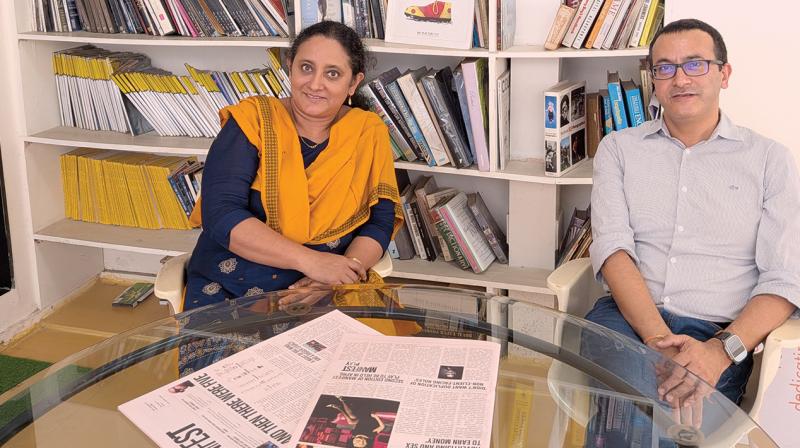
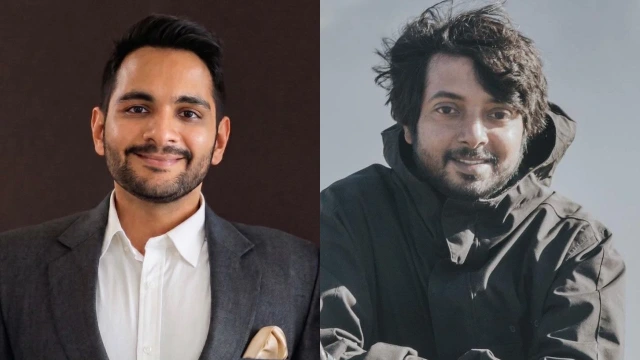
 Manasi Narasimhan and Anurag Jagati
Continuing with Marketing Manifest Stations, our podcast, which discusses how marketing helps deliver business outcomes, host Manasi Narsimhan, head - communications and fundraising, CEGIS, spoke with Anurag Jagati, EVP and head- marketing, 99acres, about the evolution of India’s real estate marketplace, the growing role of AI, and how shifting consumer behaviour is reshaping the realty landscape. The conversation offered a practitioner’s perspective on aligning marketing with business outcomes, understanding India’s diverse audiences, and building consumer trust in a high-involvement category.
Reflecting on his career spanning consumer durables, financial services, telecom, edtech, and digital platforms, Jagati emphasised that his approach to marketing was shaped early on by a business-first mindset.
“Marketing was the growth driver for the business,” he said, adding that whatever initiatives teams undertook “was not per se for the sake of the function, it came from the lens of what we are going to do to help drive the business goals,” he said.
A defining influence, he noted, has been his experience working across India’s diverse markets, including Kerala, Tamil Nadu, Karnataka, Andhra Pradesh, Telangana, the NCR, and parts of the Northeast.
For Jagati, this exposure reinforced the importance of empathy in marketing. “India is very diverse,” he observed, adding that the country behaves “like 15–20 different countries, and each of these countries behaves differently.” Such experiences, he said, “widened my horizon and my perspective as a marketer,” helping him recognise the need to understand varied consumer contexts rather than rely on uniform assumptions.
Tracing the evolution of 99acres, Jagati described how the platform transformed from a simple digital listing site into a comprehensive real estate ecosystem over the past two decades. What began as a classifieds-style platform gradually evolved alongside the internet itself: from a desktop-first experience to a mobile-first, app-driven model. Over time, the company expanded into multiple categories, addressing residential and commercial needs and catering to buyers, sellers, renters, and lessors.
He highlighted how India’s growing economy has significantly shaped this evolution, particularly the rising importance of primary housing sales. Unlike resale properties, new housing projects require curated and structured information. “There’s a lot of information asymmetry,” he explained, noting that consumers often struggle to navigate multiple project launches. To address this, the platform aggregates and curates project data, offering detailed insights, including 3D maps, property layouts, and locality information. The objective, he said, is to “reduce the information asymmetry in our category where trust is an issue” and provide “credible and reliable information to the user so that they can make the right decision.”
Technology, especially artificial intelligence, has become central to enhancing consumer experience. Jagati pointed to the company’s AI-powered video listings, which enable brokers to generate property videos at scale without manual effort. The system analyses images and videos, generates scripts, and even produces voiceovers using a sample of the lister’s voice. “We simply take a voice sample, look at the pictures and videos of the project, generate the script, and the audio is created in real time while the video is playing,” he explained. Today, he noted, “more than 50–60% of our listings are these AI listings,” reflecting how technology is transforming property discovery.
The discussion also explored evolving consumer trends in India’s real estate market.
A particularly significant shift has been the growing role of women in homebuying decisions. “Earlier, we used to market only to the male cohort,” Jagati admitted. However, recent research shows women playing an increasingly central role, “not only in giving a point of view, but also in identifying and shortlisting the kind of house that the family is interested in buying.” As a result, he said, marketing to women has become an important focus area for the company.
Understanding such shifts requires a robust approach to insight generation that combines digital and traditional methods, according to Jagati. While platform data reveals user behaviour, it cannot fully explain motivations. “What is driving them?” - such questions can only be answered through direct consumer engagement, Jagati stressed. The company, therefore, integrates first-party digital data with focus groups and face-to-face interviews. “The actual magic happens when you look at everything together,” he said, noting that this holistic understanding helps uncover both latent and explicit consumer needs.
For young professionals entering the field, Jagati offered clear guidance that effective marketing is not about chasing trends but about delivering meaningful outcomes. “The role of marketing is not something to only do things for the sake of virality; it is to help drive business.” And if one can do that, then as a marketer, you become a core and integral part of the team that is driving business outcomes.
Stressing that marketing has to be aligned with the business objective, he cautioned against pursuing virality without measurable impact. He also underlined the importance of maintaining a consumer-first approach: “As a marketer, you have to be the custodian of the consumer.” In a rapidly evolving landscape where creative, media, and technology increasingly intersect, continuous learning and curiosity remain essential, he stated.
Tune into the full conversation here: