

 Subscribe
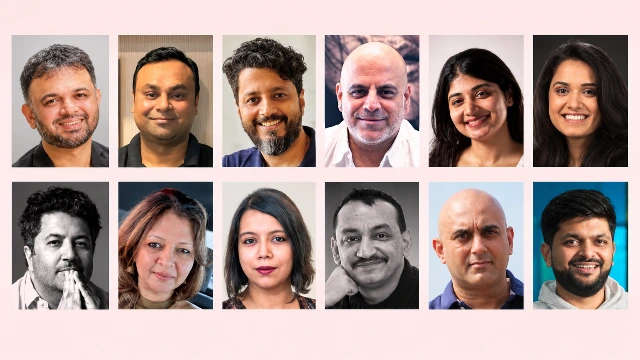
 (clockwise from bottom left) Mithila Saraf, Farah Kapadia, Vandana Tilwani, Harshada Menon, Sonal Chhajerh, Babita baruah and Adyasha Tomar
Advertising loves a good narrative. We celebrate representation milestones, and proudly publish diversity numbers. On paper, the industry appears to be making steady progress on gender equity.
But scratch the surface and a harder question emerges: Is equity still a well-crafted illusion?
We asked women across agencies and leadership roles what change they want to see. They converged on one theme: equity must shift from a 'representation metric' to a 'core business metric' — from initiative to action.
Babita Baruah, CEO, VML India, says, “The goal is for gender neutrality to be so embedded in our culture that we do not have to wait for specific programmes to enforce it.” For that to happen equity must move beyond policy and into everyday practice, she believes.
Leadership qualities such as empathy, vulnerability, and collaboration are not “feminine skills” but “essential business hard skills for everyone,” Baruah underlines. The ideal change, she suggests, is a workplace where “we stop counting the first woman to do something and start counting the next generation of leaders who simply happen to be women.”
Representation alone isn’t enough, says Mithila Saraf, CEO, Famous Innovations. “What matters is who gets paid fairly, who gets promoted, who gets the toughest briefs, and who is trusted with P&L and leadership responsibility.”
She also argues that flexibility should be viewed not as a concession but as a strategy “to retain high-quality talent.” Mentorship helps, but sponsorship moves the needle. “Women don’t just need advice; they need senior leaders actively backing them in rooms they’re not present in.” When equity shows up in everyday decisions — hiring, client allocation, visibility, and succession planning — that’s when real change happens, believes Saraf.
According to Harshada Menon, ECD, DDB, the industry isn’t designed to include everyone. “We pride ourselves on the growing number of women entering our industry. Yet at leadership level, the picture is stark. The real leak is in the middle."
Bias enters at recruitment, shows up in unequal pay, and sharpens at leadership discussions where women are assessed for life choices as much as performance, she notes. The challenge no longer is hiring women, it is retaining and advancing them, Menon adds.
The industry’s long-hours and grind culture compound the issue.
Adyasha Tomar, head – creative and brand communications, Kult, says, “I’ve actually met people who want to hire men over women just because they don’t have an issue with staying later hours.” The solution is not to sideline women, she emphasises. “We fix the hours. We fill the gap. Both for mental health and gender bias.”
From an inclusion lens, the real tussle lies between entry-level parity and leadership power. “Having balanced entry-level hiring is important, but the real impact comes when women hold revenue roles, lead large teams, and influence strategic direction,” according to Vandana Tilwani, CHRO, Havas India, and chief inclusion officer, Havas APAC.
That requires intentional sponsorship, transparent succession planning, and accountability at senior levels. “Industry-wide, we need stronger ownership of outcomes, not just intent,” she adds.
It’s not that there has been no progress.
As an industry, we’ve definitely acknowledged biases, notes Sonal Chhajerh, NCD, Leo India. “I see better policies in place, mentorship programmes, pay transparency, leadership training, and more women in mid and senior roles than when I started out.”
But beyond correction, “we need systems that support women: flexibility, childcare, and return-to-work that truly works,” she stresses.
Ultimately, as Farah Kapadia, chief people officer, Kulfi Collective, points out, equal hiring is only the beginning. “True equity shows up in who has influence, who gets the big opportunities, and who shapes strategy — and we need women across these roles.
Taken together, these voices suggest that adland’s gender conversation is no longer about ‘access’ — it is about authority, equal growth, and flexible policies that don’t penalise caregiving.
The industry has learned to count its women. It now has to empower them.
This article appears in the March issue of Manifest. To read the whole feature, purchase the issue by clicking here.