

 Subscribe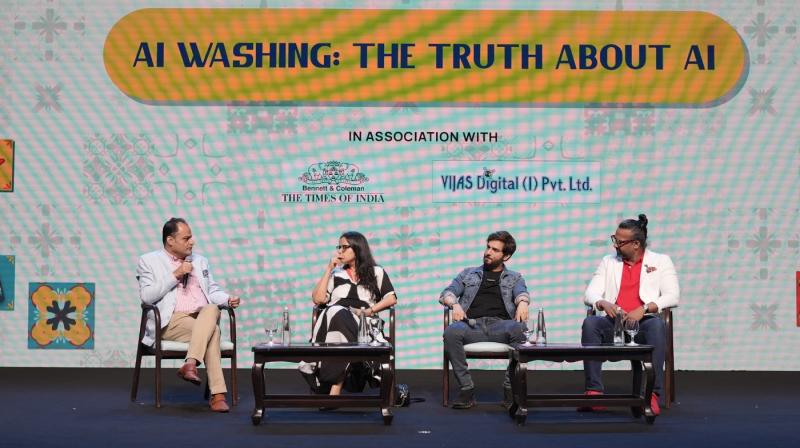
 From left: Shubhranshu Singh, Smriti Mehra, Niraj Ruparel, and Gulrez Alam
The second day of Goafest 2026 started off with an insightful session on Artificial Intelligence. Titled, 'AI Washing: The truth about AI', the panel brough together Gulrez Alam, chief revenue officer, Affle; Niraj Ruparel, creative technology lead, WPP & WPP Media; and Smriti Mehra, CEO - English and business news, Network 18. The panel was moderated by Shubhranshu Singh, member of the board of directors, Effie Lions Foundation.
According to Mehra, AI will change essentially both sides of operations in broadcasting and media – the business side as well as its nerve center - the content side of it. "It’ll make us not just information gatherers and information disseminators to bringing in layers of intelligence. Especially in news there’s so much of data – layers and layers of information that one sifts through and decode - how is that intelligence becoming more detailed and clearer for the consumer, that’s what’s going to change – its going to become faster. Plus, its going to become so much more personalised in multiple languages.
Addressing the issue from a performance marketing lens, Alam argued that AI only matters if it produces measurable business outcomes. “The proof of AI is, if you're able to deliver the result or efficiency for the client. You can do fantastic creative, you can do fantastic planning, but if you're not able to produce the desired result for the client, then it's not worth it, then it's all AI costing,” he remarked. The effectiveness of AI depends entirely on the quality of data feeding into it, he noted. “Technology, in very simple language is garbage in garbage out,” he said, explaining that flawed data inputs inevitably lead to poor outputs.
Ruparel opined that preparedness cannot come merely through certifications but through actually working with machines and consumers in real environments. “You've got to work with machines, and you've got to collaborate with consumers across many areas to get those meaningful campaigns right,” he said. He pointed to AI-led research tools, voice AI agents and collaborative audience-building as examples of how consumer understanding itself is evolving. The future of leadership in the AI era, according to him, would depend less on hierarchy and more on collaborative ecosystems. “Collaboration is the new leadership,” Ruparel stated.
The following session was on 'All About Ads: The Hook Between Attention, Emotion And Recall' and featured, Darshana Shah, chief marketing officer, Aditya Birla Capital, Rana Barua, group chief executive officer, Havas India, SE Asia and North Asia (Japan & South Korea), Rohit Kapoor, chief executive officer, Swiggy Sam Balsara, chairman, Madison World in conversation with Alex Matthew, associate, executive editor, NDTV Profit.
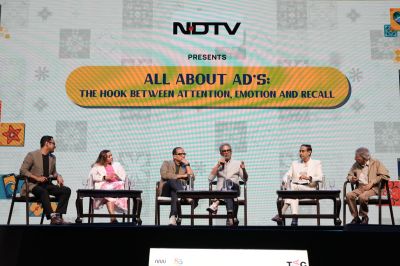
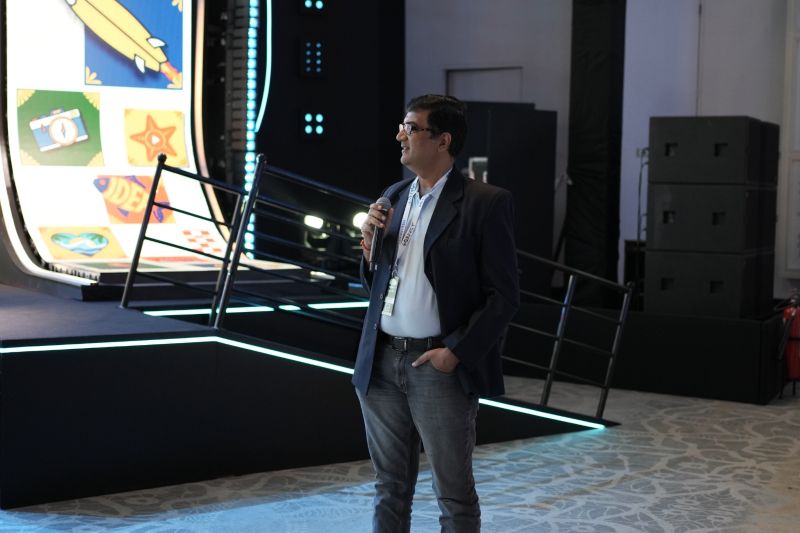
During the session, the moderator Rahul Kanwal, editor-in-chief, NDTV, asked Mayank Shah, CMO, Parle Products (who was seated in the front row), about the recent social media frenzy around Melody chocolates after Prime Minister Narendra Modi shared a video featuring Italy’s Prime Minister Giorgia Meloni. More on this here.
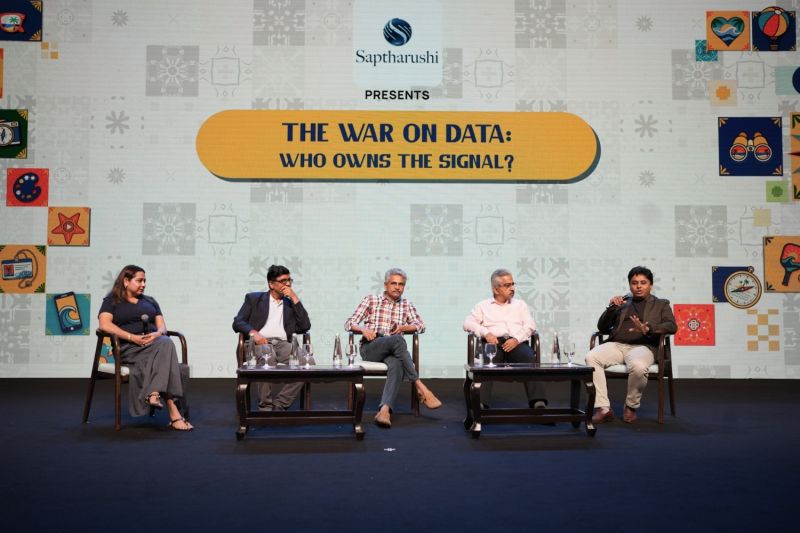
The session was followed by a discussion on 'The War on Data: Who owns the signal?'. Moderated by Gowthaman Ragothaman, founding chief executive officer, Saptharushi, the panel included Mayank Shah, vice president, Parle Products; Anjali Madan, director consumer experience global marketing, Mondelez International; Sanjay Sindhwani, CEO, Indian Express Online; and Saikat Sinha, director - consumer experiences, The Coca Cola Company. The speakers touched upon the ongoing battle for data ownership, the future of consumer trust, and the growing importance of first-party data strategies in the digital economy.
 ss
ss
Madan started off by pointing out the big challenge that exists. She said, "The big challenge is (when brands) starts looking at performance marketing and brand-building as two separate buckets. If they start focusing every effort that they have on one of the spends, one is going to end up with something not working. In the long run then what tends to happen is you get happy looking at things like clicks, conversion and ROAS, but the effectiveness of the brand starts eroding. And in the long term, the equity starts to suffer. One should look at them as a consolidated investment, rather than two separate spend areas."
Sinha stated, "In the Consumer Packaged Goods (CPG) industry, the products are a part of everyday consumption and that can only be done when you understand consumer culture. In the last few years there has been a change in the consumer behaviour - they have become more than just a passive user of the brand. They want to communicate with the brand more and be part of the discussions. And given the shrinking attention spans, we need sharper signals to target them at the right time in the right way.
Shah believes that data-driven customisation works best for high-involvement categories, while FMCG still relies heavily on mass branding and top-funnel awareness. "It's great to have the data and signal for the bottom of the funnel but for the top funnel, you still have to rely on non-digital data."
Shifting the conversation from a brand perspective to a publisher perspective, Sindhwani explained, "In the Indian publishing industry, different players are in different stages of building their data stacks. Unless one doesn't invest in knowing their customers, they will face challenges on the advertising front and building a subscription funnel of its own. Publishers are moving from anonymous audiences to first-party data ecosystems built through sign-ups, subscriptions, whitepapers, and downloads, as owning customer relationships becomes critical. Publishers realised that while platforms and tools like Google Analytics offered scale and insights, they did not provide ownership of consumer data."
Delving into the resetting role of television in the age of fragmentation, the panel 'TV is dead. Long live TV' discussed the much-debated topic. The panel was moderated by Tamanna Inamdar, managing editor, NDTV profit and included Akshay Agarwal, head - linear ad sales, Sony Pictures Network India; Rajiv Dubey, vice president - media and marketing activations; Dabur India; Arpan Biswas, chief marketing officer, Ajio; and Avinash Pandey, secretary general, IBDF.
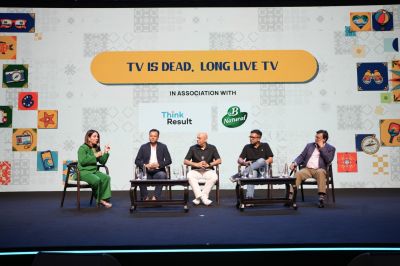
Dubey said, "The technology behind the TV screen has changed. You have to make sure that you are there in that technology. One after the other, channels are coming on all the platforms. There's no reason to believe that TV is dead or going to be dead soon."
Echoing his views, Biswas shared, "In marketing, we love spicing things up a bit. I don't think TV will ever be dead. If it caters to more than half of India's audience, I don't think it can ever be dead. If you are doing a brand launch, it makes a lot more sense to do TV primarily in the Tier - 2 and Tier -3 markets. TV is a great medium of impact for categories that want to build credibility. It also helps build long-term perspective and salience. But the unfortunate truth is TV's impact takes longer."
Agarwal was of the view that TV is a demand creation medium whereas other platforms are demand capture mediums. He explained," Television is where the ignition happens. The story starts and then the inertia spreads across the funnel. Demand creation happens through television and then there are demand capture mediums which get you last-mile conversions. And the reach time of television is massive. The medium has built brands across the last few decades. However, television needs to evolve in this fragmented area - that is what is critical currently. Currently, it's not enough to reach out to 900 million viewers - that is passive reach. Converting this passive reach to participative engagement through a content that is the key thinking we need to evolve. The content that we do has to be participative in nature. We don't have to look at it as TV or digital, it's TV and digital. "
Pandey added, "Every medium has its own advantages. If a brand like Dabur or Ajio wants to advertise, they can go to many places. The safer way is to go to an established and credible medium like television, newspapers or digital platforms which are well known digital publishers. What television or a video platform does is deliver a message in an unskippable format and through a community viewing."
At the IAA Voice of Change session, industry stakeholders came together to examine whether advertising is genuinely changing how women are represented, or simply packaging old stereotypes in progressive language.
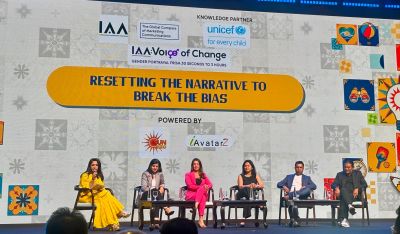
Moderated by Megha Tata, strategic advisor and independent director, the panel comprised Amitesh Rao, CEO, South Asia Leo & VP – TAC; Preeti Jhangiani, cofounder, Pro Panja League; Prasun Kumar, chief marketing officer & business head, MagicBricks; Riya Joseph, general manager, media, Britannia Industries; and Veetika Deoras, senior VP, marketing and brands, IHCL.
During the panel, 'New Games, New Gods: India’s Sporting Reset', a panel comprising Aditi Chauhan, former Indian Women’s National Team Captain, and founder, She Kicks; Parvinn Dabass, founder, Pro Panja League , Rahul Chaudhari, Indian Kabaddi Player; Sameer Pathak, president, Pickleball World Rankings, The Times Group company which was moderated by Anand Narasimhan, managing editor special projects and senior anchor, CNN News 18, the panelist played the sports they represented during the panel.
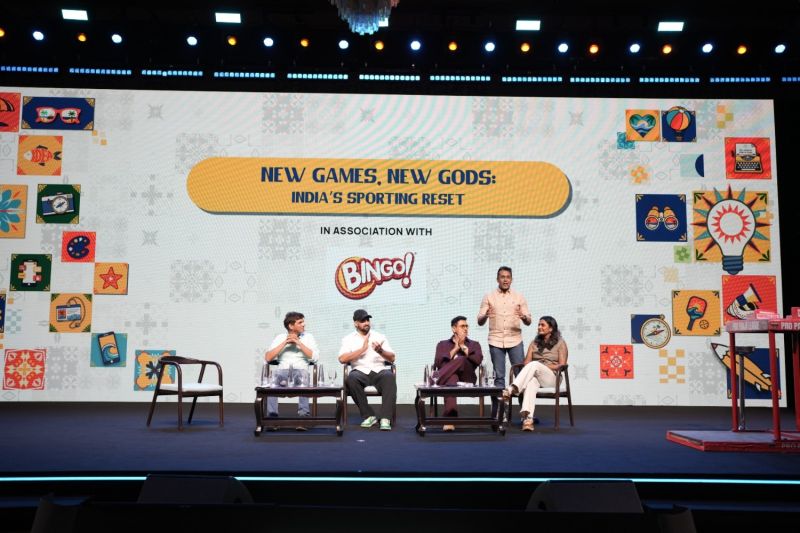
From Dabass explaining the rules of panja and Chauhan getting women from the audience involved in a football activity, to Chaudhari challenging attendees to continuously chant 'kabaddi', the session turned into an interactive showcase of emerging sports culture. It concluded with Pathak introducing the audience to the basics of pickleball.
Pathak said pickleball is witnessing growing excitement across India, with the sport rapidly expanding beyond metro cities. “Earlier, the momentum was limited to larger cities, but now it’s gaining popularity in smaller towns as well,” he said. Highlighting its appeal for audiences and brands alike, he added, “Watching a pickleball game can be very action-oriented. Any sport that is more visual becomes easier to sell.”
Stay tuned for more live updates from the festival!