

 Subscribe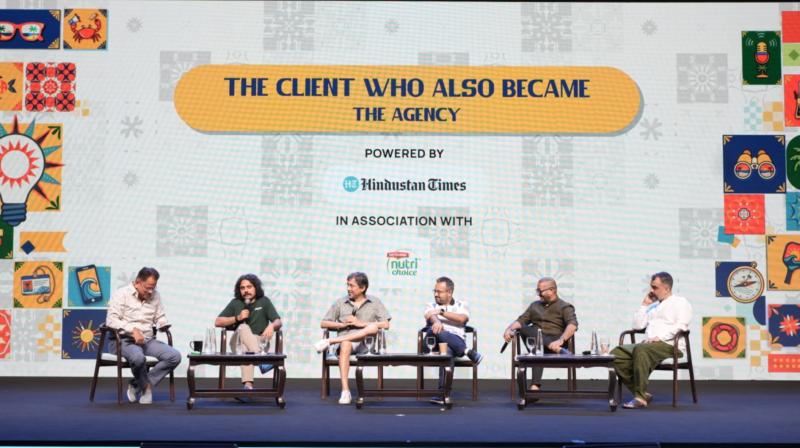
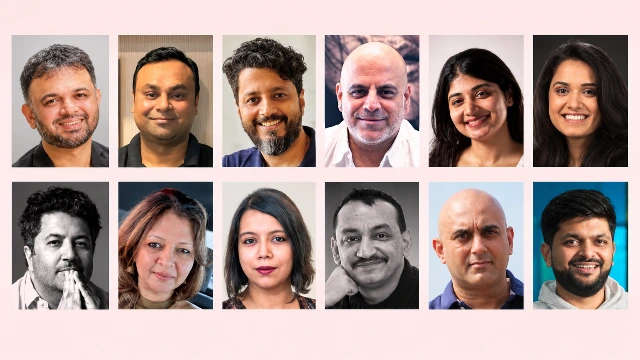
 From left: Rohit Ohri, Chandan Mendiratta, Ajay Kakar, Gaurav Ramdev, Raj Kamble, and Harsh Deep Chhabra
The old client-agency equation is being rewritten in real time. At a crackling Goafest session on the rise of in-house creative teams, marketers from fast-moving digital brands, legacy FMCG giants and global corporations debated whether agencies are losing relevance, or simply being forced to evolve.
Moderated by Rohit Ohri, founder, Ohriginal, the panel comprised Raj Kamble, founder and CCO, Famous Innovations; Gaurav Ramdev, CMO - India & South Asia, Visa; Ajay Kakar, head – corporate branding, Adani Group; Chandan Mendiratta, chief brand officer, Zepto; and Harsh Deep Chhabra, global head – media, Godrej Consumer Products.
The discussion quickly moved beyond the simplistic ‘in-house versus agency’ binary, revealing a deeper industry reset: one driven by speed, culture, data ownership, and the relentless pressure for brands to stay relevant every single day.
For Zepto’s Mendiratta, the case for in-housing began with a moment of instinctive cultural participation. Recalling a viral brand banter idea sparked by a LinkedIn comment asking whether Zepto could deliver a “dulha (bridegroom) in 10 minutes,” Chandan described how the idea immediately snowballed into a collaboration with Shaadi.com.
“In next five minutes, I made a call to Shaadi.com CMO,” he said, explaining how the playful billboard exchange was conceptualised overnight and executed the very next morning. “The hoarding insight was so strong, I don’t think it would have worked out by outsourcing the creative to anybody,” he pointed out, citing the reasoning for choosing in-house. “Agility is one answer for sure. Second big reason that we want to have brand in-house is because brand is also culture, and you can’t ever outsource culture.”
That thought, that culture now moves too fast for traditional systems, was a recurring one echoed by the other brand stakeholders on the panel.
Godrej’s Chhabra explained that the company’s aggressive growth ambitions fundamentally changed how marketing operated internally, with scale rather than speed becoming the trigger for in-housing at Godrej Consumer Products.
“Earlier we used to run 10 campaigns a month, today we run 30 campaigns a month,” he said, adding, “The one thing that hasn’t changed is that brands still want to win in the marketplace.”
As Godrej climbed from being the 17th-largest advertiser in the market to the fourth-largest, the organisation realised that business context, proprietary data and growth KPIs needed tighter integration with marketing teams, Chhabra shared.
“There is a secret sauce that we have, and we may or may not be willing to share it beyond a point with anyone outside,” he noted. “The only thing that we are focused on is: are our brands growing in the marketplace?”
But perhaps the sharpest articulation of the “always-on” marketing era came from Ramdev, who contrasted his experience at The Coca-Cola Company with the demands of a culture-led tech ecosystem at Visa today.
Referencing the evolution of WPP’s Open X model for Coca-Cola, he underscored that at Coke, the purpose was consistency and scale across 200 countries.
Contending that brands are now operating inside a culture cycle that refreshes daily, sometimes hourly, he stated, “At Visa, the idea is to be relevant at the speed of thought. Culture is now a daily affair. Because something that happened two days back has already become part of pop culture.”
Mendiratta agreed, underscoring the need for real-time relevance. “Its not just about celebrating Diwali or Independence Day for us, but even World Idli Day, World Dosa Day. Yesterday was International Tea Day.” He said, “My brand is relevant multiple times a day, so I cannot be operating with two-three campaigns a year,” revealing that Zepto had created, “30 films in three and a half months, all written in-house. I think agencies will have to catch up to this playbook,” he said. “This everyday relevance playbook has to be caught on.”
Kakar, who has worked on both sides of the business, argued that the relationship between brands and agencies has fundamentally broken because both sides stopped understanding each other’s motivations.
“A client-agency relationship is a relationship,” he said. “Both of you are satisfying each other. The day you stop satisfying each other, you start looking out.”
Calling advertising “a promiscuous industry,” he suggested that brands would continue outsourcing as long as agencies remained indispensable.
“At the Adani Group, we believe that our core competence is in-house, and what is critical for our business but not core competence is outsourced,” he explained. “This industry builds brands, and should continue to build brands.”
The strongest defence of agencies, however, came from Kamble, the sole creative voice on the panel, who argued that external perspective remains impossible to replicate internally.
“The biggest difference between agencies and in-house teams is culture. Agencies bring outside perspective, debate, challenge and creative friction, while many brands build in-house teams primarily for cost efficiency and tighter control. Agencies lose relevance when they fail to stay deeply connected to a client’s daily business realities, but creative excellence thrives when brands and agencies work as true partners rather than competitors. Strong agency culture is built on disagreement, experimentation and bold thinking.”
Drawing a distinction between operational efficiency and creative culture, he warned that agencies risk losing talent because clients increasingly view in-housing as a cost-saving exercise.
“In-house agencies are very close to the brand,” he said. “Many times they cannot tell the client bluntly that this is a bad idea because it’s your boss. The first thing they do is try to tell the boss how he can save money,” he added. “Then they start an in-house studio.”
Kamble asserted that agency culture, built on argument, debate and creative friction, cannot easily survive within corporate structures. “Go to an agency and look at it, until they’re fighting, debating, arguing, don’t join that company,” he remarked. “The culture is the most important thing. Maintaining agency culture on the client side is impossible.”
However, he acknowledged that the future likely lies in partnership models rather than rigid structures.
Ramdev perhaps summed it up by saying that the industry is moving toward specialisation rather than replacement. “In the age of specialisations, the deeper the agencies have specialisations in, the better the relevance would be,” he said.
As the discussion closed, one thing became clear: brands are no longer choosing between agencies and in-house teams. They are redesigning creative ecosystems around business, culture and growth.
And for agencies, the message from the talk was blunt - evolve fast, or risk becoming too slow for the brands they once built.