

 Subscribe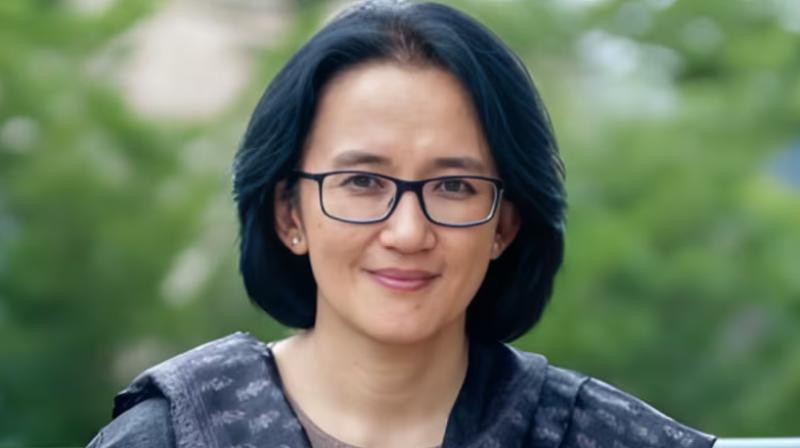
 Pelki Tshering
Tanishq has announced its foray into the natural gemstone category with the launch of its new collection, ‘Hues’.
As part of the rollout, the brand has onboarded Triptii Dimri as the face of the collection and unveiled a campaign film featuring her. Conceptualised by TBWA\ Lintas, the film aims to spotlight the collection’s focus on colour, individuality, and contemporary design, marking a strategic expansion for Tanishq in the fine jewellery segment.
With the launch of ‘Hues’, we caught up with Pelki Tshering, chief marketing officer, Titan, to discuss the brand’s foray into the new category, its association with Triptii Dimri, and more.
Edited excerpts:
With the launch of Hues, how is Tanishq interpreting the shift to more self-expressive, design-led jewellery consumption?
We realised that there is this huge trend where customers today are looking at even more elevated ways of expressing themselves. We learned that colour is a very large element of this expression. That’s when we decided to foray into the natural gemstone category, and we launched the Hues collection.
Being our first collection in the natural gemstone category, it’s more contemporary in its design. It can be used for both daily and occasion wear. It is extremely versatile in the way it's been imagined. Since it is inspired by the vibrancy of the Indian summers, the motifs are beautiful. Hence, in some sense, if you look at the silhouettes of the jewellery that is there, they look extremely wearable. And yet, at the same time, it's so refreshingly different and modern. The choice that we made that all gemstones will be natural came from the fact that today, people are looking for meaning. We choose gemstones because they bring in the colour, excitement and energy which is bold and dynamic. All of this helps us to really respond to the need of our customers and our modern Indian women to express themselves in ways beyond just diamond and gold.
Akshaya Tritiya is historically a massive gold-buying day. By launching the gemstone-heavy ‘Hues’ collection, are you trying to consciously shift the consumer’s mindset?
I don’t think we are ever looking to move away from gold and diamonds. Gold and diamonds continue to remain our core. With the launch of the natural gemstone category, we aim to provide consumers with new ways to experience their jewellery. Jewellery is an emotion, and it's that emotion that the modern Indian woman is feeling today. We are attempting to respond to this effectively. And with colours, I think we are able to do it this Akshay Tritiya.
What made Triptii Dimri the right choice for this? How does she align with the brand’s evolving identity?
At the end of the day, the entire collection is a tribute to the modern Indian woman. The one who is ever evolving, expressive, and in some sense, has a very strong individuality and identity of their own. As she experiences the jewellery, at times she might be expressing her moods or feelings, and that's what this particular jewellery does.
Coming to Triptii, she is deeply rooted in who she is. At the same time, the choices she has made and the way she engages with the world reflect a continuous journey of evolution and exploration. She is also expressive about her identity. She possesses a timeless grace, yet at the same time, she's so refreshingly contemporary, just like our collection. Triptii just felt the most apt person to collaborate with.
In a crowded celebrity endorsement space, how is Tanishq ensuring authenticity and differentiation?
It's simple because we don't look at it as an endorsement or chasing a face. What we really look for is what is the alignment and the story that we want to tell. It's never really been about who's the biggest face in industry, but it's always been about who fits the story. Everything that we do, we don't build it around the celebrity; we build it around the modern Indian woman. In some sense, it's about does the celebrity brings alive the story we want to tell? And if they do, it becomes very simple. If the celebrity feels real, we go ahead and collaborate with her.
Jewellery in India is often binary - either heavy bridal or daily-wear gold. Where does Hues sit in the customer’s wardrobe?
I am not sure jewellery is so binary anymore. What we've seen now over the years is, unlike the past when jewellery was something that you kept in a locker, today, women wear it as an everyday luxury. It acts as a medium through which they want to express themselves - that’s a very big trend. Looking at the Tanishq natural gemstones, and especially the new collection where colour is the heart of the design, we see that it is extremely versatile. One can wear it with Indian wear or western wear. More importantly, it's so versatile that it can be used for even occasion wear. So it sits within occasion and daily wear across various needs. That's the exciting part of it.
For Hues, what does your media-mix look like?
We continue to spend on TV, which is a large reach medium. But now with people spending more time online on phones, digital is also a very big part of our media plan for Hues. And when I say digital, I mean, across from OTT and CTV, to performance. Over and above this, from a media perspective, we spend significantly on outdoor. Especially for this campaign, because outdoors has really helped us to contextualise it and bring alive the idea of the vibrancy of Indian summer very well.
Beyond traditional sales, what are the KPIs you are looking at to measure this shift into the category?
While you're right, sales KPIs are important. But for us, what's also very important with this is the share of mind or the share of desire because we're foraying into a new category wanting to reimagine it. I think those will also be very important KPIs that we will look at. For instance, are we creating enough curiosity? Are we being considered? Are more modern Indian women walking into our store, curious to explore something new? Is this relevant to our existing customers? Are we bringing in newer, younger customers into the brand? We have been looking at these metrics as we foray into this category, because growth isn't just about selling, it's also about meaning more, and that's the intent with which we're doing it.