

 Subscribe
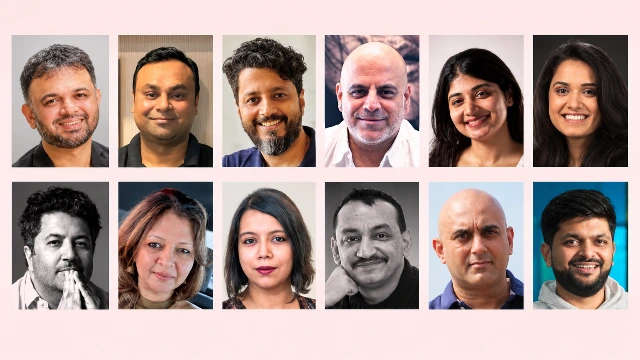
 Puneeth Bekal (left) and Carol Goyal
There’s a familiar pattern brewing in tech: big vision first, capital follows fast, and results take time. That cycle is now playing out with AI.
Companies and agencies are investing heavily, often ahead of clear returns, driven by FOMO. But we’ve seen this before. In 2021, Mark Zuckerberg made a significant investment in the Metaverse, repositioning Facebook as Meta Platforms and pouring billions into virtual worlds that ultimately fell short, resulting in losses exceeding USD 80 billion and a strategic retreat in 2026. Today, the focus has shifted to AI, with fresh bets on infrastructure, talent and personal super-intelligence. The ambition is the same, only the direction has changed.
Hence, in our April issue, we set out to question: is AI a necessary leap, or another case of ambition outpacing reality?
Carol Goyal, chief executive, Aesthetic Intelligence Lab and Puneeth Bekal, EVP and CMO, HDFC Securities, debate on the topic.
Does Meta’s shift from the Metaverse to AI signal strategic evolution or a pattern of chasing the next big thing?
Carol Goyal (CG): It’s a bit of both. At the surface, it looks like another big swing after the Metaverse. But strategically, AI is very different - it builds on existing user behaviour rather than requiring a new ecosystem. So while the pattern of bold bets remains, this pivot is more grounded in near-term utility.
Puneeth Bekal (PB): I think it’s both. Companies like Meta don’t have the luxury of sitting out any major shift. There’s too much competition, too much capital, and too much at stake. Nobody can actually predict the future.
Back in 2021, during Covid, the Metaverse genuinely looked like a strong bet. The world was transitioning to digital in a very different way, and many companies, not just Meta, began investing in this direction. Meta just went more aggressive because that’s how Zuckerberg operates. He goes all in. But the strategy itself is simple: keep chasing the next big thing because you don’t know what will actually work.
Is AI truly a foundational shift, or are we overestimating its near-term business impact?
CG: AI is foundational, but near-term expectations are inflated. Most companies will see efficiency gains first, not dramatic revenue shifts. The real transformation happens when businesses rebuild workflows around AI, which takes time.
PB: I think what’s happening right now is very similar to the dot-com phase.
If you look at the period between 1999 and 2001, there was a massive bubble. A lot of companies got funding, many shut down quickly, and only a few survived. But over time, that entire ecosystem became one of the biggest shifts in history.
AI feels similar.
People keep talking about an ‘AI bubble.’ Maybe it bursts, maybe it doesn’t, but even if it does, that doesn’t mean AI disappears. The underlying shift is still real.
So yes, we might be overestimating the near-term impact. But long term? This is here to stay.
How should companies justify billion-dollar AI investments when the ROI remains long-term and ambiguous for now?
CG: They need to separate hype from structure. Investments should fall into: capability building, experimentation and real use cases. Only the last should drive short-term ROI. The rest is about staying competitive and future-ready, not immediate returns.
PB: Honestly, one doesn’t justify it. Even in the VC world, when startups raise money, they’re telling a story. Projections, future revenue models, most of it is based on assumptions. Nobody really knows how things will play out. It’s the same here. Companies are investing based on belief and direction, not certainty. And as an entrepreneur, that’s literally your job to be optimistic about the future. Also, outcomes don’t always come from where you expect. For example, Meta didn’t know early on that advertising would become such a massive revenue driver. That evolved. One thing led to another. So with AI: You invest, you build, and the monetisation often reveals itself later.
What lessons from the Metaverse’s USD 80 billion loss should shape AI investment decisions today?
CG: Three hard lessons:
i) Adoption beats vision: The Metaverse was visionary but required too much behaviour change. AI succeeds because it meets users where they already are.
ii) Infrastructure without use cases is a liability: Meta built massive capability ahead of clear demand. With AI, the risk is repeating that: overbuilding without grounded applications.
iii) Narrative can distort capital allocation: When leadership becomes too attached to a future story, capital follows the narrative instead of the evidence.
For AI, this means: Don’t invest just because ‘this is the future.’ Invest because you can map a credible path from capability to value, even if that path is long.
PB: The biggest lesson is around how aggressively you deploy capital.
Instead of putting in something like USD 80 billion at once, maybe the smarter approach would have been:
- Start with USD 20–30 billion
- Test the market
- Look for early signals
- Then scale up
It’s not about avoiding risk. It’s about pacing it better. So for AI, the takeaway is: Don’t go all in blindly – build, test, validate, then double down.
Will the winners in AI be those who invested early and heavily, or those who waited for clarity and scaled with discipline?
CG: The winners will do both: invest early, but scale selectively.
It’s not about spending the most; it’s about learning fast, cutting losses quickly, and integrating AI where it truly works. AI is a more practical shift than the Metaverse, but that’s exactly why companies need to be more disciplined, not less.
PB: It’s not an either-or. It’s a mix of both. You do need to invest early and aggressively because if you’re too late, you miss the curve. But at the same time, scale and discipline matter.
Take companies like Google. They may not always be the first to launch, but when they commit, they commit heavily, and that allows them to catch up fast.
Also, large companies have one big advantage. They can afford to make mistakes. That’s the real edge of Silicon Valley.
Yes, there will always be smaller companies that come out of nowhere. But more often than not, they either get acquired or absorbed into larger ecosystems. At the end of the day, winners are those who move early, invest heavily, and maintain the discipline to adapt as things unfold.
This article first appeared in the April issue of Manifest. Get your copy here.