

 Subscribe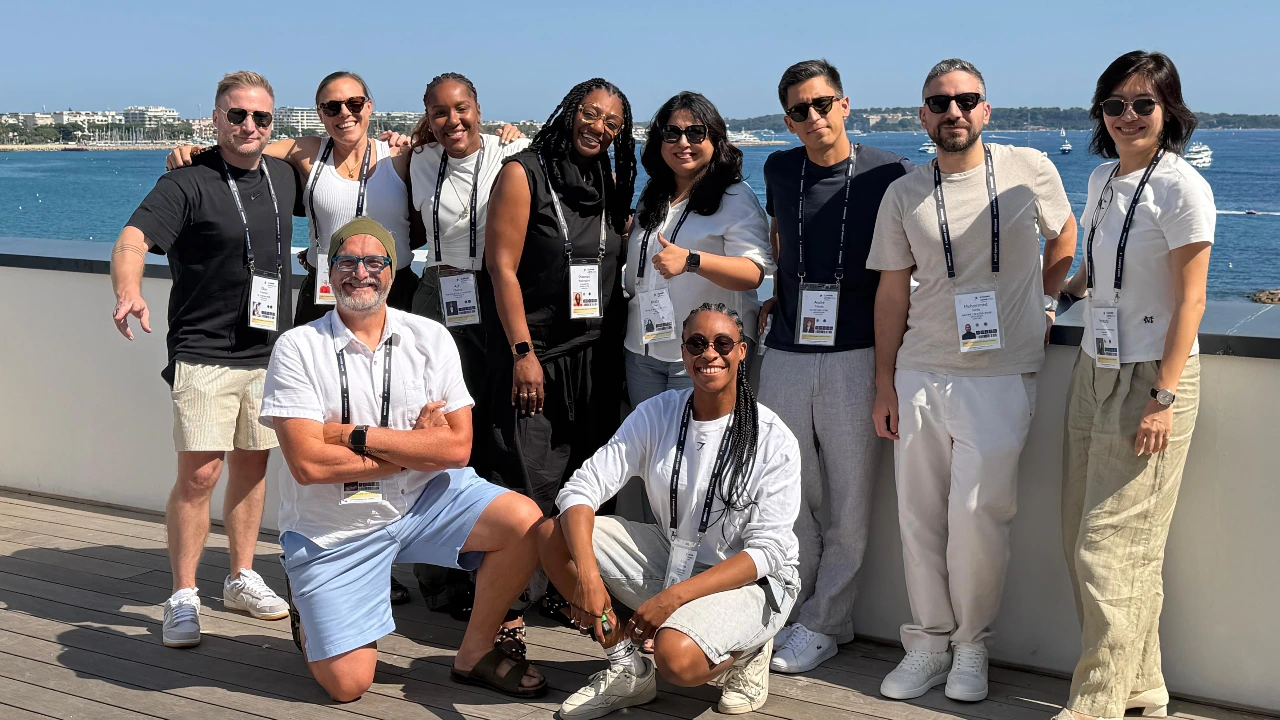
 The Cannes Lions Entertainment for Sport
Sitting on the Entertainment Lions for Sport jury at Cannes Lions is often seen from the outside as a glamorous role - two days in a room, a few debates, and a list of winners at the end.
The reality is very different.
It is structured, intense, surprisingly emotional at times, and deeply reflective of where sport and storytelling around sport are headed.
It starts long before Cannes
By the time we arrive in Cannes, the work has already been in our hands for weeks.
Each juror reviews and scores entries independently from home. This stage is less about discussion and more about immersion and understanding the intent, the craft, and the cultural context of each piece. And it means that when we finally sit in the room together, we are not seeing the work for the first time. We are interrogating it.
The conversations begin at a much deeper level as a result. Not discovery, but challenge - testing assumptions, stress-testing perspectives, and determining what truly deserves recognition.
A truly global room
One of the most powerful aspects of this jury was its diversity, not just geographic, but in perspective.
Our jury brought together voices from Singapore, the USA, the UK, Saudi Arabia, Venezuela, Australia, and India, with cultural roots spanning Peru, the Caribbean, Nigeria, China, Portugal, and beyond. Brand leaders and agency creatives. Sports marketers and storytellers. People from established and emerging markets. People who love sport in very different ways.
For me, coming from brand leadership in a cricket-dominant market, it was a reminder that the emotional architecture of sport - the loyalty, the heartbreak, the identity it carries is universal, even when the game itself is not. That mix was not accidental. It reflected the thoughtful curation Lisa Berlin and her team brought to assembling this jury, balancing backgrounds and viewpoints that shaped every conversation we had and made the final decisions sharper for it.
Judging sport like fans, not just professionals
One of the most interesting dynamics in the room was how quickly professional titles disappeared.
We didn't evaluate purely as marketers, creatives, or brand leaders. We reacted like fans debating the work the way fans debate their teams: obsessively, emotionally, sometimes irrationally, but always passionately.
Because sport, at its core, is not a category. It is a feeling. And the best work understood that instinctively.
What the strongest work had in common
From brand partnerships to athlete-led storytelling and platform-driven ideas, the range of entries was genuinely diverse.
Yet a clear pattern emerged. The strongest work didn't treat sport as a media channel. It treated sport as a cultural force, using it to build communities, shift perception, unlock participation, and create impact far beyond the game itself.
The era of simply wrapping a campaign around sport is fading. What is replacing it is work in which sport becomes the platform itself, not the backdrop.
How decisions are made
The jury room is structured, but not rigid.
Entries are challenged rigorously. Points of view are defended strongly. Assumptions are revisited repeatedly. And gradually, through layers of conversation, consensus emerges.
The role of a jury president in this process is crucial, not to dominate opinion, but to create the conditions for the best decision to surface. Shannon Washington did exactly that. She ensured every voice was heard and every perspective was genuinely considered, while keeping a room full of passionate, opinionated people focused, productive, and energised throughout. Striking that balance between healthy disagreement and meaningful progress is harder than it sounds, and she made it look effortless.
The best discussions were rarely the loudest. They were the ones that evolved, layer by layer, until clarity emerged.
What it feels like at the end
By the end of two long days, something interesting happens. Fatigue is real, but so is alignment.
There is rarely complete agreement on everything. Yet there is a shared sense that the work that wins has earned it. And in a category like sport, that matters deeply, because everyone in that room understands what it means to compete, lose, rebuild, and try again.
We are genuinely proud of the final list we've arrived at and look forward to its presentation to the world at the award ceremony on the evening of 23 June. For the work that makes it to that stage, it will have been earned through rigour, debate, and real conviction.
Final reflection
Judging the Entertainment Lions for Sport is not just about evaluating creativity. It is about understanding sport itself, its emotions, its cultures, its contradictions, and its extraordinary ability to bring people together in ways few other things can.
And if there is one lasting takeaway from the experience, it is this: The best work in sport doesn't interrupt the game. It becomes part of it.
The author is global chief marketing officer, Knight Rider Sports