

 Subscribe
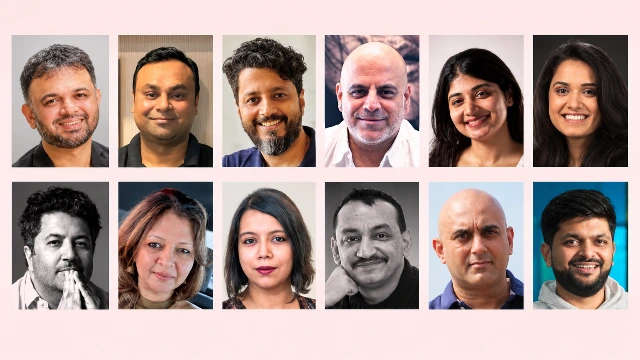
 Harshada Menon (Left) and Babita Baruah
Advertising prides itself on shaping culture. It nudges behaviour, champions inclusion in 30-second spots. But inside its own corridors, the story is more complicated. The industry has moved from denial to discussion, from token hiring to better representation, but a deeper fault line remains: equity often exists as optics than structural.
For our March issue, we reached out to industry professionals across agencies and seniority spectrums. Here’s what Babita Baruah, CEO, VML India and Harshada Menon, ECD, DDB, had to say on the persisting structural inequities in adland…
Edited excerpts:
Where, according to you, does gender disparity continue to show up today - hiring, pay, promotions, or visibility and attribution?
Babita Baruah: Where disparity exists, it will show up in all aspects and is not limited to one or the other. However, the industry is making great strides in ensuring equal opportunities and inclusivity, and in removing biases and stereotyping.
The focus should now be on structuring evaluation metrics to be outcome-led rather than perception-led. Starting with the way we recruit. A balanced and diverse workforce creates environments where the best ideas win.
Every voice in the room needs to be heard, respected and valued.
Harshada Menon: Our industry isn’t designed to include everyone. Which is why, gender disparity is everywhere. Bias enters at recruitment, shows up in unequal pay, and sharpens at leadership discussions where women are assessed for life choices as much as performance. Men are still more readily trusted with high-stakes mandates and benefit from informal visibility. And visibility often means opportunity. Meanwhile, women face invisible penalties for flexibility, slower promotions, and reduced credit in rooms where decisions are made. What’s worse, these barriers evolve across career stages for women.
Entry-level parity vs Leadership gap: Why do you think women drop off at senior leadership levels despite strong entry-level representation?
Baruah: The mid-career stage is where life transitions often require greater support. There have been cases of dropouts due to this. The tide is definitely turning as agencies are embracing flexibility. This flexibility helps women focus on their families without having to step away from their careers entirely. We are closing the gap by offering non-linear career paths that allow talent to pace their growth according to their life stages. Strong mentorship and guidance during these transition years are also critical. When we provide the right support systems, we enable more women to reach their professional goals seamlessly. Organisations that consistently invest in continuity, nurturing and upliftment are the ones that truly retain and grow more women leaders.
Menon: The real leak is in the middle. Mid-level women are not leaving because they lack ambition. They are leaving because momentum stalls. Men are often promoted on potential, while women are asked to keep proving performance. Add to that burnout from micro biases, limited sponsorship, motherhood penalties dressed up as flexibility, and too few role models at the top. The challenge no longer is hiring women. It is retaining and advancing them. That requires moving from diversity optics to structural inclusion, with fair promotion criteria, active sponsorship, real support for caregiving, and leadership that truly reflects the talent pipeline.
'The motherhood cliff': Do life stages like maternity still impact one’s growth trajectory or client allocation, or are you able to return to the same role or growth track post-maternity?
Baruah: This is an area with incredible positive momentum across the industry. Maternity is viewed as a brief pause and not a disruption to career growth. With the introduction of progressive policies like fertility leave, extensive maternity benefits and phased return-to-work programmes, women are resuming their growth tracks with renewed focus. We are also moving towards performance-based evaluations that ensure a few months away do not impact long-term career progression. The industry is focused on giving women leaders the space to bloom and grow. By enabling accessibility for all, we ensure that important life stages are supported, not penalised.
Menon: Absolutely! Maternity still impacts a woman’s growth trajectory, despite all the policies we put in place that promise role continuity. A six-month absence in fast-paced, high-demand workplaces can shifts client allocations, visibility, and stretch opportunities. Many women return to the same title, but not always to the same momentum. The result? Reduced responsibilities and assumptions about commitment. The challenge isn’t capability; it’s perception. Unless organisations actively protect growth paths during life stages like maternity, the break can unintentionally become a career pause rather than just a personal one.
I once heard someone say about a new mother returning to work, “She’s a mom now. Why would she be serious about her career?” As long as that belief lingers in our corridors, no policy will truly fix what is broken.
This article appears in the March issue of Manifest. To read the whole feature, purchase the issue by clicking here.