

 Subscribe
 The exchanges go back at least to 2008, when Publicis announced a technology collaboration with Google.
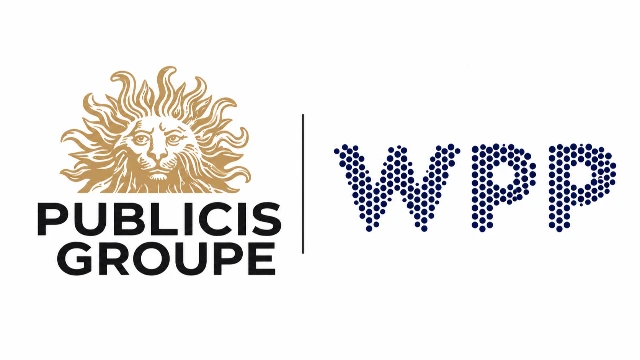
Publicis Groupe's recent response to WPP CEO Cindy Rose may have caught the industry's attention, but the holding companies have a long history of making their disagreements public.
The exchanges go back at least to 2008, when Publicis announced a technology collaboration with Google.
WPP's former CEO, and founder, Sir Martin Sorrell, questioned whether the partnership exposed an 'Achilles' heel' in Publicis' technology capabilities. Maurice Lévy, CEO, Publicis Groupe, at the time, who was trained as an engineer, was quick with his response.
"He's a financier, I'm an engineer, and you can see the difference," he said at the World Economic Forum in Davos. He added that he was sorry his 'dear friend' had not understood the partnership. The exchange set the tone for what would become a fairly entertaining public rivalry.
Things got more personal in 2009. After Sorrell suggested that Publicis should consider a combination with Interpublic Group (IPG), Lévy dismissed the idea as the 'fantasy of a little Englishman trying to stir things up'. He added that Sorrell was 'more interested in the affairs of other businesses than in managing his own'.
Lévy also reminded Sorrell of an earlier prediction that Publicis would eventually be swallowed by a larger agency group. "We were not swallowed – we swallowed," he said in an interview with Haaretz, referring to Publicis' acquisitions and expansion. By then, Sorrell had also described Lévy as an 'amateur', 'callous' and 'hysterically funny', according to a 2009 CBS News account of their exchanges.
The rivalry acquired a much bigger business dimension in July 2013, when Publicis and Omnicom announced a proposed USD 35 billion merger. The deal would have created the world's largest advertising group, taking the top position away from WPP, which eventually happened when Omnicom merged with Interpublic.
Sorrell was unconvinced. He described the proposed combination as 'strategically puzzling and structurally clunky', questioning its benefits for clients and employees and raising concerns about regulatory hurdles and potential conflicts.
WPP's half-year results statement in August 2013 went further, saying the proposed merger ran counter to the strategies and cultures of both companies, with considerable potential client and people conflicts. Sorrell continued to question its rationale at industry events, arguing that the benefits for clients had not been adequately articulated.
The deal eventually collapsed in May 2014, after disagreements over governance, leadership and the structure of the proposed merger. Sorrell was hardly surprised. Speaking to CNBC, he described the negotiations as a 'bit of a soap opera', adding: "I think this deal was driven by ego issues and emotional issues. I think both CEOs wanted to try and dislodge WPP from its number one perch."
He also described it as a case of 'eyes being bigger than your tummy'.
Lévy, meanwhile, called 2014 an 'annus horribilis' for Publicis, acknowledging the disappointment of the failed deal. Yet he remained defiant about the competitive nature of the business. "We are all moving into the future. We are fierce competitors. Everyone wants to kill the other one," he said in comments compiled by Campaign.
The change in leadership did little to end the public sparring. When Lévy commented on Sorrell's potential successor in 2016, he said: "Whoever succeeds [Sorrell] needs to be a good human being – not wicked and nasty, generous and not greedy, sharing and not selfish or egotistical."
A year later, Arthur Sadoun took over as Publicis Groupe's CEO, while Sorrell remained at WPP until his departure in 2018. The debate shifted from personality clashes to the future of holding companies. Sadoun argued that the traditional holding-company model needed fundamental change, saying the industry could not continue operating as it had.
The next chapter involved Mark Read, who succeeded Sorrell at WPP. In 2024, Sadoun publicly criticised Read's remarks on principal media buying, accusing him of 'throwing stones at competitors, or by the way predecessors'.
Sadoun defended Publicis' approach to principal media, insisting that transparency and client consent were central to its operations.
Now, with Cindy Rose leading WPP, the argument has returned to how agencies win business. Rose questioned the growing practice of major accounts being awarded without traditional pitches, urging clients to undertake proper due diligence. Publicis responded with an open letter, which shows that the names have changed, and the issues have evolved, but the competitive instinct between the two holding companies remains.
Over to WPP to reply to Publicis' open letter!