

 Subscribe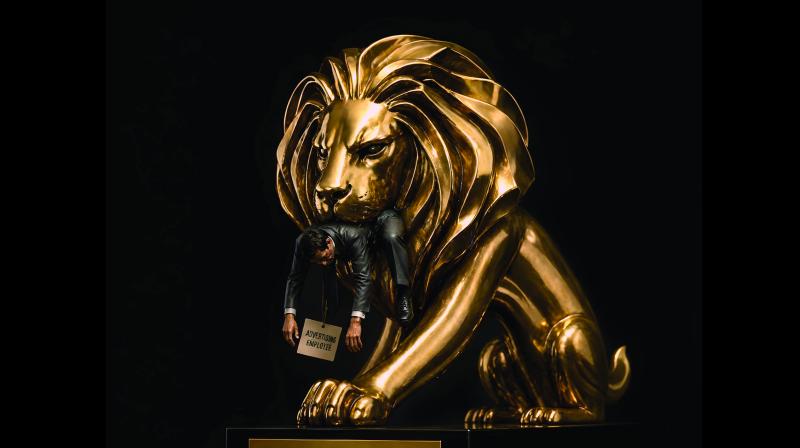
 The talent versus trophy paradox
The numbers for 2026 tell a stark story - one that’s marked by aggressive restructuring across agencies.
WPP cut 8.7% of its workforce in 2025 (~9,000 roles), with more expected this year. Post its IPG merger, Omnicom eliminated over 4,000 jobs in late 2025, with further cuts ongoing. Dentsu is axing 1,300 roles in 2026, part of a wider 3,400-job reduction initiated last year.
Across the board, layoffs are being framed as necessary resets in an AI-led, efficiency-first era.
And yet, even as agencies tighten their belts on talent, there’s little evidence of restraint or pullback where awards are concerned - from Cannes Lions and D&AD to regional shows like the Abbys and AdFest.
Entry volumes remain robust, case films are more sophisticated than ever, and global festival participation continues unabated. The contrast is stark and hard to miss -and harder to explain away.
Internally, the narrative has evolved. Agencies argue that awards are no longer a vanity play, but a strategic investment.
“At a minimum, the work should showcase either innovation or impact, ideally both,” says Narayan Devanathan, president and chief strategy officer, South Asia, dentsu, adding that participation today is far more selective and driven by ROI metrics like reputation lift, earned media, and new business inquiries.
But the math isn’t entirely straightforward.
“Let’s be clear, awards don’t magically give you pricing power,” says Anupama Ramaswamy, MD and chief creative officer, Havas Creative India. Instead, she frames them as a perception lever, one that determines “the kind of conversations we’re invited into” and the calibre of mandates an agency is considered for.
That long-term, intangible value is echoed by Mithila Saraf, CEO, Famous Innovations, who calls awards ‘social proof,’ particularly in global pitches where credibility needs to be established quickly.
Still, beneath the strategic rationale lies a more uncomfortable question: what does this signal internally?
As agencies celebrate creative excellence on global stages, employees are grappling with layoffs, restructuring, and an increasingly uncertain future. The optics can feel jarring - especially at junior and mid-levels, where cuts tend to run deepest.
Ramanuj Shastry, co-founder and director, Infectious, offers a pointed caution: “An unhealthy focus on awards will fill your agency with award-hounds who detest real work.” And ultimately, it is “the real work” that counts.
The contradiction runs deeper still.
Even as agencies speak of a ‘talent crunch,’ thousands continue to be let go, pointing less to a shortage of people and more to a mismatch between evolving business models and the kind of talent they demand.
Senthil Kumar, creative consultant, film director, and former CCO, VML, dismisses the talent crunch rhetoric. “If one is willing to lose one’s best talent and complain about a talent crunch, all is not well with the world out there.”
“AI is only an excuse; the survivors live in fear of their own exit and insulate themselves with the ordinary and the average. Extraordinary has left the building,” Kumar rues.
In a business built on ideas, reputation, and creative capital, awards remain one of the last visible signals of relevance. But if the industry continues to cut the very people who create that value, the equation begins to look increasingly fragile.
Is this strategic recalibration, or a growing imbalance between what the industry celebrates and what it sustains?
This article appears in the May issue of Manifest. To read the whole feature, purchase the issue by clicking here.