
 Subscribe

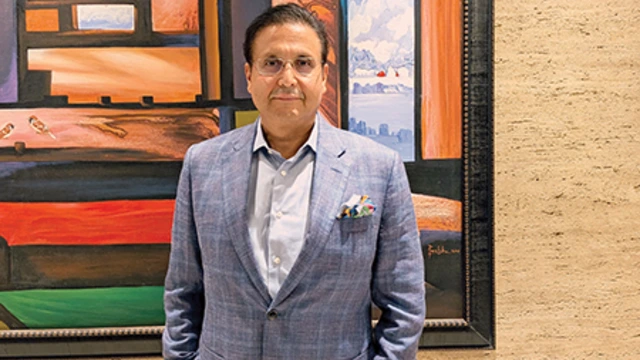
 Pooja Khemani
‘The ads that you skip on YouTube, I make those ads.’ This is how I describe my job whenever someone asks me what I do for a living. Maybe the self-deprecating approach behind my job description makes it easier for people to be honest around me. And it turned out that everyone I know either skips ads or has a YouTube Premium subscription (obviously, duh!)
Not me. I watch ads looking for stories from our everyday lives and, of course, to support my peers who fight long battles with clients and agencies before their work finally sees the light of day. But you know how we all watch those motivational reels on Instagram that tell us how to lead our lives perfectly only to end up doing exactly the opposite?
Well, I am guilty of skipping these ads myself these days. Go ahead, judge me. But hear me out once before you do that.
I grew up loving advertising for a lot of reasons. The ads were memorable (maybe we feel this way because there was less clutter.) The words like ‘Maan gaye, aapki paar ki nazar aur nirma super dono ko’ were running a race with nursery rhymes to make a space in my long-term memory. And before I write more, let’s be clear about something: this is not one of those write-ups where we talk about how things used to be good and how they are not anymore. It very easily could have taken that route. But after spending a little more than a decade in this field, I have a few observations.
What I love about media (not just advertising, but all mediums of communication in general) is that it has always reflected the state of mind of the country. The ‘angry young man’ era of the Hindi film industry had a lot to say about the helplessness of its people. The angry young man was the Robin Hood they aspired to have in their lives.
In the 80s, every middle-class family thought twice before making a purchase. If Nirma was doing the same job, did we really need to spend more on Surf? Every household had a scooter, and several people used it at different times. ‘Mileage kitna degi?’ was the question people would ask before buying an automobile, and advertising mirrored that insight. A common man would save up for an automobile, and there was a lot of celebration associated with the purchase. The buyer needed to know if the mileage justified the price. A lot of aerated drink commercials revolved around cricket celebrations because cricket was not a year-round affair (like it feels these days), and the celebrations were more emotional. So were our ads.
That brings me back to my theory: the advertising of eighties, the nineties and to some extent the decade that followed represented country’s people more authentically. It is essential for generations to look back at the advertising of a particular era and understand what the country was going through at that point in time. But, is our advertising today reflecting the state of mind of our society? Do we understand the consumers we are trying to impress?
The country that I see inside our camera screens and the one that I see outside are quite different. The aspirational world shown in advertising is, in reality, representative of just 1% of the country. Of course, there are brands that cater to tier two and tier three cities. But it is either one extreme or the other. The problems of the middle class, the reality of delayed purchases due to rapidly rising inflation - which channel should I turn on to see that? And why is it that tier two and three stories are so often surrounded by humour? And where are the women of today?
When it comes to representing women, we either have homemakers (there is nothing wrong or untrue about that) or working women who are shown receiving moral support from their husbands. But there are women who have stepped in to contribute because a single-income household is not enough to sustain a family these days. There are women who work and save up for their parents’ medical bills. Women who support their husbands when they have had to take a step back from their careers. And why aren’t more of our ads talking about postpartum experiences or the mental health issues that new mothers go through?
Today’s middle class sends their children to private schools, spends lakhs on annual school fees, and pays EMIs on their cars or homes. Yet today’s advertising chooses to focus predominately on lifestyle. Congratulations, people across the country have smartphones, and let’s choose to show that. But just because smartphones are affordable, and just because we have become a cluttered market like the US, it doesn’t mean that our purchasing power is like that of the US.
Aspiration was sold in the nineties, when liberalisation happened, and it worked for a reason. Brands like Cadbury had entered the country and consuming them was aspirational. But so many decades later, when every single household looks aspirational in our fictitious world, are we forgetting reality? News channels have already created a delusional world. The cinema of today is going through a phase. And I understand that advertising is not here do to that; it is here to sell products. But how do we sell to the people we refuse to acknowledge or understand?
I am sure people would point out that there have been ads made recently where the story began in a Jantar Mantar protest-kind of a setup. And Goel TMT’s ‘Band Baja Bitiya’ commercial mirrored the mindset of the society. But I am talking about the sheer volume of such ads. Not the ads that can be counted on our finger tips.
Shoojit Sircar once said that he spends most of his time in his hometown because that is where real stories are. We, the advertising folks - will we forget our real stories? Hoping against hope that there is one oddball in a brand’s marketing team who encourages more such stories. Also being optimistic about those creatives from the grassroots who light up a conference room in an ad agency. Is it too much to ask for a commercial to look less like a treatment note with a lot of GIFs in it?
PS: There is a high possibility that I have formed my opinion based on the advertising that appears on my feed and my mother’s TV, because I watch soap operas with her whenever I go home to visit her. Maybe the world of advertising I wish for does exist, and my algorithm has simply narrowed my world down to that of a superficial woman from a metro city who likes to shop whenever she is upset. If that is the case, then our maps of reality are shaped by our algorithms (duh!) - and that is the topic for another column.
The author is a Mumbai based director.