

 Subscribe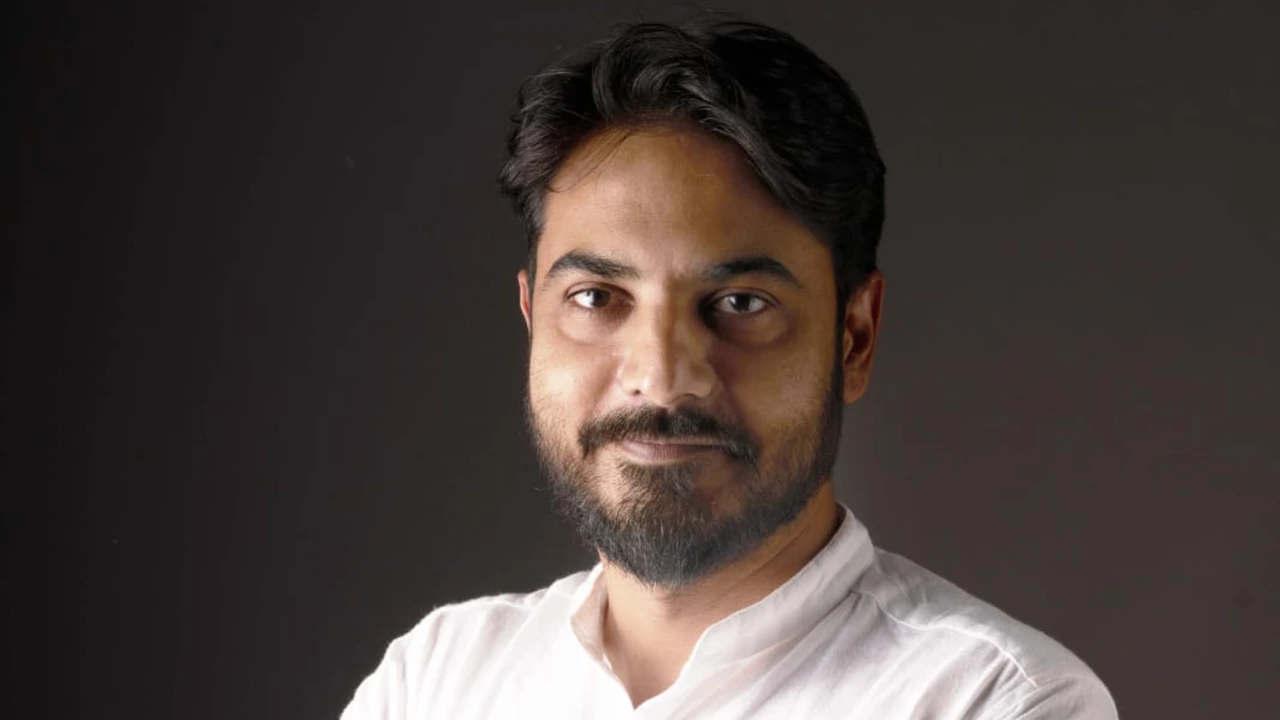
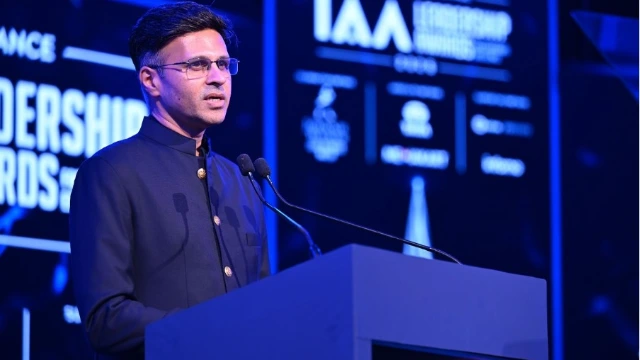
 Vaibhav Pandit
Long before world cinema claimed him, film director and screenwriter Satyajit Ray learned the disciplines of image, type, economy, and audience inside an advertising agency.
When we speak about Ray, we usually begin with Pather Panchali, the Apu Trilogy, Cannes, the Oscar, or his place among the great filmmakers of the twentieth century.
As an advertising person, I start somewhere else. At a desk in a British-run advertising agency in Calcutta.
In 1943, Ray joined DJ Keymer as a junior visualiser. He would spend roughly thirteen years in advertising before becoming a full-time filmmaker. Before that, he had studied economics and spent formative years at Santiniketan studying art. He was deeply interested in graphic design, book production, illustration and typography.
That detail changes the way I look at his cinema.
Advertising did not create Ray. That would be far too simplistic. But the agency was not simply a job he happened to do before films either. It was a laboratory.
An advertising visualiser has to solve a peculiar problem.
Where does the eye go first?
What can be removed?
How much can an image say before the copy begins?
What single detail makes an idea memorable?
Watch Ray's films through that lens, and something becomes visible.
His frames rarely over-explain. A glance, a pause, a prop or the arrangement of people in a room can do the work of a paragraph. His cinema could turn an ordinary human moment into compelling storytelling without artificially manufacturing drama around it.
We are often tempted to add another line, another visual device, another claim, another layer of explanation. Ray understood something every communicator eventually learns: communication is not necessarily about adding more information. Very often, it is about discovering the one detail that carries the meaning.
His parallel work with Signet Press is equally fascinating.
DK Gupta, his colleague at DJ Keymer, brought Ray in to design book jackets. Ray worked across illustration, lettering and cover design, bringing Indian motifs and calligraphic sensibilities into a distinctly modern graphic language.
Then came an assignment that, in retrospect, feels almost prophetic. Ray was asked to illustrate an abridged edition of Bibhutibhushan Bandyopadhyay's Pather Panchali. Through illustration, he began entering the world of a story he would later transform into his first film.
Think about that creative journey. A designer encounters a story through an illustration assignment. He reads it visually. Begins imagining its people, spaces and rhythms. Years later, the same material becomes cinema.
For me, this says something important about creative disciplines. They are rarely as separate as our industry structures make them appear.
There is another advertising connection that feels almost cinematic in retrospect.
In 1950, DJ Keymer sent Ray to London. During his stay, he watched close to a 100 films. Vittorio De Sica's Bicycle Thieves was particularly significant. Its use of real locations, ordinary environments and largely non-professional actors helped affirm Ray's belief that Pather Panchali could be made outside the conventions of the studio system.
An advertising assignment had, indirectly, helped unlock the filmmaker.
What fascinates me even more is that Ray never abandoned design once cinema arrived.
He designed film posters and title cards. He worked extensively with lettering. He created typefaces including Ray Roman, Ray Bizarre, Daphnis and Holiday Script. He illustrated, wrote, composed music and remained involved in almost every aspect of the worlds he created.
Long before 'multidisciplinary creative' became an industry expression, Ray simply was one. Typography wasn't decoration. Music wasn't background. A poster wasn't merely publicity. A title card wasn't housekeeping. Each was part of communication.
Each helped establish how the audience entered the story.
And then there is perhaps his greatest lesson for anyone in communication: people.
When the Academy honoured Ray in 1992, its citation referred not only to his mastery of motion pictures but also to his profound humanitarian outlook.
Ray observed people. Their contradictions. Their dignity. Their aspiration. Their awkwardness. Their vanity. Their silences. And that is where enduring communication begins too.
For me, Ray's advertising years reveal an important part of his creative architecture. He could think about a letterform and a human emotion with the same seriousness. About a book cover and a cinematic frame. About craft in its smallest detail and storytelling in its largest form.
And this is where my interest in Ray becomes personal. As a creative director, I continue to see myself as a student of his way of seeing.
His work reminds me to observe harder. To remove what isn't needed. To respect craft without allowing craft to overpower the idea. To never separate design from storytelling, or storytelling from people.
The teacher is still very much in the room.
The author is founder and creative director, ADbhoot.