

 Subscribe
 Tista Sen
The second Indian edition of Cannes Lions International Festival of Creativity's 'See It Be It Connects' organised by Indian Creative Women and Manifest, in partnership with Godrej Industries, Adfactors PR, First December Films, Kulfi Collective, and Chrome Pictures unfolded in Mumbai on 19 November.
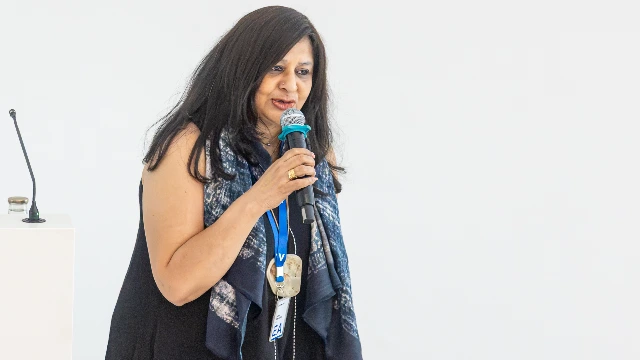
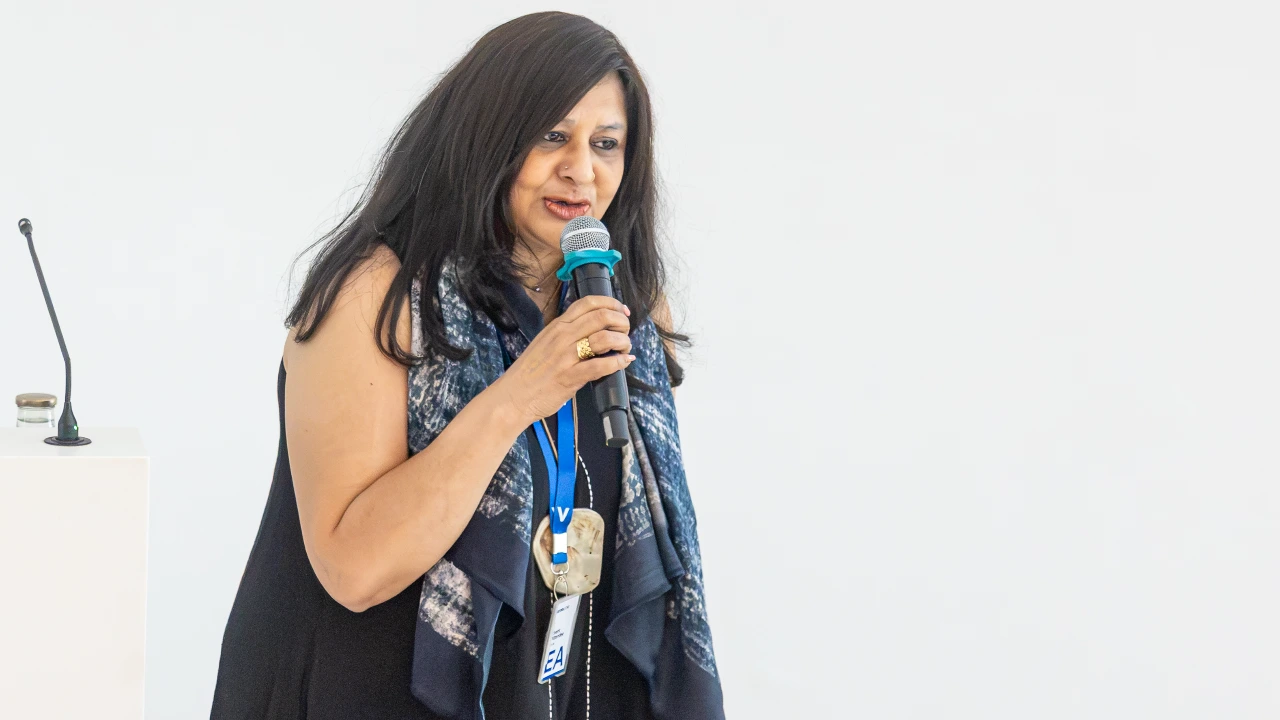
The day opened with a ‘Say It, Feel It’, talk by Tista Sen, founder, Tista Thinks.
Sen spoke about the realities of ambition, workplace relationships, leadership and the challenges women face in the advertising industry. Drawing from her professional experiences, she described what she called her ‘drama and truth bombs’, sharing a series of observations on navigating careers, dealing with expectations and finding one's place in the workplace.
She said that the advertising business was fundamentally about making people feel something. But behind the creative work and professional achievements, she acknowledged that ambition often came with its own challenges.
“Advertising is really about what I call ‘feel it’. And ambition can be quite lonely. When one is in positions such as creative director, CCO, CEO or any other leadership role, one must prepare for the fact that it can get a little lonely sometimes. People will definitely stumble and then get up. One might stumble again, but will get up again,” she said.
One of her central observations concerned money and professional compensation. Questioning whether appreciation from colleagues and clients was enough, Sen argued that being valued for one's work should also translate into adequate remuneration. “Don't fall for anybody who says, ‘But the clients love you, and you're so good with your team, and you're so supportive.’ Just get paid enough,” she asserted.
Sen also spoke about the realities of working independently, challenging the romanticised idea of being one's own boss. Recalling her decision to work on her own, she said she had initially imagined having the freedom to choose projects, refuse assignments and take holidays whenever she wanted. However, her experience offered a different perspective.
“A lot of us want to be our own bosses. It sounds romantic — doing our own thing, saying no and taking a vacation whenever we want. But the truth is, if you really do what you want, you're going to be unemployed. There will be days when you don't really love what you do, but it's okay because you're still getting paid for it, as opposed to being unemployed,” she noted.
Another theme she addressed was the pressure to be liked in professional environments. She acknowledged that professional environments can be difficult to navigate, with colleagues, teams and bosses not always being supportive.
“It's the need to be liked. You're going to meet people, teams and bosses who will stab you in the back. Trust me, you're not going to be liked by everyone. Because you will be to people what people deserve,” she said.
Sen also addressed the perception of women being too emotional in professional settings, recalling how she had been told during appraisals that she was ‘too emotional’, which she said often meant that she cried. She questioned why crying was treated as an issue, explaining that she would sometimes cry when she felt like quitting or going home, before returning to work.
Another issue she highlighted was the difficulty women often face in saying no. Referring to what she described as a tendency to please others, Sen urged women to practise being assertive and setting boundaries, even when they were technically available to take on additional work.
“It's just so hard to say no. Sometimes say no for the sake of it, even if you can do it. I think we need to practise it. Next time you are available, and you have time to work on Sunday, if your boss says, ‘Can you?’ just say no. It's just good practice,” she said.
On the subject of self-worth, Sen reiterated that not everyone would like or approve of you, and that professional life should not become a popularity contest. She stressed the importance of developing one's own opinion of oneself rather than depending on how others perceive or evaluate you.
“We're not here to win an election or a popularity contest. But what you think of yourself is really important. It's okay to think you're great. So what if the world doesn't? You need to have an opinion of yourself,” she shared.
Towards the end of her address, Sen questioned the gender imbalance in leadership positions within the advertising industry. Recalling a song she and her friends once enthusiastically danced to, she said that revisiting it while preparing her talk made her reconsider what they had been celebrating. She questioned the continued dominance of men in senior creative and leadership roles, as well as their representation across teams and client organisations.
“Do we need another male creative director? Do we need another male CCO, CEO? And do we really need more male members, clients in your team? But why were we shrieking hysterically and shouting ‘Hallelujah’? It makes no sense,” she said.
Jack Daniel's Merchandise was the 'Experience Partner' for the event.
Catch updates from See It Be It Connects through the week on Manifest.