
 Subscribe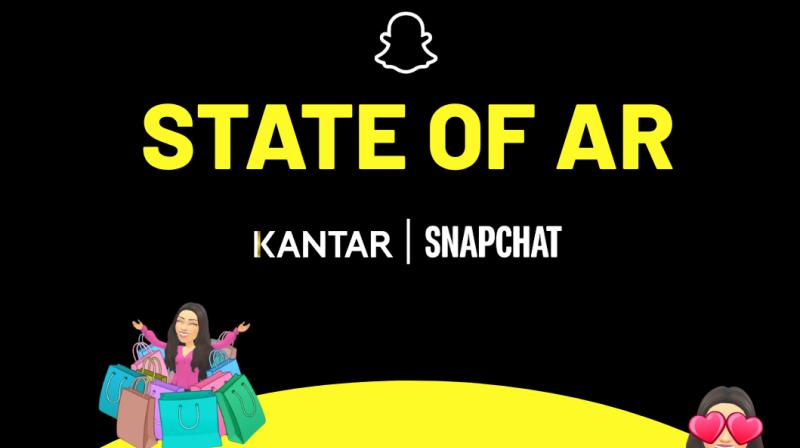
 3 in 5 Gen Z users say AR keeps their attention longer than regular posts cites the report.
At a time when consumers are increasingly tuning out traditional advertising due to clutter and passive engagement, a new study by Snap Inc. and Kantar India points to a clear shift in how brands can break through.
The ‘State of AR in India’ report highlights the growing role of augmented reality (AR) as a high-impact advertising format. With 92% of Indian consumers believing AR will transform how they shop, learn, or connect online, the findings signal a move toward more immersive and participative brand experiences.
What this really means is simple: AR is changing how attention is earned. Instead of passive scrolling, users are actively engaging with content, and that shift is translating into stronger outcomes for brands.
The study finds that AR lenses are a key driver of attention, delivering more than twice the effectiveness and three times the efficiency in capturing voluntary, active attention compared to other formats. Among Gen Z users, three in five say AR keeps their attention longer than regular posts, even when content is skippable.
That attention is not just fleeting. It’s feeding directly into business impact. Two in three Gen Z users say AR helps them decide whether to try or buy a product, while also improving their understanding of it. This positions AR as a tool that goes beyond awareness and plays a role across the purchase journey.
In India, AR adoption is also being shaped by cultural context. Usage tends to spike around festivals and local moments, giving brands timely and relevant opportunities to connect with audiences in ways that feel native rather than intrusive.
From a platform perspective, India is emerging as one of the most dynamic AR markets globally. The format is no longer in an experimental phase. It is delivering measurable results, showing that immersive experiences can drive both engagement and conversion.
As consumer behaviour continues to evolve, AR is becoming a core part of digital engagement. For brands, the opportunity lies in using immersive formats not just to capture attention, but to build stronger connections and drive tangible outcomes.
Highlights of the report:
- 92% of Indian consumers believe AR will transform how they shop, learn, or connect online
- AR lenses deliver over 2X higher effectiveness and 3X greater efficiency in capturing attention
- 3 in 5 Gen Z users say AR keeps their attention longer than regular posts
- 2 in 3 Gen Z say AR influences their decision to try or buy a product
- Nearly 3 in 5 Gen Z prefer posting AR content over static formats
- Nearly 2 in 3 Gen Z say AR makes brand experiences more immersive and engaging
- Nearly 2 in 3 Gen Z find AR content more entertaining and shareable
- Nearly 3 in 5 Gen Z say AR helps them express their personality and create unique content
Soumya Mohanty, managing director and chief client officer, South Asia, Insights Division, Kantar, said, “The data shows that AR is reshaping consumer decision-making in measurable ways. It enhances understanding, builds believability, and increases intent, three critical drivers of conversion. For marketers, this represents a significant opportunity to rethink how immersive formats can drive effectiveness across the purchase journey, not just awareness.”
Neha Jolly Sawhney, head of ad revenue, India, Snap Inc., added, “India is one of the most dynamic AR markets globally, and what we’re seeing is that AR is moving beyond experimentation and starting to drive real results. When two in three Gen Z consumers say AR helps them decide whether to buy, it signals that immersive experiences are no longer upper-funnel engagement tools; they are influencing real business outcomes. As a camera-first platform, we are excited to continue building AR innovation that enables brands to move from attention to action.”