

 Subscribe
 Roma Singhal
Why the strongest leaders of this moment are the quiet ones.
Somewhere between the war rooms and boardrooms of 2026, an old Chinese text is quietly making a comeback. Lao Tzu wrote that the best leader is one whose people barely know they are being led - that when the work is done, they say, "we did this ourselves." It’s a strange idea for a year of strongman politics and command-and-control headlines, but perhaps exactly the corrective leadership needs.
This year’s leadership research keeps arriving at a conclusion the Tao Te Ching reached twenty-five centuries ago: control is brittle, and trust is not. Studies on 2026 leadership describe organisations flattening, moving from top-down hierarchy toward shared ownership. Emotional intelligence, once dismissed as a soft skill, is now baseline - the entry fee for leading distributed, AI-augmented teams where trust, not authority, moves people.
Water does not force its way through rock; it wears it down by yielding, by finding the path of least resistance.
The leaders thriving in 2026 are described the same way: steady rather than loud, curious rather than certain, quick to adapt when conditions shift. They treat AI as a partner rather than a threat, and people as whole humans rather than resources to extract from.
Ray Grigg’s Tao of Relationships, published alongside Heider’s Tao of Leadership, offers a related insight that scales just as well to organisations as to partnerships. Balance, Grigg argues, is not one energy defeating another; it is push and pull, hardness and softness, held in motion without either swallowing the other. A team run purely on directive force eventually snaps. A team run purely on consensus eventually drifts. The healthiest ones move between decisiveness and receptivity as the moment calls for it - and that capacity to hold both is itself a leadership skill, not a compromise between two lesser ones.
That kind of balance is also, not coincidentally, what opens the door wider. Women currently hold just over thirty percent of leadership roles worldwide, and the climb gets steeper at every rung - close to balanced at entry level, narrow by the C-suite. Progress has slowed, not accelerated, over the past two years. Yet companies sustaining gender-balanced leadership report stronger revenue and workforce growth, and the regions with the strongest board diversity, much of Europe among them, got there through sustained, deliberate commitment rather than accident. Human contoured skills - trust, empathy, relational intelligence - are now ranked as core leadership competencies, not soft extras.
None of this is really about gender or background for its own sake. It is about what kind of strength gets rewarded. A culture built only on force selects for people comfortable wielding force. A culture built on balance, on holding push and pull together, makes room for a wider range of people to lead as themselves, rather than as imitations of a model never built with them in mind.
The Tao’s oldest leadership lesson may be its most radical one for today: the strongest leaders are not the ones who dominate the room, but the ones who make room for everyone else in it. In a year of loud men and louder headlines, that is worth remembering.
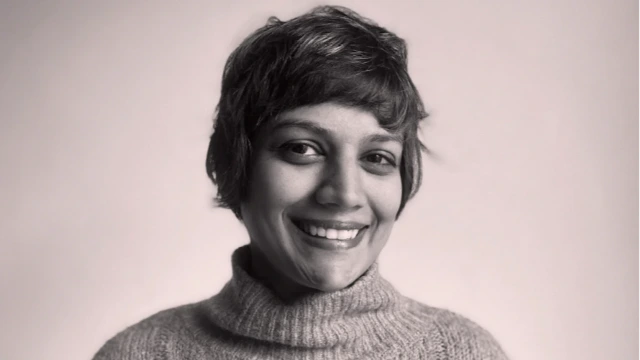
Roma Singhal, is founder and strategy partner, Brandself, a strategy studio based in Sydney.