
 Subscribe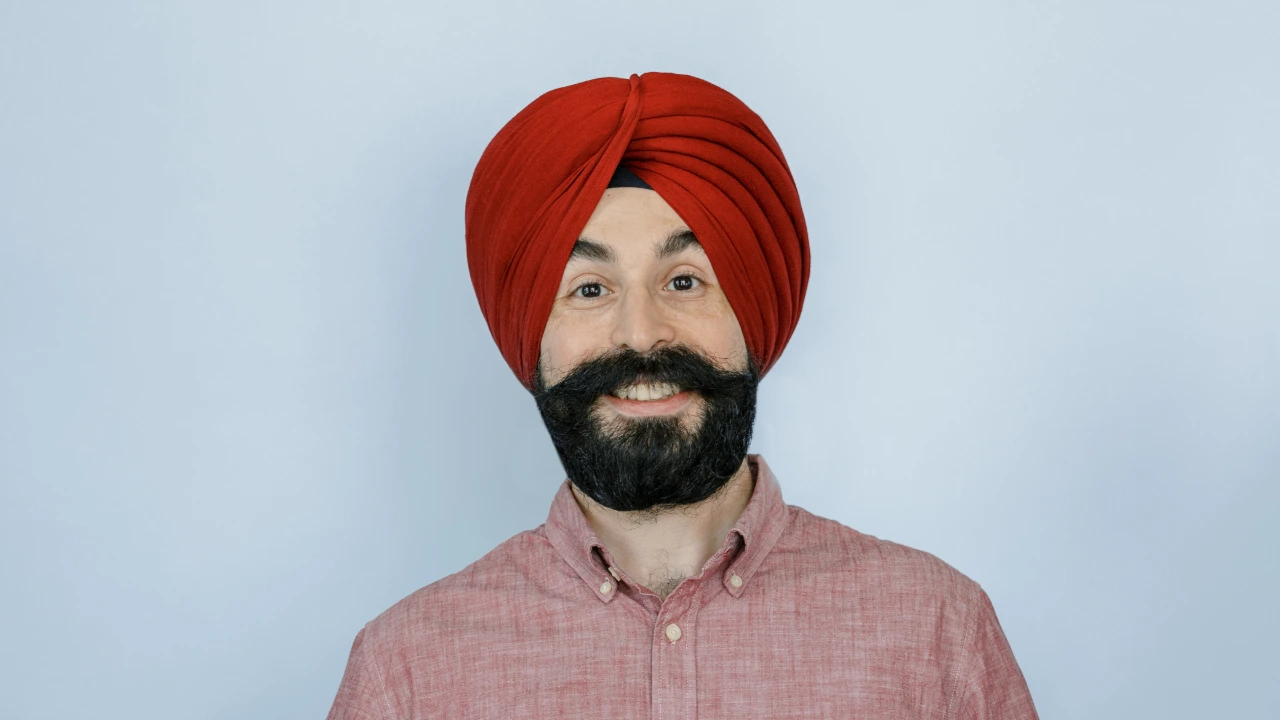
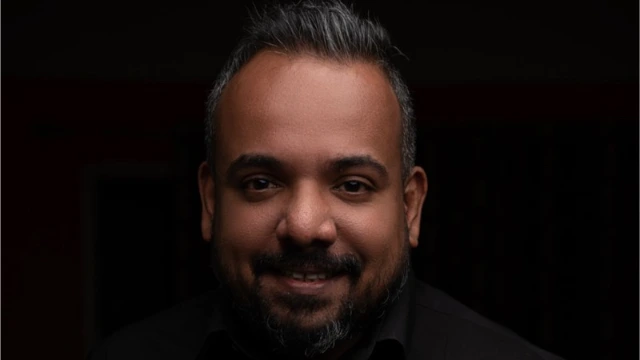
 Karandeep Singh Kapany
Duolingo has rolled out a campaign, 'Ullu Da Pattha' , marking the launch of its new ‘Learn English from Punjabi’ course.
Conceptualised by Talented, the campaign takes the familiar phrase and reinterprets it through the lens of Duolingo's owl mascot, Duo, celebrating Duolingo learners as the students of the owl.
We caught up with Karandeep Singh Kapany, regional marketing director, India and South East Asia, Duolingo, to discuss the creative insight behind the three-film campaign, the importance of hyperlocalisation in a culturally diverse market like India, and more.
Edited excerpts:
How did the team arrive at the idea of turning a phrase that is traditionally used as an insult or joke into a badge of pride?
Going back to our childhood, we’ve all read these fairy tales and stories, a lot of them imported from the West; where the owl is always seen as a symbol of wisdom and intelligence - the wise owl. But in India, and a lot of Southeast Asia, we don't have a wise owl. In fact, we always look at the owl as a creature who's up the entire night and sleeps in the daytime. We have always used it as a playful taunt. It's almost like a son or a daughter of an owl - ‘Ullu da pattha’.
We were thinking that this is a core cultural insight, which is so local to India, and we were trying to figure out a way to make use of this. We have had multiple launches in the past, including Tamil, Telugu and Bengali. But we never felt that something like this would fit.
When we were launching Punjabi, and because Punjabis are known for their sense of humour and larger-than-life lifestyle, this was an idea which just somehow clicked and brought a smile to all of us. It was an idea where we thought, let's just turn this taunt around into almost like a badge of pride, and say that it's great to be a ‘Ullu da Pattha’ because that's how you learn.
The phrase is something every Punjabi would recognise, but they do not expect to hear it in this format. There's a lot of disruption there. You recognise this phrase, but you have always heard it in a different manner, and suddenly you're hearing it in a different way. From what we've done on social media, we found out that when people are presented with something ordinary in an extraordinary way, they stop doing whatever they're doing and they pay attention. That's something that we were looking at doing.
The other part is that it is very aligned with our personality. Learning a language is often very intimidating and confusing. A lot of people just give up. We have seen this often time where just the very idea of learning something new, generally, but learning a new language specifically, can be very intimidating for them. Duolingo is all about fun. Our core principle is that you should make language learning fun and accessible to everybody. Fun is a huge part of the way we teach language. It's not very academic or theoretical, but you just end up learning a lot in a fun way. That's why it fits in really well to use this as a concept for us.
The campaign films are anchored in highly specific local situations. How did the creative team ensure these backdrops felt authentically immersive rather than tokenistic?
It's a testament to this country and its diversity. When we did the Bengali or Tamil Nadu campaign, it was very localised to that culture. You cannot play one size fits all across these different markets. For us today, we go about such conversations and campaigns by being authentic. The way we do that is to select people who have a background from that particular area. For example, the films in this campaign are directed by Anand Sharma, who is a Punjabi himself. A large part of the idea or the insight came from Talented’s ‘Punjab division’, as we call them. Being a Punjabi myself, it was one of the easier ones for me to vet and know what was perfect or over the top. Generally, when it comes to some of these campaigns in the past, what we've seen is that working with people from that particular state or city, or having that kind of authentic conversation, is critical. We are very mindful of the authentic work that we do, which is vetted by people from the particular region and culture. Managing India is like managing Europe; every state is like its own country. One has to be very careful about not having one size fits all or one solution for the entire country. It makes the work tougher, but it also makes it very rewarding and interesting.
The campaign is rolling out globally across key Punjabi-speaking hubs like Canada, the US, the UK, and Australia alongside India. How are you adapting the messaging for Punjabi audiences abroad versus learners in India, particularly in Punjab?
We are not really changing the messaging at all for people outside of India. The core message and the core audience for this largely remains within India. Essentially what we are doing is that while the focus is India, the idea is that even for people living outside of India, the core messaging still stays the same. For instance, a lot of people who have just migrated to a new country might have issues in learning or picking up the language, or even older parents or grandparents who are living with you and are struggling. This is something you see quite often that the kids are only speaking in English, and their grandparents are struggling to talk to them. Those are the kind of challenges that learning a new language can hopefully overcome. The messaging is very simple: you can learn English from Punjabi. But what we are trying to do is to make sure that the awareness of that message goes across, and people who feel that they can get some value out of this are able to take some value.
Bringing such a culturally specific idea to life can come with its own challenges. How did Duolingo and Talented work together to navigate any hurdles during the creative and production process?
The biggest challenge was shooting the Jago sequence. It was a lot of fun. Making sure that we managed to catch the largeness, grandness and richness of a Punjabi wedding - the cultural part of it because we don’t have a budget of a Karan Johar film. Trying to get some of those nuances right was important. In one of the films, we are shooting in a cow shack next to cows, and when you're shooting next to any animal is way tougher.
We've been working together with the team at Talented for a lot of projects; they have been on retainer for a while. We have a very good relationship when it comes to figuring things out; even if there is a hurdle, what is the best way to creatively overcome? What are some of the ways in which we can fix the solution? There's a huge amount of trust between us. Say, for instance, even on the day of the shoot, if there is something which cannot be done, we trust them to make the right judgment and the right call. I think that's the basis of making sure that a lot of these hurdles that you see are overcome. I would say the largeness of the Jago was something that was giving all of us nightmares.
Beyond the three films, the campaign will also see collaborations with Punjabi artists and digital creators. What role do you see this creator ecosystem playing in the campaign, and how are you measuring its impact?
The biggest advantage that some of the creators bring to these campaigns is their different take on it. They have their own audiences. They know how to talk to their audiences. Nobody knows that better than them. They know their audiences' pain points. They know how their audiences react, what works for them, what doesn't work for them. They are very emotionally well-connected with the audiences.
What we generally do is that when we work with these creators, we tell them about our offering and ask them if there is a way in which they can personally talk to their audience about this. It’s the easiest thing in the world for us to give them one script and say read this out to your audience. While this is the easiest and we can do this at scale, the messaging doesn't land.
When we work with the creators, we ask them if there is a way to authentically tie the messaging to their audience? And if there is, we explore that. So, their connection is one thing which they can get, which we can't as a brand. The other is the audience, like, distribution essentially. That's something that they can give us each. Again, as, if you look at a social media, for example, right, it's all posted in English, a little bit of Hinglish. So, it automatically limits our reach to maybe 10% of India.
When you put up something which is on social media, automatically a large part of the non-English crowd, for whom basically this messaging is most important, is left-out. So, working with creators help us reach out to them. The idea is to reach out to where these people are, reach out to them in a language that they still understand, in a message format they understand. Creators do an unbelievable job for us to be able to reach our audiences. They take our message and bring in their own creativity and deliver it to the audience.
How do you adapt a global mascot to fit seamlessly into hyper-local cultural tropes without losing its distinct digital identity?
We have people in France, Germany, Brazil, Mexico, China, and many other countries. Everybody’s Duo is kind of localised. They do different things in different ways. For example, the German Duo is called the party Duo or the rave Duo. The French Duo is somebody who will go to very nice architectural buildings and then do the most unhinged thing that you can ever expect. The Japanese Duo is in another league of its own. It’s very inspired by some of the Japanese culture.
Every country’s got its own take on it. This is what we realised is basically our superpower, because if there is ever a global campaign which does not have this local taste, people will just not connect to it. Going local and going hyperlocal is extremely important. Even for Punjabi, we could have essentially taken the same model for all our language launches and then simply copied and pasted. What we did for Bengali could have been done for Telugu, could have been done for Tamil, could have been done for Punjabi. But each of them is extremely different from the other. We hope to do something which connects to the local people in a way that they understand it, or in a language that they understand, in a way that seems authentic. For that, you cannot just have a national message or a global message.