

 Subscribe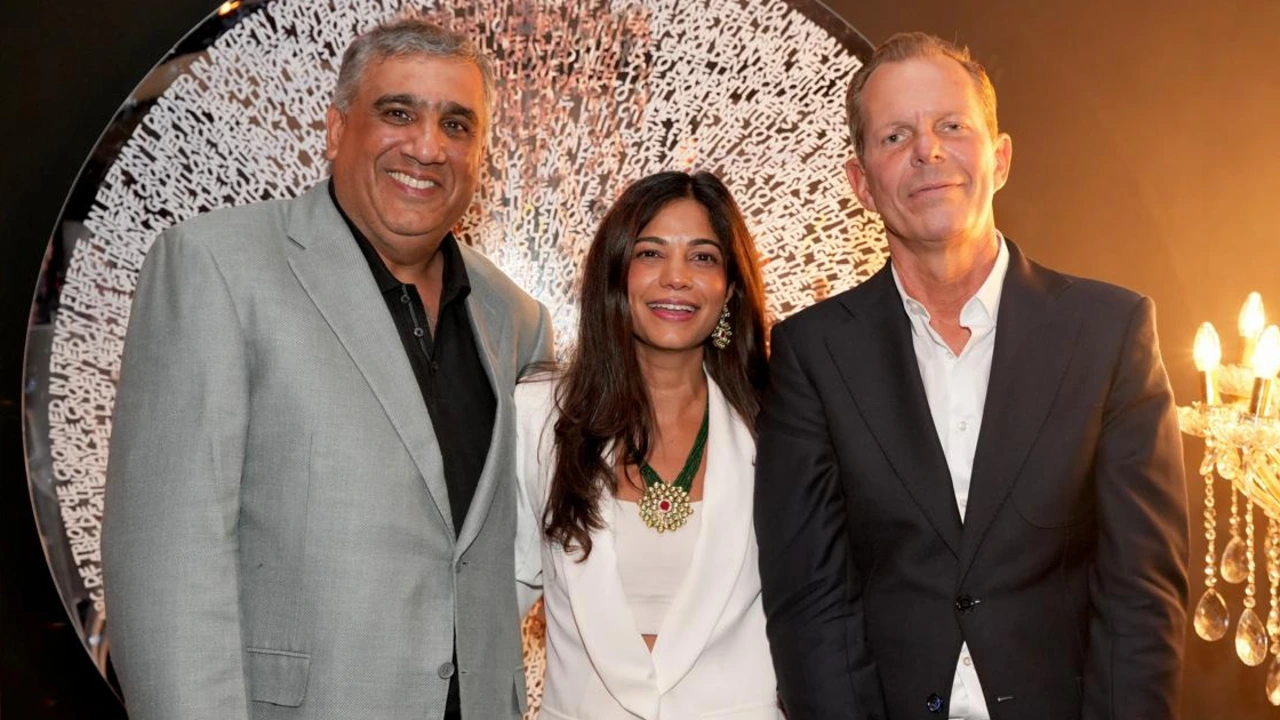
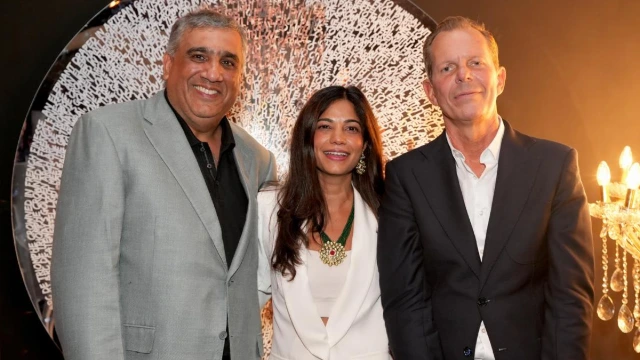
 From left: Sameer Tobaccowala, Farah Lauren Khan, and Christophe Pinguet
As global luxury houses face shifting dynamics in China and the Middle East, India has emerged as an alternate epicentre attracting the world's most storied brands. Against this backdrop, Shortcut, the French experiential agency celebrating 30 years of global craft, and Shobiz, the Indian experiential agency with over four decades of legacy, have joined forces to launch Shortcut Shobiz. Operating under Havas India, the entity aims to fuse French know-how with Indian cultural intelligence.
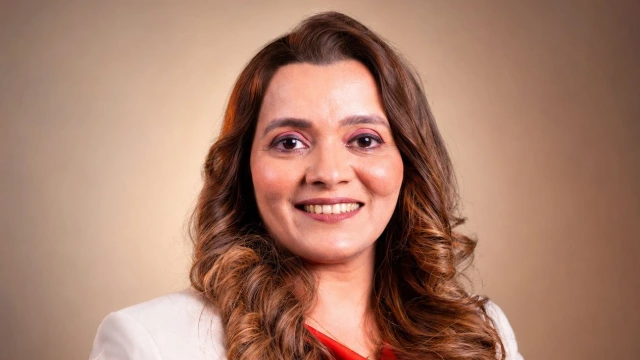
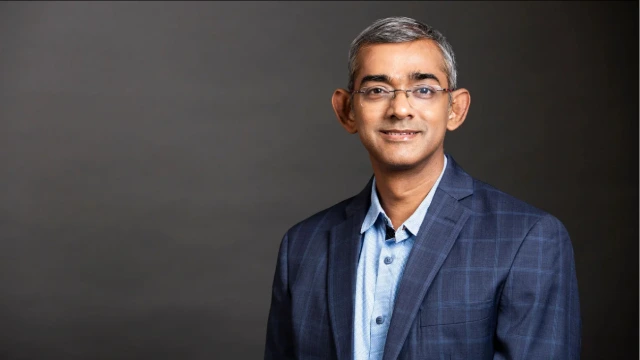
Ahead of the official rollout on 9 September, Christophe Pinguet, co-founder and co-president, Shortcut, Sameer Tobaccowala, CEO, Shobiz, and Farah Lauren Khan, who steps in to lead Shortcut Shobiz in India, sat down with Manifest for a candid conversation. They dismantled old industry stereotypes, debated the shift from pure spectacle to strategic content, and laid out their vision for elevating Indian craftsmanship on the global stage.
The providential convergence
For Pinguet, entering the Indian market was an organic evolution driven by client demand and regional energy.
"The real positioning of Shortcuts in France is to work everywhere in the world. Linked to big French groups like L'Oréal, LVMH, and Kering, these brands had goals in the world: success and growth," Pinguet stated.
He stressed that the alliance is not merely a pipeline for European brands to enter India, but a two-way exchange.
"Our clients are very interested, but we are not looking at our partnership only to treat French or international brands here. We also want to export Indian companies outside. We have two different sensibilities, but together they make a beautiful story for India," he said.
Reflecting on how the partnership took shape over two years, Pinguet said, "One may see it as opportunism, but I see it as providential. Sameer and Farah are two people one dreams of having in one’s team. We also have Havas India overseeing this, looking at how we can transform this company and become desirable to clients. So I think it's the right moment," he said.
For Tobaccowala, the time spent to build Shortcut Shobiz methodically was non-negotiable, noting that the luxury, lifestyle, and wellness verticals demand deliberate focus rather than rapid expansion.
"I don't think there's a gap in the Indian market that drove this, but the luxury, lifestyle, beauty, and wellness space is becoming a very important vertical. Shobiz is 44 years old, and every time we build a vertical, we spend time to get it right. We could have hired a few people and started, but Christophe and I have been speaking for two years. We didn't want to jump in; we had to get the connection right on how to make it one agency where everybody works together," Tobaccowala explained.
He added that legacy brings responsibility: "Shortcut is celebrating 30 years and we've been here for over four decades. Our reputation is at stake. To get that right, we took the time, but we are ready," he said.
Navigating India
On whether India’s experiential marketing market has matured significantly as compared to global standards, Tobaccowala said, “The Indian events and experience space is right up there in the global market. Today, events that happen over here are equally fabulous and are nothing less than what's out there. But the learning is always there, and the learning is on both sides.”
Reflecting on what global brands most often get wrong about the Indian market, Khan provided perspective on the local cultural nuances or behaviours that global luxury brands need to understand when creating experiences in the country.
"Global brands launching for the first time are often clear about keeping the brand experience sacrosanct, which local audiences appreciate. But in the last seven to eight years, brands are pivoting. For instance, Cartier wants to do an event for Diwali, but executed as 'What would a Cartier Diwali look like?' So one sits carefully on that cusp of acknowledging local nuances without taking away from the global brand," Khan explained.
Addressing cultural sensitivities that global luxury brands need to understand when creating experiences in India, Khan noted that brands today are far more observant.
"That question would have been answered very differently maybe 10 years ago. But sitting here today, I think that by necessity, everybody is fairly clued in. Today it takes one post or tweet for everything to blow up in one’s face,” she remarked.
“India specifically as a nation, is very layered, so there's much more for people to learn or be aware of when they're here,” she noted, while emphasising that there is not so much of a gap in the expectation and the delivery today. “Eventually, all of it is keyed to one’s audience. Our audience is well-read, well-informed and on top of global trends, so brands are also paying attention.”
She, however, pointed out that India is not yet where it could be in terms of the experiential market because ‘we are still a bit cautious’.
She said, “We are mostly seeing experiences that are a bit more ‘templatised’ than not. But the change is very imminent, and the hope is that as we keep going, it only obviously gets better.”
Then again, she added, that's where the agency comes into play. “As an agency, we consult them, advise them, hold their hands, do all of their on-ground research so they feel confident and secure in what that eventual plan is," Khan stated.
Contrast and convergence in partnership
Pinguet highlighted their underlying operational philosophy. "We have two sensibilities: in creation and in production. Farah invented a concept that we agreed with immediately: contrast and convergence. Contrast gives one a lot of creativity, and convergence is what one has to deliver at the right time, the right price, with a good strategy. This idea of contrast and convergence is the perfect build-up," Pinguet shared.
Underlining the nature of the venture, he admitted: "I would never do this if I didn't have the right partner. I need to have the right partner so we can engage our audiences and make our clients happy." He added, “We are under the umbrella of Havas, but they let agencies be who they are at the core. ,I never felt the constraints of the group. They will still give the opportunity to be yourself, but it also makes your intellect the frame.
For Tobaccowala, Shortcut’s three-decade legacy provides crucial operational insights where execution matters most.
"Shortcut understands the nuances of the luxury sector - the detailing in design, strategy, and execution. For us to learn those nuances from them is an experience we wouldn't get anywhere else.”
“At the end of it,” he said, “an event is an hour or two hours. We may work for months behind the scenes. But, as my father used to say, at 6 p.m. when the lights go down, one either gets it right or one gets it wrong. There is no in-between in live," Tobaccowala stressed.
Pinguet framed events as digital content engines, rather than as isolated moments.
"We have to redefine what an event is. An event isn't just inviting someone to a beautiful launch. It's an experience, a memory, and then it's an amplification too. An event has to be like a brand content factory so invited influencers, VICs (very important clients), or media can create their own content after," he explained.
He differentiated high-end experiences from superficial social posts: “It's very important to understand what one does with the event after. One must reach audiences with the right tone, not a 'Dubai-style' influencer model lacking content quality," Pinguet remarked. Today clients need to know the strategy, the creativity, and also what’s the growth they can get from the event, among other aspects, he added.
The conversation veered to how, in recent years, the agency ecosystem is increasingly blurring the lines between advertising, entertainment, content, technology and live experiences. Where does the trio see experiential sitting in the new marketing mix over the coming years?
Tobaccowala believes that experiential marketing has shifted to a core strategic pillar.
"Events are a serious business tool now—no more a tamasha," he stated.
"Events and experiences have become an important thought process in the marketing mix. When I started 30 years ago, an event was an afterthought. Today, marketers put experiences right up there alongside ATL, digital, and PR. Keeping people involved with your brand for two to four hours is gaining immense importance. Events are a serious business tool now—no more a tamasha," he said.
Pinguet reinforced this structural shift: "Sometimes we build an event strategy, and the client decides to cancel their planned advertising campaign because the event's aura and content will be stronger for their audience. It is not a toy anymore but a serious business tool," he added.
Agility, sustainability and the road ahead
On the long-term vision for Shortcut Shobiz in India, Khan underscored mutual growth.
“We've realised that between the teams there's a lot of synergy - a lot of shared vision and common goals in what we would like to achieve. We, of course, want to bring global clients into the country, but we would also love giving local brands an international stage. India is solidly on the map, and it's important for us to show on a global stage what we are capable of, and that's where this collaboration hopefully will bridge a gap," Khan affirmed.
"One needs to have the strength of a group, the strength of two companies that can work together, but stay humble, stay at the disposal of your clients, and at the disposal of what you need to deliver," added Pinguet.
Critiquing the current business model of major agencies worldwide, which he likened to ‘industries’ due to their concentration of manpower, he opined, “When it becomes a real big industry for the luxury and lifestyle market, then it doesn't work so well. One needs to be subtle.”
He likened Shortcut's structure to high-end luxury houses: "We want to be a 'little worldwide agency' with global know-how, but an intimate relationship with clients. We don’t want to become an industry; we want to be a content factory, an atelier, like the great houses of luxury."
The leadership trio agreed that even within a global network like Havas, experiential agencies must stay agile and human-centric.
“We can never get up and say, ‘hey, this is how we did this last year,’ because technology and formats change rapidly. If we stop innovating, we'd be dead and out," Tobaccowala asserted.
“The event and experiential world needs to always be in a ‘startup mode'," he signed off.