

 Subscribe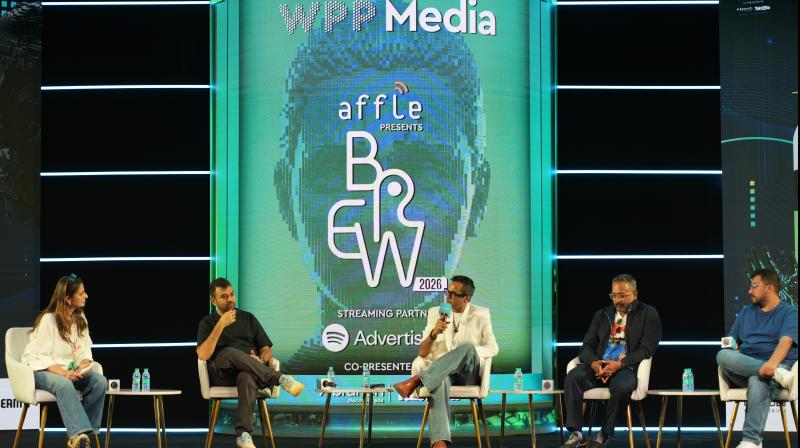
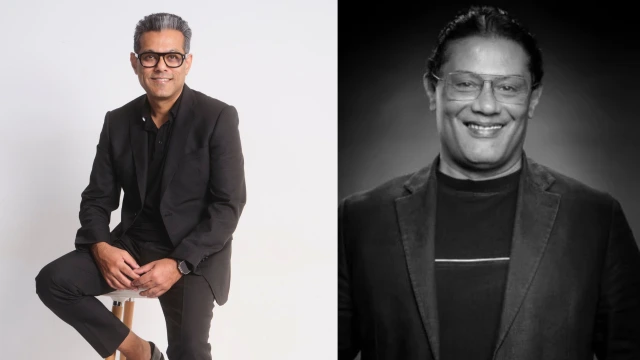
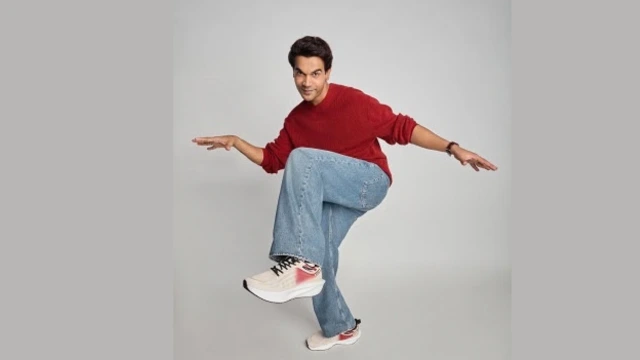
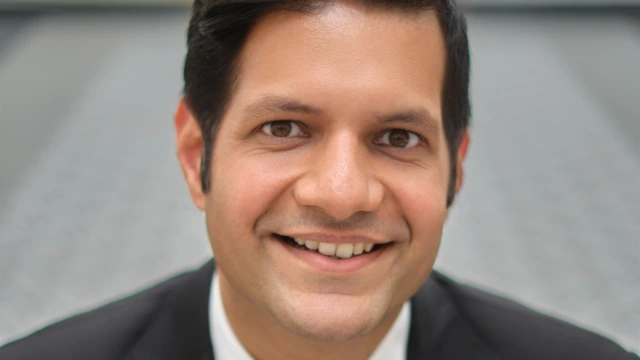
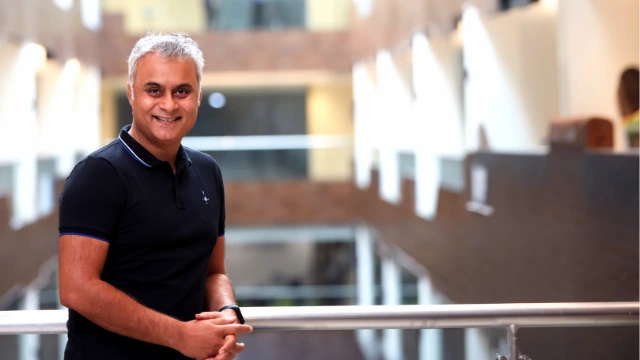
 L to R: Ruchi Mathur, Ritam Bhatnagar, Laksh Maheshwari, Arjun Kolady and Anmol Kukreja.
At Brew 2026, hosted by WPP Media India, a panel discussion focused on the growing importance of experiential marketing and community-led fandom in shaping modern consumer engagement.
The panel featured Ritam Bhatnagar, founder, IFP; Laksh Maheshwari, storytelling artist; Arjun Kolady, head - sales, Spotify India; and Anmol Kukreja, founder, Skillbox. The speakers unpacked how fandoms are evolving, why niche communities are driving stronger engagement, and how live experiences are increasingly becoming extensions of identity and culture.
The session was moderated by Ruchi Mathur, cluster lead - North, WPP Media.
Set against the summit’s larger theme, ‘Brewing Disruption: Where Disruption Fuels Creativity’, the panel explored how audiences today are seeking immersive, participative experiences rather than passive entertainment, and why brands need to move beyond traditional sponsorship metrics to become part of culture itself.
The conversation opened with the panellists reflecting on experiences that stayed with them personally and emotionally.
Bhatnagar spoke about how intimate experiences often leave a deeper and longer-lasting impact than scale-heavy spectacles.
“The way I looked up to experiences which were large crowds, hundreds and thousands of people, versus something which is more niche, more special, and stays with you for a much longer time, is what I kind of took across,” he said.
While acknowledging the scale and energy of massive events like Coldplay concerts, he added that both intimate and large-format experiences create emotional memories that audiences carry forward long after the event ends.
Maheshwari pointed to participation as the defining factor behind memorable experiences. “All those events where the audience becomes part of it, where audiences can participate in one way or the other,” he voiced.
Using the example of musician Jacob Collier’s concerts, he explained how audiences are transformed into collaborators during performances. “He makes every single audience member standing there become a musical instrument. You can give the metronome, the beat, the clap. That experience is something very unique," Maheshwari shared.
Kolady recalled a recent qawwali (sufi devotional music) evening at Mumbai’s Royal Opera House as one of the most striking live experiences he had attended.
“It was amazing to see a really old art form interpreted in a way that was connecting with young audiences,” he said, adding that performers across generations contributed to making the format feel contemporary and immersive.
Kukreja echoed the sentiment, saying the most memorable events are the ones where fans stop behaving like spectators and begin feeling ownership over the experience itself.
“When fans become participants, and when you get that feeling that ‘I was there’, that emotional ownership makes the event memorable,” he said.
Referring to performances by artists like Seedhe Maut and Hanumankind, Kukreja said audiences are now willing to invest emotionally and physically into fandom-driven experiences. He shared, “People were standing packed across venues, singing every track back while the artists performed. That emotional ownership is what people remember.”
Storytelling, fandom and emotional connection
As the discussion shifted towards audience engagement, Maheshwari argued that connection is built less through spectacle and more through honesty embedded within storytelling.
“When you are telling a story, there is decoration and beautification, but there is also truth hidden in it. That is something people relate to,” he said.
According to Maheshwari, audiences may enjoy entertainment, but they ultimately remember the emotional truth behind a story. “If the message is clear and delivered well, people connect with it much more than somebody just coming out, performing and leaving," expressed Maheshwari.
While music discovery online may be free and endless, Kukreja believes the real indicator of fandom is whether audiences are willing to leave their homes, travel and buy tickets to attend a live event. “If somebody travels thousands of miles to watch your show, that is the fandom you have built," he remarked.
Kolady expanded on how Spotify views fandom not as isolated moments but as long-term cultural ecosystems. Referring to hip-hop initiatives like Spotify’s Rap 91, he explained that the platform does not think in terms of standalone events. “You have to think of it as a programme,” he said.
“The playlist exists, the live event exists, artist engagement exists, and platforming new talent exists. It’s a journey," Kolady added. He also spoke about India’s opportunity to export music cultures globally in the same way Korea exported K-pop.
“Given the richness and diversity of music in our country, what are the fences that we can create to make global phenomena out of here?” Kolady asked.
Leveraging community-driven events
Bhatnagar explained how IFP has built its festival ecosystem around participation long before the physical event begins. “The festival happens in two parts. First, people create content, and then they come down to Bombay (Mumbai) to showcase it,” he said.
According to Bhatnagar, community-driven events create a stronger emotional purpose because attendees arrive already invested in the ecosystem. “The engagement starts three months before. The event becomes like a graduation ceremony," Bhatnagar added.
Bhatnagar also argued that communities eventually begin treating events as shared cultural homes rather than standalone entertainment properties. He said, “The community demands a home, and your event becomes a home for people to come together.”
He also shared examples of collaborations born out of IFP that eventually evolved into award-winning creative partnerships. “Two musicians met at IFP in 2019, formed a band, and were performing at NH7 Weekender in 2020,” he said. “In the last 15 years, 11 teams that met for the first time at IFP went on to win National Film Awards.”
According to Bhatnagar, strong communities eventually reduce dependence on marketing spends because audiences themselves drive growth organically. “Less than 2-3% of our expenditure goes into marketing now. It’s demand-driven rather than supply-driven.”
Why brands need to move beyond logos
The panel repeatedly returned to one recurring challenge: brands still approach experiential marketing with traditional media-buying frameworks.
Kukreja said many brands continue prioritising visibility metrics over participation and immersion. “Brands are still thinking in a very traditional way: logo placements, impressions and visibility,” he said.
Using hip-hop sponsorships as an example, Kukreja argued that the strongest partnerships emerge when brands become part of the culture rather than simply sponsoring isolated events. Referring to Hanumankind’s concert activation, he explained how the event recreated visual elements from the artist’s viral ‘Big Dawgs’ universe to create continuity between digital culture and physical experience.
“It’s important for brands to realise things have moved beyond traditional visibility,” Kukreja said.
Kolady agreed, arguing that experiential marketing cannot be measured using the same frameworks as conventional media. “The true distribution is still online,” he said. “Millions of people will see the event digitally later, but brands are still not designing for that.”
Kolady also stressed that audiences now expect co-creation and participation from brands. “If you’re tapping into fandom, it’s not just about being visible. It’s about playing with them.”
Drawing from a personal example, Kolady pointed to H&M’s approach towards music culture. “I was surprised to find that H&M has a global head of music,” he said. “That shows they understand fandom and plan for it structurally, instead of treating it like a media decision.”
Maheshwari added that modern audiences have become increasingly resistant to overt advertising. “If audiences see somebody promoting a brand too outrightly, they repel from it,” he said.
Maheshwari argued that the strongest brand integrations work subconsciously rather than aggressively. He stated, "The brand has to sit subconsciously in the audience’s mind. It shouldn’t be in your face.”
Bhatnagar echoed this frustration, saying brands continue evaluating sponsorships through outdated visibility metrics. “Every time we go to a brand, they look at our deck from a media angle — logo size, lanyard visibility and branding presence,” he said.
Sharing an example from IFP, Bhatnagar recalled how boAt created a typewriter installation where attendees wrote letters to their future selves, which would then be mailed back to them every year for three years. “It was an economical but beautiful way of engaging with audiences not for two days, but for three and a half years,” he said.
Measuring experiential ROI
The discussion also explored how technology and data are helping brands better measure engagement within live experiences.
Kukreja explained how Skillbox has built RFID-based systems for live events to help brands track consumer behaviour in real time. Referring to collaborations with Diageo brands, he said the platform can now provide detailed behavioural insights, including which cocktails performed best during specific music genres and events.
“Brands now have access to metrics and technology that help them measure ROI much more clearly,” Kukreja said.
The panellists also spoke about the growing ambition economy emerging across tier-two and tier-three markets.
Bhatnagar noted that for audiences outside metros, attending live experiences often represents aspiration, identity and social signalling.
“For people from tier-two and tier-three cities, buying a ticket and attending an experience becomes a way of telling the world that they’ve arrived,” Bhatnagar remarked.
Closing the conversation, Maheshwari reflected on the inevitability of technology becoming part of modern storytelling and live experiences. “We use all these technologies to create content now. It’s inevitable,” he said.
He added, “Brands are probably waking up. They just need a little bit of a nudge.”