

 Subscribe
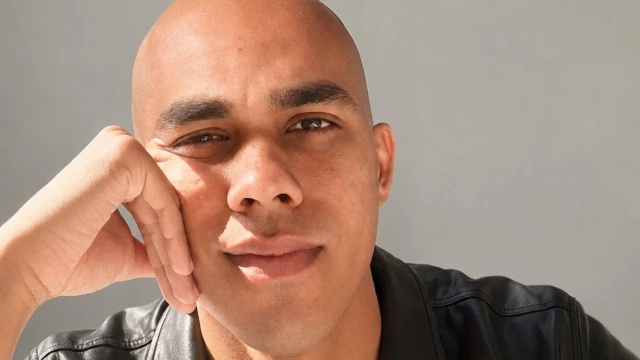
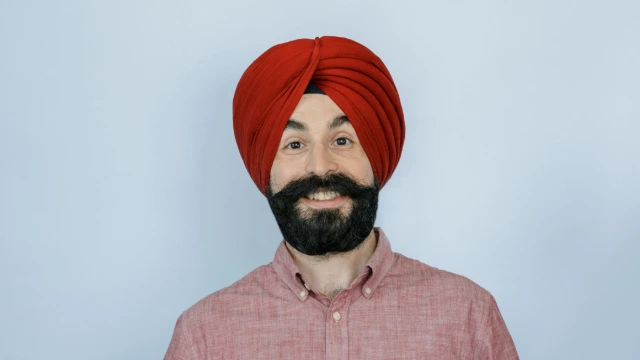
 Tarak Bhattacharya (left) and Shraddha Panday
As brands compete for Gen Z’s attention over the festive season, many rely on creators, trends, and social-first storytelling. But does this reflect how Gen Z actually shops and celebrates? A recent GWI and Snapchat study suggests a more nuanced picture: while creators drive discovery, trusted friends and family shape purchase confidence, and 70% see the festive season as a series of celebrations rather than one shopping moment. Against this backdrop, we at Manifest explored whether brands truly understand Gen Z’s festive behaviour or are simply marketing to a stereotype.
Hence, we got Tarak Bhattacharya, CEO, Mad Over Donuts and Shraddha Panday, director, content and founding member, The New Thing, to weigh in.
Are brands genuinely understanding Gen Z, or relying on a familiar playbook of creators, trends and social media?
Shraddha Panday (SP): With every passing festive season, Gen Z’s purchase funnel is getting more complex. Winning them over emotionally is harder now because customer reviews, honest comments, and advice from friends are all a tap away. Even the smallest purchase decisions can spend days on their feed and weeks in their carts before they actually hit ‘place order’. It is thus clear that simply cracking a creator mix is not enough to win this festive season. This year will be about building a holistic framework across all GEO-worthy platforms - YouTube reviews, Reddit discourse, X posts, etc. Organic conversations here will become trust markers that make their way into the friends and family group chats, and finally tip consumers over the edge.
Tarak Bhattacharya (TB): Most brands have studied Gen Z’s media diet—the app, the format, the trending sound—and mistaken that for understanding the person. Knowing where someone spends their attention isn’t the same as knowing why a purchase matters to them. And the irony is, the more standardised this playbook becomes, the less it actually differentiates anyone. Once every brand is running the same creator strategy, it stops being a signal and starts being wallpaper.
Are marketers overestimating the role of influencers in the festive purchase journey?
SP: Not overestimating their existence, but overestimating their job. Creators are doing exactly what they’re good at: top-of-funnel discovery. The mistake is expecting a creator video to close the sale. Over the years, that has gotten a lot harder. It stems from eroding trust. Users can smell brand deals from a mile away. So, they’re understandably suspicious of any brand messaging that’s coming from creators. It’s also a function of how easy it has become to compare prices across platforms thanks to AI aggregations, and how quickly one can get feedback from their inner circle. A simple ‘what do you think?’ on a group chat can help them be confident in their purchase decisions. In short: An influencer opens the tab; a best friend closes the cart.
TB: It’s a funnel problem, not a media problem. Creators are genuinely good at getting something noticed. But somewhere between noticing a product and actually buying it as a festive gift, the real decision moves into a group chat, or a phone call with someone’s mother, a room brands have zero visibility into. So budgets keep flowing to the part of the journey that’s easy to measure, not the part that actually decides the outcome. And Gen Z has grown up fluent enough in spotting sponsored content that a creator today carries less persuasive weight than the same creator did five years ago. Brands are quietly investing more in a channel that’s losing potency.
Does Gen Z require a fundamentally different festive advertising strategy?
SP: For many brands, a film about family and homecoming may not be the answer (no, not even in 9:16). In fact, most campaigns may not even need a central hero asset. With consumption patterns, motivations, and purchase behaviours becoming so fragmented, brands that invest in different creator cohorts and platforms to target different micro-groups will drive higher engagement.
TB: Not a different strategy so much as a different structure of time. The one-big-moment festive campaign is inherited from an era when celebration lived on a fixed calendar date. For Gen Z, festive season isn’t a date; it’s a string of smaller occasions strung together over weeks. A campaign built around a single hero moment is solving for a version of the season that doesn’t really exist for them anymore. The brands that get ahead won’t build one expensive spike; they’ll build something closer to a season-long system.
Are brands adapting their storytelling to Gen Z, or simply putting a younger layer on traditional festive narratives?
SP: Writing for Gen Z is seen as a tightrope walk. Use generic templates, and you’re ignored. Use specific Gen Z cues or lingo, and you’re ridiculed. The truth is - it’s only as tough as you make it. The generation isn’t complex. Marketers just aren’t listening to them enough.
TB: Mostly the younger layer - faster cuts, trending audio, same script underneath. But the real miss is about who’s telling the story. Traditional festive advertising puts the brand at the centre, as the giver of joy. Gen Z doesn’t want a brand narrating their celebration back to them- they want to be the author of it, with the brand showing up as a small, useful part of that story, not the storyteller. That’s a structural difference, not a stylistic one, and most brands haven’t noticed the distinction yet.
What is one thing marketers consistently get wrong about Gen Z during the festive season?
SP: That our pop culture isn’t the same as any generation before us. We consume music, cinema, content, etc. in pockets, which is why we don’t have many general, unifying pieces of contemporary media that bring us together. A reference that works for Riya in Kanpur may not even work for Sania in Lucknow, 90 km away. When our consumption is this different, why are we targeted the same way?
TB: That Gen Z is one audience. There’s more variation within the generation than between it and everyone else at this point - identity today is built around interests, not age brackets. But the bigger miss is assuming a generation that grew up online wants everything to stay online. If anything, the festive season shows the opposite: a hyper-digital generation reaching for something tactile and ritual-based, precisely because so much of the rest of their life already happens on a screen. Most brands read that as a nostalgia play. It isn’t. It’s a genuine hunger for something real.
This article was first published in the September issue's Perspectives section. Click here to buy a copy