

 Subscribe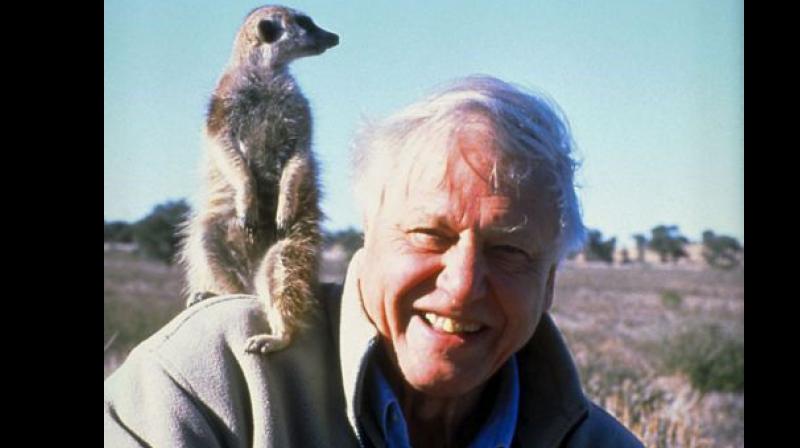
 David Attenborough
Very few media figures permanently alter public perception at global scale. David Attenborough did it.
He did it without cynicism.
That emotional resonance perhaps explains his reach across generations and group.
Children trusted him, scientists respected him, political tribes struggled to fully claim or reject him because he spoke from observation not ideology.
Many get famous. David Attenborough achieved more than fame.
For storytellers, it’s an important question to ask. What produces such a quality of trust?
It’s not celebrity status.
It’s not even talent.
It’s a lifetime spent in genuine relationship with the world he described.
Slow and disciplined. For nearly a century, Attenborough performed a rare cultural function of teaching industrial humanity how to look at the living world again.
Most media competes for interruption. He competed for attention in its purest form of sustained observation.
His documentaries were not built around algorithmic engineering.
He taught us what comes from patience. Waiting weeks for a bird to emerge, months for migrations to begin and years for ecosystems to reveal patterns invisible to hurried eyes.
Modern media mistakes stimulation for engagement.
Attenborough understood that awe is the ultimate form of attention.
What made his work exceptional cinematography married to a narrative philosophy.
In his work nature was hardly a background scenery. That was where all the drama, intelligence, conflict and beauty unfolded.
Mice escaping snakes became thrillers. Deep oceans became alien worlds. Forests became political systems. His genius was translating ecological complexity into emotional comprehension without vulgar simplification.
His voice became globally recognisable because it was the sound of someone genuinely astonished by life even after decades.
That authenticity cannot be manufactured.
As climate anxiety intensified, his later documentaries evolved from celebration toward warning. He persuaded through visibility.
Coral bleaching.
Oceans choked with plastic. Vanishing biodiversity.
He made distant destruction appear emotionally proximate, transforming environmentalism from technical discourse into something closer to moral imagination.
Climate change is abstract when communicated statistically. Attenborough made it an engaging narrative.
The finest documentaries alter what viewers notice afterwards.
Thanks to Attenborough, audiences looked differently at oceans, forests, migration, extinction.
Attenborough was shaped by a broadcasting culture that invested in long horizons and editorial seriousness rather than platform economics.
The BBC that formed him believed creators and audiences alike were capable of sustained curiosity.
Today’s fragmented media economy struggles to produce figures with comparable authority because incentives increasingly reward immediacy over endurance.
A creator can become globally famous within weeks.
Becoming globally trusted for seventy years is a different achievement entirely.
His centenary should matter not as nostalgia but as a marker of the fading memory of an era when careful observation of reality could itself become mass entertainment.
He pointed cameras toward ecosystems and evolutionary timescales vastly larger than individual life.
He restored scale.
He reintroduced humility into popular culture.
He created visual splendour through focus not tech razzmatazz.
He showed nature to humanity.
He showed humanity its place within nature.
Happy Birthday. Batting at 100, not out.
The author is a marketer, business leader and columnist. He was honoured as one of the 50 most influential global CMOs for 2025 by Forbes and serves on the board of the Effie Lions Foundation.