

 Subscribe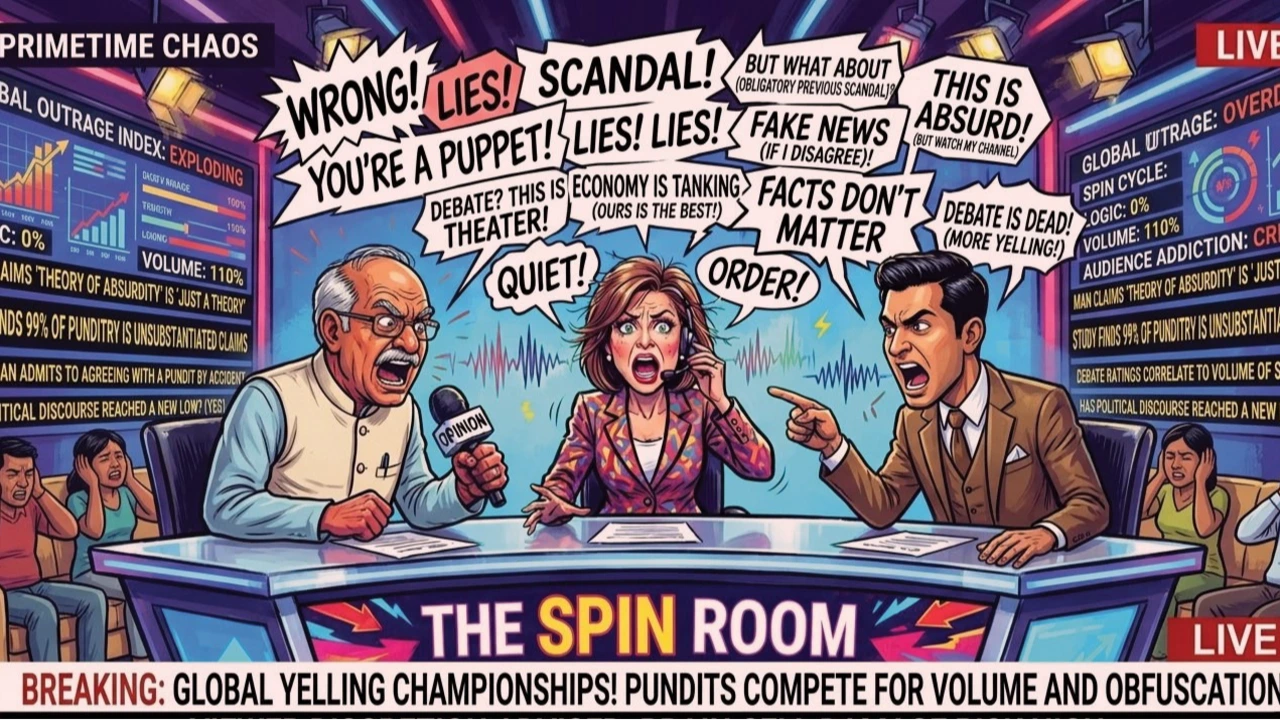
 Noise, polarisation and performative debate have blurred the line between journalism and spectacle
The recent Cockroach Janata Party protest at Delhi’s Jantar Mantar did more than capture youth frustration. It exposed a growing disconnect between India’s legacy news media and a generation that no longer sees television as its default source of truth. As TV crews attempted to cover the protest, many found themselves being rejected by the very audience they were trying to reach.
The scepticism is reflected in the numbers. India ranks 157 out of 180 countries in the 2026 World Press Freedom Index, its lowest position to date. Meanwhile, the Reuters Digital News Report 2026 found that 58% of Indians access news through YouTube and 56% through WhatsApp.
But while the migration to digital is part of a global shift towards mobile, video and personalised news consumption, industry observers believe India’s story is also about something more fundamental: credibility.
“Television news in India has increasingly come to be perceived as partisan rather than independent,” says Sujit Nair, chairperson and managing editor, HW News Network. Once audiences see news channels as extensions of the establishment rather than independent watchdogs, he added, “they naturally seek alternatives.”
According to Ritu Kapur, CEO-MD, Quint Digital, the sense of alienation is more pronounced among younger audiences. “Indian TV news has spent the better part of a decade optimising for outrage and TRPs over accuracy, and a segment of the audience has clearly aged out of that format.”
She cited the recent youth-led protest as proof of the growing discontent against established media.
“This year has given that a very concrete, visible expression: the Cockroach Janta Party movement, which grew out of the NEET paper leak, has explicitly named large legacy media, alongside political leadership, as an institution its Gen Z supporters no longer trust.”
Partha Sinha, senior advisor, McKinsey and former president, Bennett Coleman & Co. sees the migration as “equally a vote for convenience, personalisation and participation”, apart from growing mistrust. He acknowledged that television must confront its credibility problem, with “too much noise, polarisation and performative debate” blurring the line between journalism and spectacle.
Dr Jaimine Vaishnav, media researcher and columnist, is more damning. “People didn’t leave television, television pushed them out,” he says, pointing to years of manufactured outrage, screaming anchors and debates that, in his view, eroded whatever trust audiences had left.
That transformation of news into entertainment is also what Ashish Bhasin, advertising veteran and founder, The Bhasin Consulting Group, sees as television’s biggest failure. “Compared to, say, 10 years ago, the news channels have sold their soul out,” he said, pointing to the pursuit of TRPs, sensationalism and increasingly shrill programming. His warning to broadcasters is blunt: “The consumer is not an idiot. If they don’t like it, they’ll just switch the channel.”
And audiences now have far more places to switch to. Cheap data has democratised access to content, said Sandeep Goyal, managing director, Rediffusion, giving consumers ‘unprecedented choice’. As authenticity has become more important, institutions perceived to have political ‘leanings’ have become suspect. The shift, he contended, is not simply about distrust but “the quest for alternate viewpoints”.
The credibility question, however, cannot be separated from money and power. Government advertising remains an important revenue source for many legacy newsrooms, while concentrated ownership and commercial pressures can influence editorial decision-making. Nair pointed to an environment where editors must weigh commercial, legal, regulatory and ownership considerations, making ‘self-censorship’ potentially more powerful than direct censorship.
Vaishnav put it even more starkly: “When a channel’s survival depends on empanelment lists and government ad budgets, ‘independence’ becomes a press release line, not a practice.”
That also creates an uncomfortable question for advertisers. Should brands simply follow audiences, or should they consider the editorial environments they fund?
Bhasin believes their role is straightforward: “Advertising follows audiences.”
However, Nair reasoned that advertising on highly polarised news channels is increasingly perceived as “a statement about the values and identity of the advertiser itself.”
Sinha was more categorical in his pronouncement. He believes brands cannot remain passive observers, warning that funding “toxic or misleading environments” may deliver short-term reach while damaging brand trust and the wider information ecosystem.
Most of the industry stakeholders have little expectation that subscriptions alone can replace advertising as the dominant funding model for mass-market news in India. A more sustainable future may lie in a mix of subscriptions, memberships, events, philanthropy and responsibly governed advertising, they voiced.
However, across the debate, one conclusion stood out: the crisis facing Indian journalism is not fundamentally technological. It is one of credibility.
Rebuilding that credibility will require greater transparency in ownership, stronger editorial-commercial firewalls and consistent standards around accuracy, misinformation and responsible journalism, they believe. As Sinha put it, “Those who fund attention also carry responsibility for what that attention rewards.”
The harder question is what happens when audiences have already learned to look elsewhere, and whether India’s legacy newsrooms can give them a reason to come back.
This article appears in the August issue of Manifest. To read the whole feature, purchase the issue by clicking here.