

 Subscribe
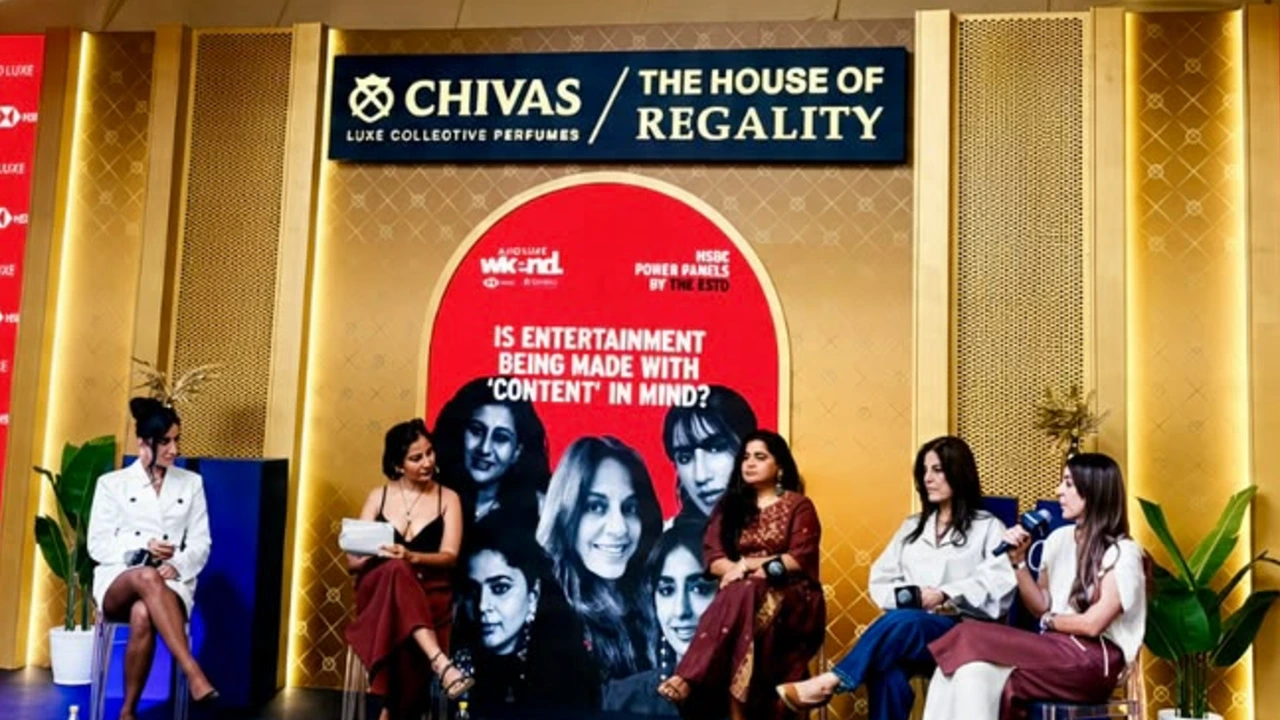
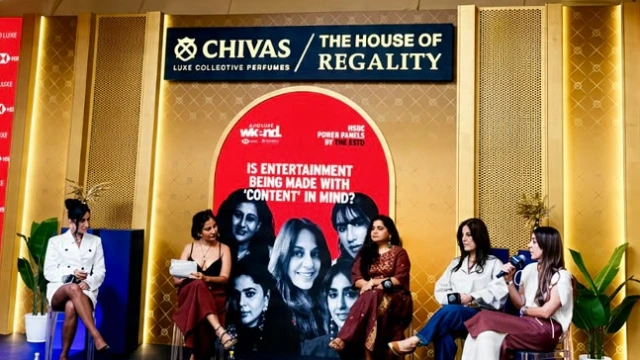
 From left: Parul Gulati, Arshia Dhar, Ashwiny Iyer Tiwari, Juhi Chaturvedi and Ashi Dua.
The debate around virality is changing how films are made, marketed and measured. But a panel of filmmakers, writers and an actor argued that while Reels and memes can extend a film’s cultural life, they cannot compensate for a weak story or replace the cinema experience.
The discussion 'Is entertainment being made with 'content' in mind?' took place on the second day of Ajio Luxe Wkend 2026, held in Mumbai and featured Ashwiny Iyer Tiwari, filmmaker, writer and producer; Juhi Chaturvedi, screenwriter; Ashi Dua, producer; and Parul Gulati, actor, creator and founder, Nish Hair.
Arshia Dhar, managing editor, The Established, moderated the session.
Casting talent over popularity
Dua recalled the resistance she faced while casting Aneet Padda in Hunkkaar: The Roar. Padda had not yet appeared in Saiyaara, and the team was repeatedly asked to consider a more established, popular face.
Dua said the decision came down to recognising the actor’s suitability for the role rather than her existing popularity.
“We knew she was right for the role; we believed in her and fought for her casting,” she said. The show eventually released after Saiyaara made Padda a star, but Dua said the casting decision was based entirely on her talent.
A film needs to stand for more than a viral moment
For Tiwari, the growing demand for viral dialogues and punchlines reflects an industry increasingly drawn to shortcuts. She pointed to films such as Piku and Vicky Donor, which were not written with viral moments in mind.
“A film doesn't become famous simply because of one dialogue. It needs to stand for something beyond that,” Tiwari said, adding that cinema, from its writing and performances to its cinematography and art direction, cannot rely on quick fixes.
She also spoke about the conviction required to make stories that do not fit conventional industry expectations. When she made Nil Battey Sannata, people questioned whether a story centred on a mother and daughter from a less privileged background would find an audience in theatres. The film's appeal, she argued, came from the universality of that relationship. With Bareilly Ki Barfi, she resisted expectations around heightened comedy and visual spectacle, choosing instead to tell a story rooted in middle-class India.
"The industry also tends to confine creators to familiar genres, limiting the kinds of stories they are encouraged to tell. We tend to put people into categories, and that's where the problem begins,” she said.
Reels can drive discovery, but cannot replace a good film
Gulati argued that social media has changed how audiences discover films. She cited titles such as Obsession and Backrooms, which found visibility through online conversations and circulation.
“One might come across a Reel and then decide you want to watch the film,” Gulati said, arguing that short-form content and good storytelling can coexist.
Dua agreed that a film's life now extends well beyond the theatre. Reels, memes and music can keep a film circulating and encourage more people to watch it. However, she distinguished between amplification and quality. “You cannot make a bad film and expect 20 Reels to make it successful,” she said.
The box-office debate and the case for midstream cinema
The discussion also turned to the industry's growing fixation on box-office collections. Tiwari argued that films should not be judged solely by their financial performance, pointing to the period between 2015 and 2021, when films were remembered for their stories rather than the size of their collections.
She called for a return to midstream cinema and said an INR 15-crore film that earns INR 30 crore while telling an exceptional story should be considered a success.
Dua, however, said the industry itself had helped create the obsession by publicising box-office milestones in newspaper advertisements.
Staying true to the story, whatever the format
Chaturvedi said she preferred to remain loyal to her craft rather than write to fit a marketable genre. For her, even a category such as ‘urban crisis’ can describe a body of work, though it may be difficult to sell.
As the conversation returned to the changing formats of entertainment, Tiwari made the case for sincerity regardless of duration. “Whether it's a two-hour film or a one-minute video, one has to put thought into it,” she added.
What makes a story endure beyond the box office and virality
Asked whether audiences remember a film's dialogues, characters or the feelings it leaves behind, Chaturvedi argued that these elements are closely connected. “A dialogue is simply a more concrete expression of a feeling. People know what they're feeling, and they perhaps use a particular line to express that feeling,” she said.
Tiwari, meanwhile, questioned the industry's insistence that every theatrical release must be an event film. She said she wanted to see more room for stories made for the big screen without the expectation of spectacle or a blockbuster star. “Not everybody can make a blockbuster or a big event film,” she said, adding that the industry needed to move away from the idea that films without those elements did not belong in theatres.
The closing exchanges returned to a central question running through the discussion: what makes a story endure? For the panellists, it was not simply a viral dialogue, a box-office milestone or the scale of a theatrical release, but the thought, feeling and conviction behind the work.