
 Subscribe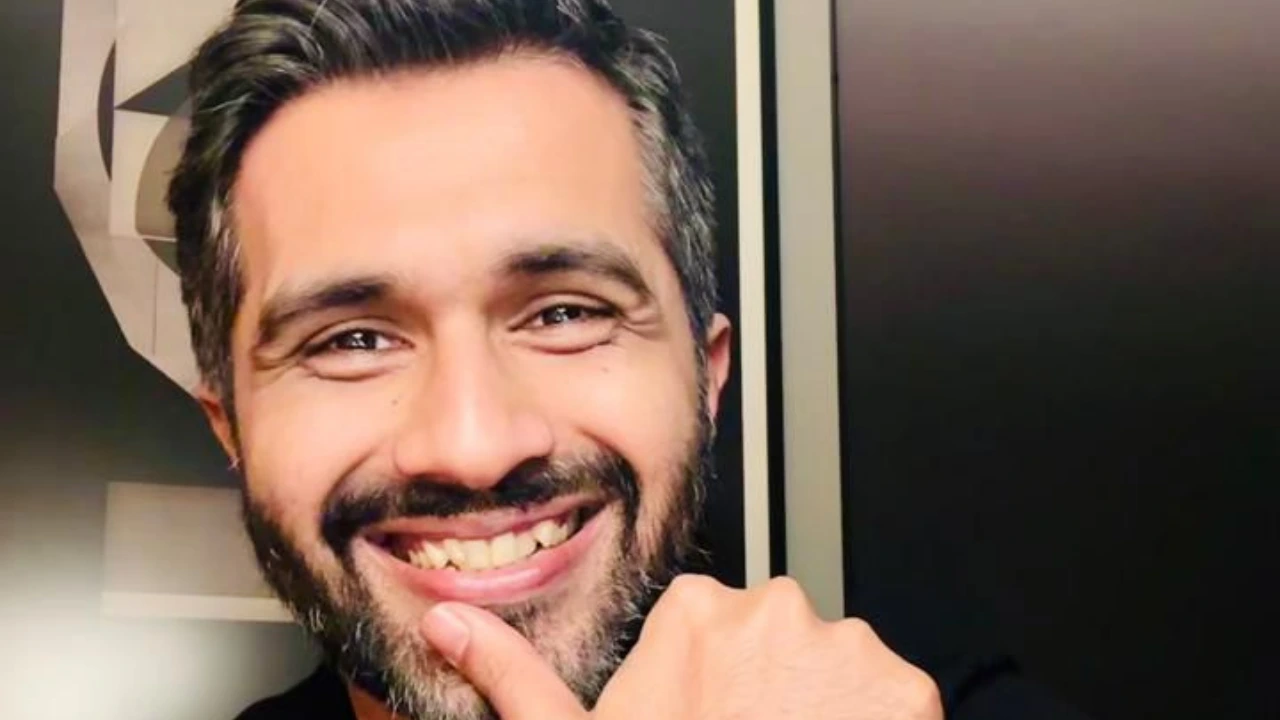
 Jimit Kansara
For Spider-Man: Brand New Day, which released in India on 31 July 2026, Sony Pictures Entertainment, aimed to establish its global IP into a mainstream Indian cultural moment. The strategy went beyond trailers, traditional media and fan marketing, weaving the character into cricket, music, regional culture, entertainment, creators, experiential and brand partnerships.
From KL Rahul, Suryakumar Yadav and Rishab Shetty to metro wraps, bus takeovers and an anamorphic CGI billboard, Spider-Man was placed in contexts that felt distinctly Indian without losing sight of the character at the centre of the story.
The ambition was also clear: serve the franchise’s deeply invested fandom while bringing everyone else into the conversation. With the film crossing INR 500 crore in India and emerging as the biggest Hollywood film to release in the country, the campaign offers a compelling case study in how global entertainment properties can be localised without becoming gimmicky.
For Jimit Kansara, marketing director, Sony Pictures Releasing International, India, the answer lies in understanding the problem a campaign needs to solve rather than simply doing more. His approach to Brand New Day brought together cultural insight, audience intelligence and instinct, with partnerships treated as an extension of the media ecosystem rather than a logo-sharing exercise.
It also points to a broader shift in film marketing, where theatrical urgency has to be created across increasingly fragmented audiences and platforms.
Manifest spoke with Kansara to pick his brains on taking Spider-Man beyond its core fandom, the role of localisation and partnerships, the enduring power of theatrical marketing, and how AI, creators and data could reshape the movie marketing playbook.
Edited excerpts:
Spider-Man: Brand New Day became the biggest Hollywood opener in India. What was the marketing strategy behind the campaign, and what did you identify as the biggest opportunity in the Indian market?
We knew the Spider-Man fans were going to come. All our signals were telling us that. The bigger question was how do we get everyone else? That became the big opportunity and shaped a lot of the campaign. We wanted to take Spider-Man beyond the core fan universe and make the release feel like a big mainstream entertainment event. Cricket, music, creators, regional culture, partnerships — all of these helped us get there.
Spider-Man already has an enormous fandom in India. How did you build a campaign that went beyond existing fans and made the film a mainstream cultural conversation?
We had to do both. We couldn't take the fans for granted, but at the same time, growth had to come from outside that core. So we kept servicing the fandom through experiences, collectables, artwork contests and other initiatives, while using cricket, music, creators and regional culture to take Spider-Man into much larger conversations. The fans give you a very strong base. The job was to build from there.
From Rishab Shetty to KL Rahul and Suryakumar Yadav, the campaign brought distinctly Indian faces and cultural touchpoints into the Spider-Man universe. How do you decide what can be localised without diluting a globally established IP?
For me, the IP and the story have to come first. Localisation for the sake of localisation can become gimmicky very quickly. Peter Parker is in a very difficult position in this film — the world has forgotten who he is, including the people closest to him. That gave us a really interesting creative space to play with. So when we used cricket, talent or regional culture, the attempt was to bring people into Peter's situation rather than simply put a famous Indian face next to Spider-Man. There has to be a reason for the association.
The campaign extended into TV, OOH, brand partnerships, social media and experiential activations. Is the traditional film marketing playbook of trailers, media and outdoor no longer enough to launch a blockbuster?
I wouldn't write off the traditional playbook at all. A great trailer with a strong media push can still do a lot of heavy lifting. The bigger challenge is that consumer attention is now everywhere. So naturally the campaign has to find audiences across different places as well. But I also don't believe every film needs to do everything. One can have 20 things in a campaign plan and still not have a campaign. What matters is whether those choices are solving the problem you have for that particular film.
Spider-Man partnered with brands and platforms across categories, including Pulse and Amazon. What makes a brand partnership meaningful for a film, and are studios increasingly looking at partnerships as a media and audience-building engine rather than just an amplification tactic?
Yes, absolutely. Partnerships can bring serious reach and access to audiences, so we increasingly look at them as part of the larger media ecosystem. But there needs to be a real value exchange. What is the partner bringing to the film, and what is the film bringing to the partner? It could be reach, distribution, an interesting consumer experience or access to a particular audience. Just putting two logos together is probably the easiest part. Making the partnership actually do something is where it gets interesting. Shout out to Punit Dawda, who heads partnerships for our team, for a stellar job on the movie marketing.
The film was released across English, Hindi, Tamil, Telugu, Malayalam and Kannada, while the campaign also made a deliberate push into regional markets. Is the next growth opportunity for Hollywood in India going to come from deeper regionalisation rather than simply expanding its English-speaking audience?
There is definitely a big opportunity, but I still think it is IP-dependent. Not every Hollywood film will travel the same way. For the right film though, regionalisation has to mean more than dubbing it into another language. The media choices, talent, creative and cultural context also need to make sense locally. India is a very complex market. You can run one national campaign, but people across the country don't necessarily discover or respond to entertainment in the same way.
With audiences increasingly fragmented across streaming, social and gaming, what does Brand New Day’s performance tell us about the power of a big theatrical event and the role marketing plays in creating that urgency?
It tells us that the big theatrical experience is still very powerful when audiences feel that something is worth showing up for. Our job is to create and then keep building that sense of occasion. Awareness alone isn't enough. Someone knowing your film is releasing doesn't necessarily mean they are going to buy a ticket. A lot of what we do is about trying to close that gap and create urgency.
Lastly, as AI, creators, fandom communities and data increasingly influence how entertainment is marketed, what will the movie marketing playbook look like over the next two to three years? And where does Sony Pictures see the biggest opportunity to innovate?
AI is already changing the way we work and make decisions, and I think we're only at the beginning of that.
At Sony, we've been pushing strongly towards data-led decision-making. I see better audience intelligence and much clearer media attribution becoming important. Even traditional media will become more measurable as it becomes increasingly digitised. Creators will get bigger, fandom communities will get more important, and AI will give us more information to work with. But I don't think any of that removes instinct from the job. Data can get you to a very good place. Sometimes one still has to look at everything in front of them and make a call.