

 Subscribe
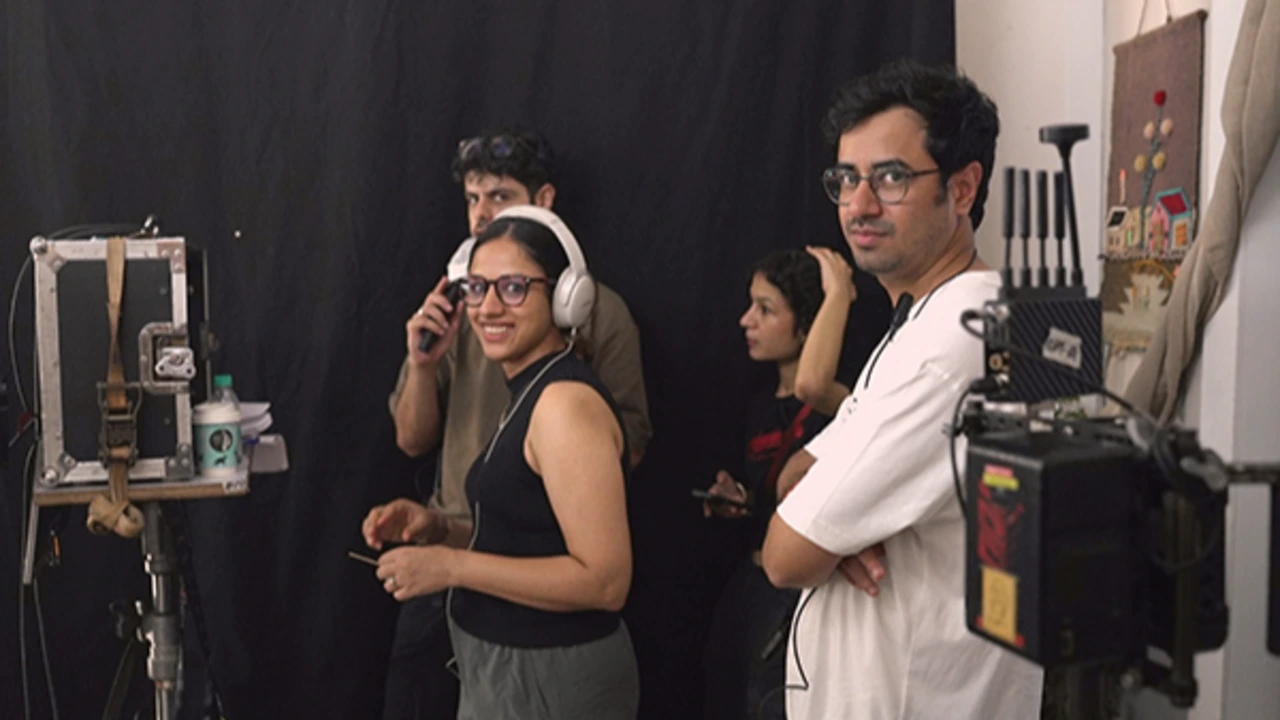
 Sonal Batra and Falgun Busa
From finding their way into filmmaking to creating a film that puts the emotional lives of caregivers in focus, producer-editor Falgun Busa and director Sonal Batra discuss their journeys, the importance of creative trust and why some stories need to be felt rather than explained.
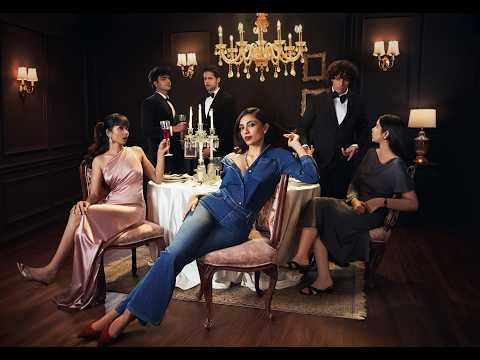
For Falgun Busa and Sonal Batra, filmmaking is as much about the people behind a story as it is about the story itself. Their recent work for Mr Med (Kuch Hoga Toh Batana) reflects this belief, as the film explores the emotional realities of caregiving through the relationship between Anisha and Karishma.
The film asks viewers to look beyond the familiar reassurance of ‘Kuch hoga toh batana’ (asking if one can help someone in need) and consider what it means to offer someone genuine support. Bringing that idea to the screen required restraint, sensitivity and a shared commitment to putting the story ahead of conventional
advertising imperatives.
For Busa, who worked on the film as producer and editor, and Batra, who directed it, the project was also a reminder of what can happen when a team trusts its instincts and gives a story the space it needs.
Putting caregivers in the frame
That sensibility found a natural expression in Mr Med’s Kuch Hoga Toh Batana. The film explores the often unseen emotional burden of caregiving, asking audiences to recognise the person behind the responsibility.
For Batra, the first priority was authenticity. She did not want the performances to feel theatrical or the film to rely on dramatic cuts and exaggerated emotions to communicate its message.
“I wanted it to feel lived-in, like we were observing a real moment in someone’s life,” she said.
The intention was to allow audiences to discover Karishma’s struggles alongside Anisha, through performances, silences and small moments, rather than having the message spelt out for them. The subject also had a personal resonance. Batra had watched her father care for his mother and sensed the emotional weight he carried.
“I’ve seen my father be a caregiver for his mother and I’ve always sensed the weight he carried. In some way, I wanted Karishma’s character to see him,” she says.
That connection informed the time she spent researching the protagonist’s anxiety and inner conflict. Batra and cinematographer Kabir explored how these internal emotions could be translated into visual choices, while conversations with Busa helped them establish how the film needed to feel.
Writer Shivani Gairola was another key collaborator. Batra and Gairola spent several days discussing the script and its underlying themes even before preparation began.
For Busa, the story was equally personal. Having seen family members and loved ones navigate the challenges of caring for others, he understood how much the responsibility could take out of a person.
“When I first read the script, I knew it was a story I wanted to bring to life, one that deserved to be told with honesty, empathy, and care,” he says.
His dual role as producer and editor meant balancing the practical requirements of production with the emotional demands of the final film. As a producer, he had to remain mindful of the budget while ensuring the team could deliver its vision. As an editor, he focused on the rhythm of the narrative.
“Every pause, cut, and silence was intentional, drawing the audience closer to Karishma’s state of mind,” he says.
“When the first cut moved me despite knowing every moment by heart, I knew we were home.”
Both filmmakers credit the trust extended by the agency and client for helping them preserve the story’s integrity.
Tejas Mehta, who managed the campaign on the agency side, and Dev and his team at Mr Med supported the creative process, allowing the team to focus on the emotional core rather than predetermined requirements around duration, branding or packaging visibility.
For Batra, the film’s final form was shaped by the willingness of everyone involved to contribute ideas while remaining committed to the story. For Busa, it reinforced a belief that the right people, given the space to prioritise creativity, can make a project work. The response after the film went live was particularly meaningful for Batra.
"As a director, you spend so much time with a story, thinking about every little detail and wondering if what you’re trying to convey will come through. To see people connect with it in ways that are deeply personal to them was incredibly special," she stated.
Ultimately, both filmmakers hope the film prompts audiences to move beyond offering a well-meaning assurance and take a more active role in supporting caregivers.
For Busa, the project reaffirmed the importance of bringing together people who believe in a story and allowing them to tell it honestly. The result, for both, is a film that does not attempt to explain every emotion, but instead gives audiences the time and space to recognise them for themselves.
However, their paths to become filmmakers were different stories, shaped by curiosity, unexpected career turns and a willingness to follow their creative instincts.
Their paths
Busa’s relationship with films began in college, when he started making short films. The experience stayed with him, eventually drawing him towards production as well as editing.
“I think one of the most beautiful things about filmmaking is that, while we have very little control over most aspects of our lives, we get to create and shape an entire world through a film. As filmmakers, we have the ability to make people feel something, to take them on a journey, and to leave them with a thought or an emotion that stays with them long after the film ends,” he said.
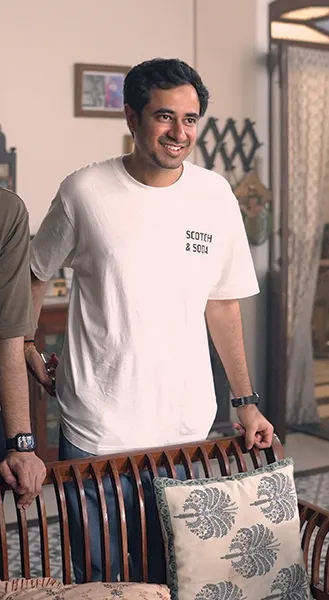 He began his career at a production house as an editor and post-producer. The experience also introduced him to the technical and logistical aspects of making films, prompting an interest in the work that happens before a camera starts rolling.
Budgeting, scheduling and finding creative solutions within constraints became as interesting to him as the edit itself.
Curiosity eventually took him to Leo, where he worked as an agency producer. The move gave him a different perspective on the business, allowing him to collaborate with agency teams and work on campaigns from the other side of the production process. He also got opportunities to direct a couple of commercials.
And then there was Mad Men.
“To be honest, Mad Men had a little something to do with that!” Busa said of his interest in understanding how advertising works from an agency’s perspective. After spending time in the agency environment, Busa felt drawn back to editing. Rather than choosing between the two disciplines, he decided to embrace both.
“I love the creative process of editing just as much as I enjoy the strategy, planning, and problem-solving that go into producing,” he said.
Working independently brings its own set of challenges. Unlike an agency producer, who is more closely connected to the client and has an established pipeline of projects, an independent producer must also build relationships, pitch for work and earn the trust of prospective collaborators. Busa explained, “Every project matters, not just creatively but also in terms of building your identity and reputation as a producer. So, while the nature of the challenges may have changed, the hustle definitely hasn’t!”
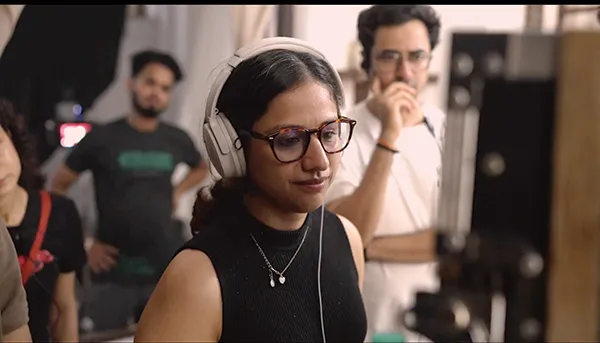
Batra’s journey into filmmaking began with a different kind of realisation. She studied Economics Honours, but a job interview made her question whether she could imagine herself in a conventional career.
“Honestly, I think the career chose me. Or perhaps it took a rather dramatic slap in the face for me to realise that this was what I wanted to do,” she stated. On the day of her first job interview, she suddenly confronted the possibility that she might not be able to write for very long. Having written since childhood, the thought of spending her days at a desk doing something unrelated to storytelling was difficult to accept.
“I’d been writing since I was young, and the thought of spending my days at a desk job doing anything else terrified me. Honestly, it still does.”
The realisation set her on a different path. She learnt editing during an internship, completed her master’s at the Symbiosis Institute of Media and Communication (SIMC), and eventually moved to Mumbai, where she found an opportunity to direct and produce films for a digital agency.
What began as a desire to tell stories gradually became a career behind the camera.
Today, Batra approaches direction with a strong emphasis on intention. Casting, character backstories, the way people inhabit a space and even the framing of a shot contribute to how a story is experienced.
She cites Uber India’s Safety Never Stops campaign, which won two Baby Elephants at Kyoorious, as an example of how visual choices can reinforce a film’s message. The crowd was deliberately made part of the visual scheme, creating a sense of collective experience, while the comedian’s shots became increasingly intimate and darker as the jokes unfolded.
For Batra, the objective is to create work that audiences can immerse themselves in, rather than simply watch. “I think the real opportunity lies in finding that sweet spot where the brand’s commercial objective meets a human truth,” she says. “When that happens, the story doesn’t just sell a product; it builds a connection. And that, to me, is where advertising can become genuinely meaningful.”