
 Subscribe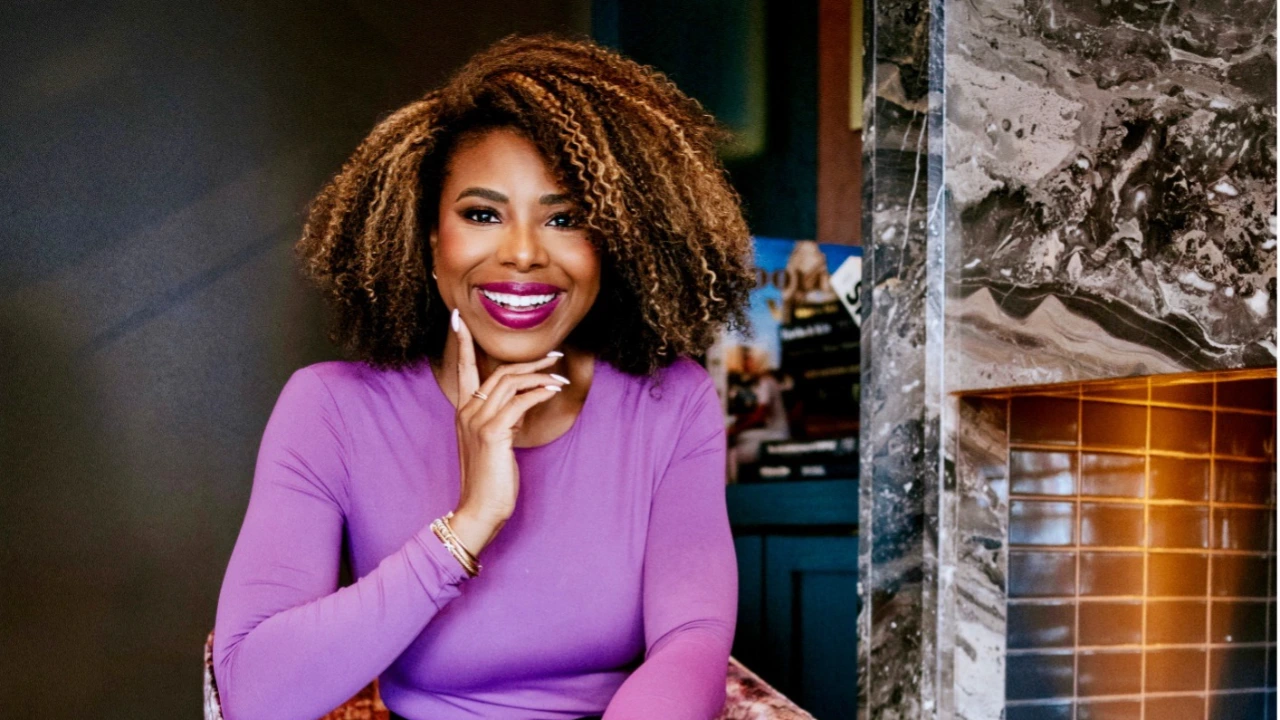
 Emily Graham
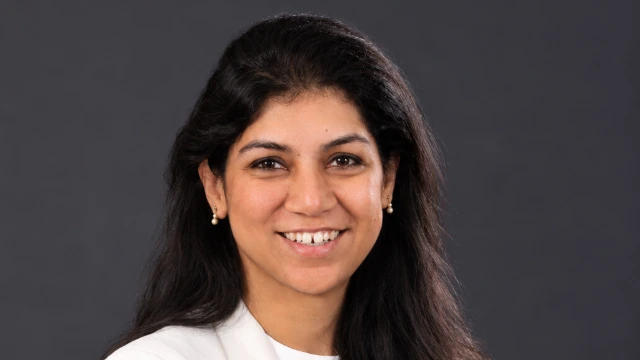
Emily Graham took on the role of the global inclusion and impact officer at Omnicom more than five years ago, and believes she has the coolest job in the advertising industry.
In conversation with Manifest during the Cannes Lions International Festival of Creativity, Graham said, "I have the coolest job, and it’s such a privilege. We call it inclusion and impact at Omnicom, and that’s our framework for creating the conditions for belonging, employee engagement, and enabling our colleagues to do their best work while being their authentic selves."
"The other pillar, which isn’t reflected in my title but is central to what we do, is innovation. Once we establish inclusion in our framework, people are able to innovate. For us, innovation is the freedom to disrupt, create big ideas, and dream big. That’s one of the outcomes of making people feel included. The result of innovation and inclusion is impact. We look at impact as something that happens within our business, through the work we do with clients, but also in terms of the societal impact we create outside Omnicom," she added.
The role is centrally led and Graham reports to John Wren, CEO, Omnicom.
But while the framework is global, Graham believes the approach cannot be one-size-fits-all.
"Inclusion may be a global strategy, but it has to be hyper-localised," she said. "In India, the success metrics are different from those in the United States because our societal realities are different. So I can’t point to one country and say it has got everything right."
Omnicom currently has around 70 inclusion and impact officers globally. In India, the team comprises three people, with Vanaja Pillai leading inclusion for Omnicom Advertising in India and working across the region.
The network also has two sizeable employee resource groups in India. Omniwomen, its largest employee resource group, has been active for 11 years and has a strong India chapter, according to Graham.
Open Pride, which focuses on LGBTQ+ acceptance and inclusivity, was launched in India around five years ago.
In India, gender balance remains a particularly important part of that agenda. Graham acknowledged that while the announcement of the leadership structure following the Omnicom-IPG merger featured only one woman, the reality across the business is more nuanced.
"That’s a perception because the announcement featured only one woman. The reality is that we have several senior, highly impactful women working across the business in India, representing both the legacy Omnicom and IPG organisations," she said.
At the same time, Graham was clear that there is still work to be done.
"When it comes to the people driving day-to-day operations, there are many women. But there still aren’t enough, and let’s be clear about that," she said, adding that the gender imbalance in India is rooted in historical realities.
AI
Graham sees technology and the rise of AI as a double-edged sword, with the potential to either reinforce existing biases or create more equitable outcomes.
"AI is only as powerful as the teams building it. We need those teams to be as inclusive and diverse as possible. Large language models are ultimately built by humans, and they inevitably reflect our biases and the way we see the world. That’s why AI produces the outputs it does," she said.
The responsibility, therefore, extends beyond building diverse teams. Organisations must also actively examine the systems and algorithms they create.
"Most people don’t naturally build inclusive systems, particularly at work, so we have to deliberately interrupt those systems and algorithms if we want more equitable outcomes," Graham said.
Looking ahead, she hopes the industry will move beyond simply talking about inclusion and instead embed it into the work it produces.
"I believe this industry has enormous potential to embed inclusion into everything we create. We’ve only scratched the surface," she said.
Read the full conversation with Graham in the July issue of Manifest, which can be purchased here.