
 Subscribe
 Sana Ahmad
There’s a certain kind of ad you see a lot these days.
It’s quirky. A little absurd. Sometimes genuinely funny. Always trying to catch you mid-scroll.
And to be fair - some of it really works.
You laugh. Or you pause and think, “okay, I didn’t see that coming.” In a sea of sameness, that kind of surprise has value.
So, this isn’t a complaint.
It’s an observation.
Because what feels new isn’t the quirk itself - it’s how often it’s becoming the starting point.
Almost every brief today seems to carry the same unspoken ask: ‘Let’s do something out of the box.’
And somewhere along the way, that ‘out of the box’ has started meaning one thing - be louder, stranger, more unexpected than everything else in the feed.
Take Flipkart’s recent ‘OnlyFans’ ad, for example.
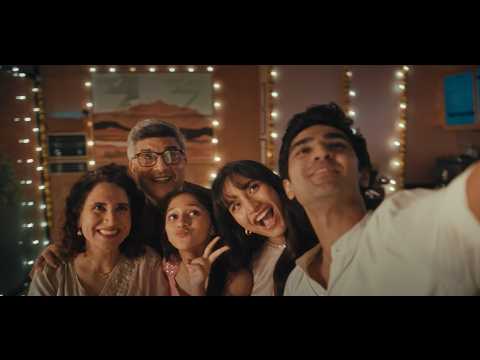
It’s a cheeky, provocative play on the name - set up to make you think of the adult platform, only to reveal that the family is actually talking about only fans - ceiling fans, coolers, beating the summer heat.
It’s clever. It’s culturally aware. And it definitely makes you stop, of course, only to a particular demographic!
In fact, it does exactly what a lot of advertising today is trying to do - grab attention instantly.
But it also leaves you with a question.
After the smile fades, what remains?
Is it the brand? The sale? Or just the cleverness of the joke?
Because increasingly, a lot of work today feels like this- memes extended into 30-second films.
The joke lands early. The rest is just trying to hold attention.
Because the metric we’re optimising for isn’t depth. It’s an interruption.
Will this make someone stop? Will this get a reaction? Will this stick?
But sticking and resonating are not the same thing.
Something that sticks might get a laugh. A share. A moment, or a fleeting moment of recall.
Work that resonates, on the other hand, operates differently. It lingers. It builds memory. It carries a feeling. It gives the brand a place in someone’s life- not just their feed.
And that kind of work rarely begins with ‘let’s be quirky.’ It begins with something quieter.
More human. Often less obvious.
A truth. A tension. A feeling people recognise before they react to it.
And we’ve seen this kind of work - recently, even.
Take, for example, the Goel TMT campaign featuring Gajraj Rao. There is nothing overtly gimmicky about it. No exaggerated hook, no forced quirk. Just a story, rooted in familiarity, carried by performance and writing that understands its audience. It doesn’t try too hard to surprise you - and perhaps that’s precisely why it stays with you.
Or consider the ‘Baatan hi Baatan Mein’ WhatsApp campaign. Built on everyday conversations and cultural nuance, it finds its strength in recognition rather than disruption. It doesn’t demand attention; it earns it quietly. And in doing so, it creates something far more lasting than a momentary reaction.
The irony, of course, is that these are still the advertisements we remember. Not because they tried to be different, but because they had something to say.
None of this is to suggest that quirk has no place in advertising. On the contrary, when used with intent, it can be refreshing, disarming, and highly effective. Interestingly, the same brand offers a contrasting example in Flipkart’s ‘Sasa Lele’ campaign.
A campaign that leans into absurdity with a repetitive, almost nonsensical jingle- yet it stays with you because it is built as a strong mnemonic device. The rhythm, repetition, and sheer commitment to its strangeness make it hard to ignore and even harder to forget, turning the quirk into recall rather than just a passing reaction.
So definitely, the question then isn’t whether brands should be quirky or not. The concern arises when it becomes the default- when the pursuit of being unexpected overshadows the need to be meaningful.
And more importantly, in our rush to be out of the box, are we slowly forgetting what was worth putting inside it to begin with?
The author is an advertising director.
This column was first published in the May issue. Get your copy here.