

 Subscribe
 Mohit Jain
Miraggio is entering a new phase of growth, with its AW26 collection marking a sharper push towards a more recognisable design identity. The handbag and accessories brand has brought in designer Ying Yang for the collection, while also expanding its offline presence, building experiential retail and entering categories beyond handbags.
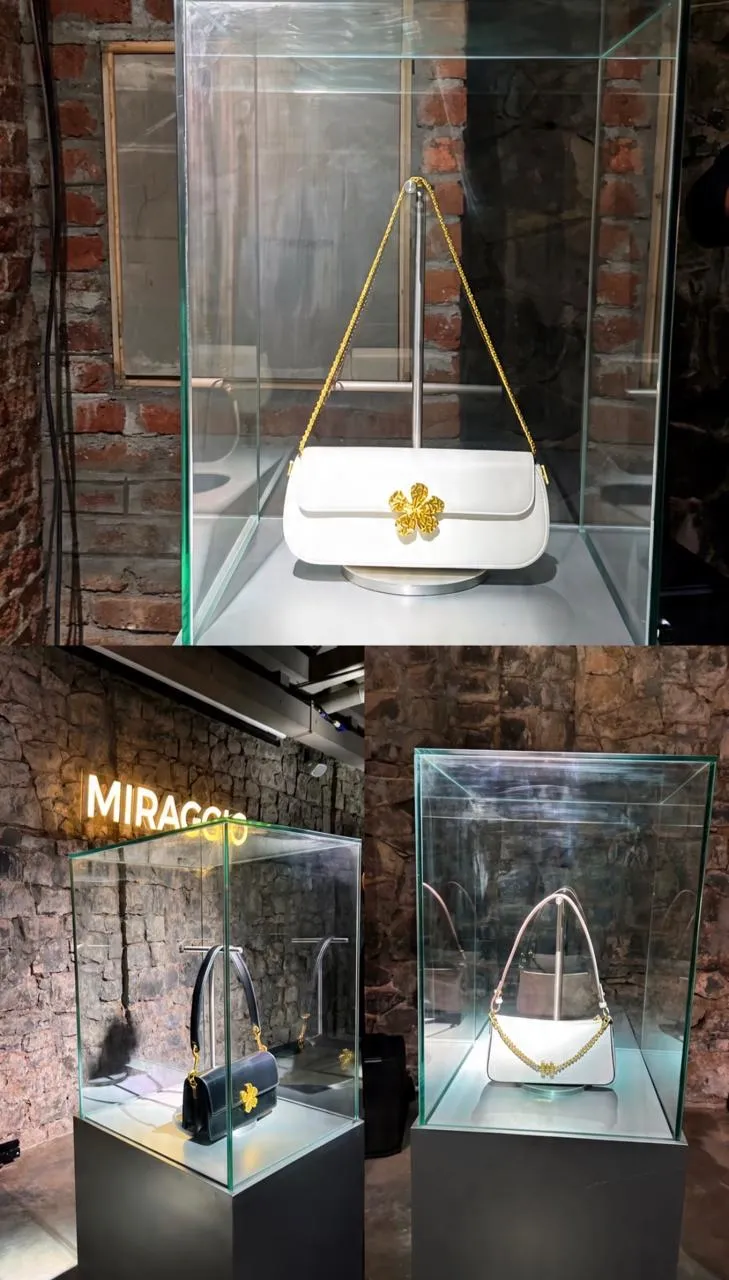
A glimpse of Miraggio's AW'26 collection in collaboration with designer Ying Yang
The shift comes as Miraggio looks beyond scale to build stronger brand recognition. The brand now ships more than a million orders a year, and founder and CEO Mohit Jain, on the sidelines of the AW26 collection showcase, told us that the next phase is about creating a more cohesive language across its silhouettes, hardware, colours and materials.
As Jain shared, the next chapter is less about simply making more products and more about creating a brand that consumers can recognise, experience and ultimately associate with a distinct identity.
A new era for Miraggio
Miraggio’s positioning, Jain stated, has not changed. It was always positioned between the mass market and premium brands. What has changed is the stage of its evolution.
He expressed, “It’s just a new era of Miraggio now.”
After building the business around handbags and reaching more than a million orders a year, the focus is now shifting towards recognition.
“We want people to look at something and immediately say, ‘That’s Miraggio,’” Jain added.
That recognition, Jain believes, will come through a more cohesive approach to design.
Sharing the vision behind the design, he remarked, “We are moving towards more cohesive silhouettes, hardware, colours and materials. That gives the new Miraggio a stronger identity.”
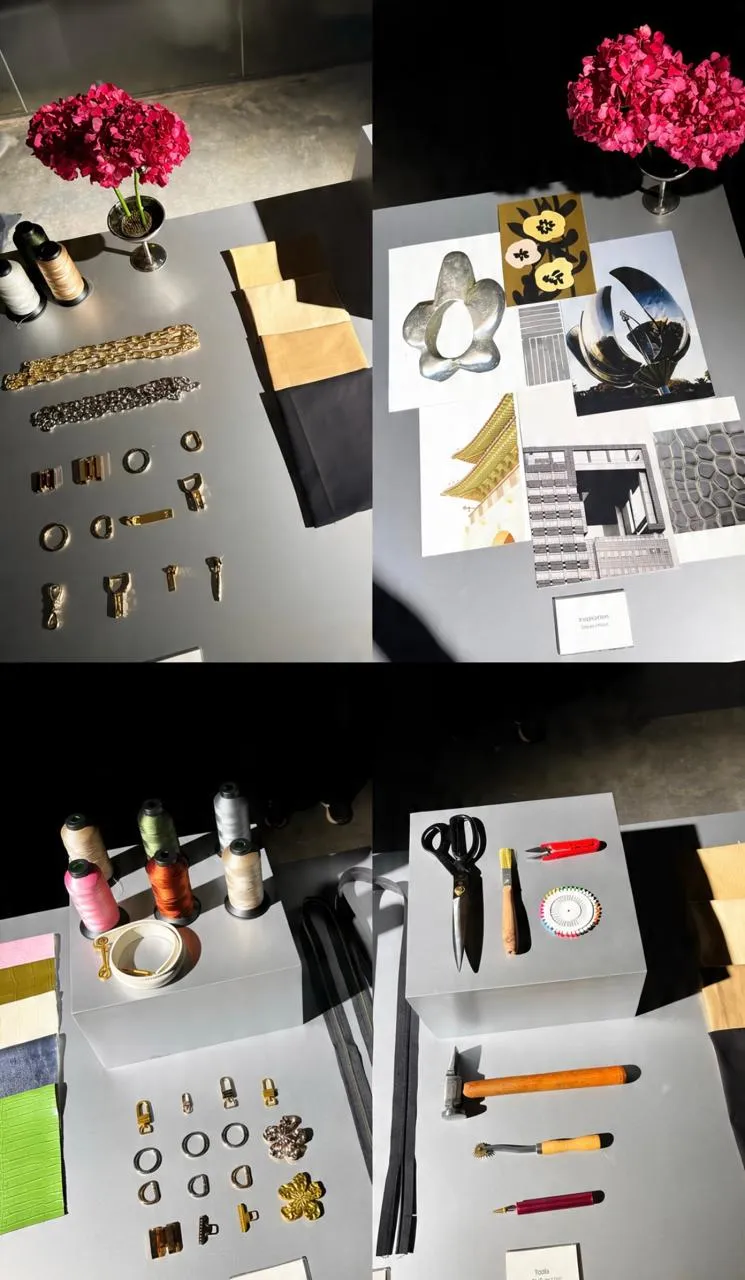 The mood board and inspiration behind the AW'26 collection
For Jain, this is the direction the brand is taking after establishing itself as one of the largest brands in India.
India is now unapologetic
That evolution is also taking place against a changing Indian design landscape, with Jain identifying three trends that influence how consumers and brands approach fashion.
The first is a growing conversation around craft.
“People are talking about craft openly,” he said.
The second is a shift in silhouettes. “Silhouettes are getting stranger and softer. It’s no longer just about structured silhouettes. People now want to experiment.”
But the biggest change, according to Jain, is the confidence with which India is beginning to approach its own design identity.
“India is now unapologetic. It has stopped taking permission from Europe,” he remarked.
For Jain, the opportunity is for India to own its design rather than simply become a market where international ideas are sold.
“I think India is ready to be a country that owns its design from India, rather than becoming a country where we simply sell to the world,” he added.
These shifts, he believes, are shaping the market Miraggio is building for.
Challenging the creative comfort zone
That thinking is also reflected in the decision to bring Ying Yang on board for the AW26 collection.
For the brand, the collaboration was about bringing in an external perspective and challenging its own creative instincts.
“We wanted somebody who could give us a new perspective and challenge the way we think,” Jain said. “For the last six years, we have been taking decisions based on our instinct. Sometimes, one can be trapped within those creative blocks.”
The objective was therefore to bring someone from outside the brand who could challenge its existing approach.
“So we wanted somebody to come from outside, show us the mirror and actually challenge us,” he expressed.
Yang’s appeal, however, was not limited to her creative perspective. Jain shared that she was able to combine creativity with functionality while keeping the Indian consumer in mind.
“The beauty of Ying Yang as a designer was that she could bring that creativity while also maintaining functionality and keeping the Indian consumer in mind,” he added.
That combination was further strengthened by her ability to bring a global design appeal through the collection’s design, hardware, colours and materials.
“Cultural sensibility and functionality, while also bringing that creative global appeal in terms of design, hardware, colours and materials,” Jain stated.
He added that Yang’s experience with major luxury brands globally was another reason for the choice.
“I think the combination worked really well for us. That is why Ying Yang was the perfect designer,” he said. “She has also worked with massive luxury brands across the globe, and hence we chose her.”
For Jain, the result is a collection he believes will stand out within Miraggio’s journey.
From retail stores to community hubs
While Miraggio had built significant scale online, offline retail marked a new chapter for the brand.
The focus was on allowing consumers to touch and feel products, experiment with silhouettes and experience the quality in a way that online could not fully replicate.
Jain expressed, “We’re going to create smaller community hubs across India. We plan to open more than 100 stores, and these are going to be experience stores for people to come in and experiment."
These stores were also expected to host masterclasses, build-your-own-bag experiences and other activities, becoming mini community hubs for Miraggio.
“Retail is a new chapter of growth for us in terms of, of course, scaling the business, but also adding on to that premiumness and making sure that experience happens,” he added.
A creator-first brand
Creators had been central to Miraggio’s growth, with Jain describing it as a ‘creator-first brand’. The strategy spanned both long-term and short-term partnerships, while the brand had increasingly seen inbound interest from some of the biggest creators.
“When they are going for an event, going for vacations, when they are going for any specific occasion, they are actually calling for a Miraggio bag because they like a certain design, and they reach out to the team,” he shared.
With new collections launching throughout the year, the brand also saw an ongoing opportunity to collaborate with creators rather than limiting activity to major campaigns.
Beyond the handbag
The ambition extended beyond handbags. Asked whether its expansion into workspace products could eventually include the men’s category, Jain said, “I’m not sure about the men’s category, but we definitely didn’t want Miraggio to be just a handbag brand.”
The brand was instead looking to understand the wider lifestyle of the Indian woman, with products already extending to duffel bags, backpacks, yoga bags and pickleball bags.
“We really go deep into understanding the consumer and what they would actually want,” Jain said.
“We don’t just want to be a handbag brand. We want to create an aspirational brand, a brand that understands the lifestyle of the Indian woman.”
Making gifting an experience
The festive season was also set to build on this proposition, with a new collection planned alongside BYOB: Build Your Own Box. The feature will allow consumers to choose their box, dust bag, bag and an occasion-specific card before having the customised box delivered.
For Jain, it is going to be another way to create a more personal experience around the product. “We believe in actually creating these tiny little experiences here and there,” he said.
Ultimately, all these moves formed part of what Jain described as a ‘new chapter, the new era of Miraggio’. The ambition was to build a brand with global standards, a new language and new designers.
“I think the world will see what India can actually do,” Jain said.
He concluded, “We will be building a brand which is of global standards with the new language and new designers coming in.”