
 Subscribe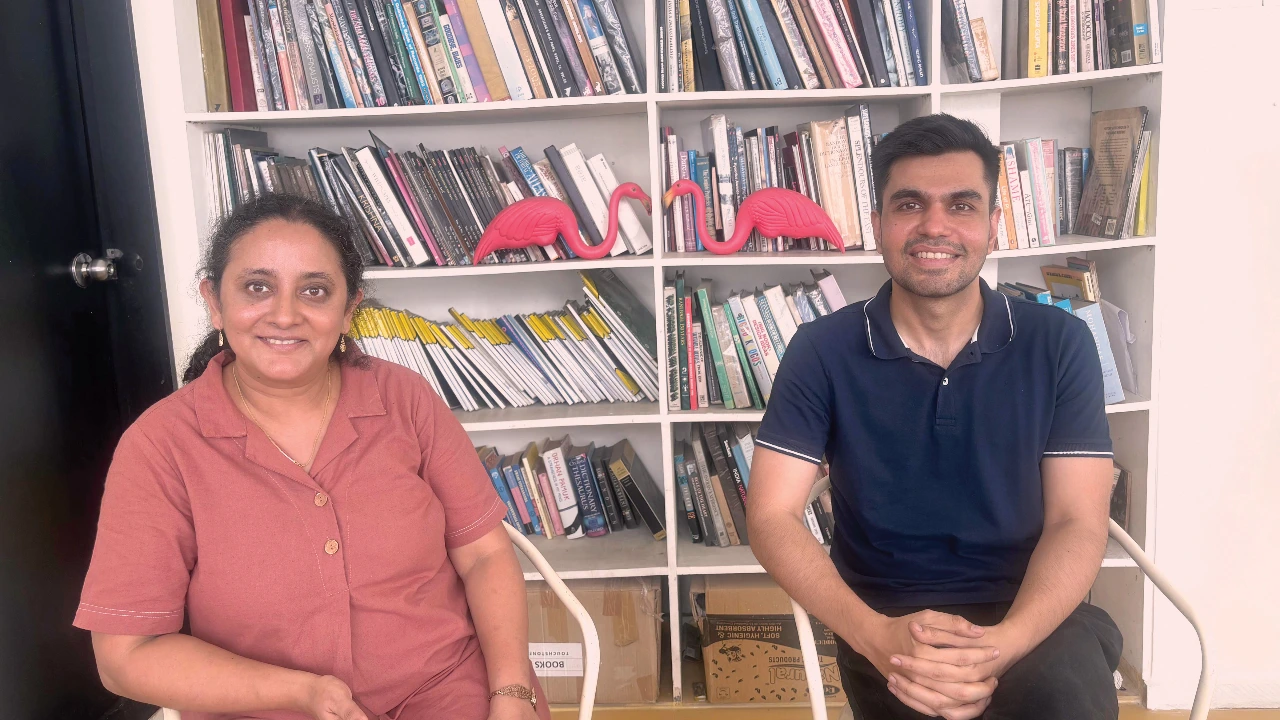
 Manasi Narasimhan and Samir Sethi
In this episode of Marketing Manifest Stations, Manasi Narasimhan, head – brand and communications, Accelerate Indian Philanthropy and SCALE, chats with Samir Sethi, head, brand marketing, Policybazaar, on building India’s insurance comparison category, a decade of brand evolution, and the push to make insurance simpler and more trusted.
Looking back at his journey with Policybazaar, Sethi explained that the task was never merely about advertising insurance. It was about convincing Indians to compare insurance online, educating them about products they did not actively seek, and ultimately earning their trust in a category that is only tested when consumers need it most.
"I have been with Policy Bazaar for a little over 11 and a half years now, and it has been an extremely interesting journey," he said. "It was not just about building a brand, it was mostly about creating a category which has very little existing demand. Unlike travel or e-commerce, where comparison shopping already existed, insurance was a category in which consumers rarely compared policies before buying. That meant Policybazaar had to first create a behaviour before it could build a business,” Sethi explained.
He went on to break the company's brand journey into three distinct phases.
The first focused on familiarising consumers with the idea of comparing insurance online. Early campaigns demonstrated practical savings, such as reducing car insurance premiums by comparing multiple options, making online comparison feel both simple and rewarding.
Once consumers accepted comparison as a habit, the focus shifted to an even larger problem: convincing Indians to actually buy insurance.
"For categories like term insurance and health insurance, it had less than adequate existing demand," Sethi said. The brand's communication, therefore, centred on educating audiences about medical inflation, rising health risks and the importance of financial protection for families. Rather than pushing products, the campaigns attempted to grow the category itself.
The third phase tackled perhaps insurance's biggest trust barrier: claims. To do this, Policybazaar highlighted its role beyond the point of sale.
"People actually buy insurance to be able to use it later," Sethi stated. "When that promise is not fulfilled, that leads to a lot of disappointment."
Through campaigns featuring real customers recounting authentic claims experiences on national television, the company sought to reassure consumers that it remained alongside them throughout the claims process.
"As they say, the proof of the pudding lies in its eating," he said, clarifying why genuine testimonials help bridge the trust deficit far more effectively than scripted advertising.
While education remained central, scale required mass appeal.
Policybazaar's celebrity strategy has therefore focused on personalities with broad, pan-India recognition. Akshay Kumar's portrayal of Yamraj in the brand's 2018 campaign used a culturally familiar character to deliver a serious message about term insurance.
"One of the intentions has been to appeal to the masses and also keep it extremely relatable," Sethi said.
Over the years, the company has also collaborated with actors Kapil Sharma and Pankaj Tripathi, allowing each celebrity's personality and humour to simplify conversations around health and term insurance without trivialising the subject, he added.
The same philosophy extends to sponsorships.
While large-scale sporting events like the IPL, ICC Cricket World Cup and Women's Premier League provide unmatched reach for a mass-market brand, Policybazaar has simultaneously invested in endurance events such as Ironman, HYROX and city marathons to build a stronger association between health insurance and healthy living, Sethi shared.
He also revealed that despite being a digital-first company, television continues to dominate the brand's media mix. While the allocation has gradually shifted from over 80% linear television to roughly a 60:40 split between traditional TV and connected television across OTT and smart TV platforms, large-screen advertising continues to deliver immediate business impact.
On AI, Sethi sees artificial intelligence reshaping marketing in three major ways: generating creative assets, helping brands identify more intent-driven audiences, and dramatically improving attribution models that help marketers understand what is actually driving business outcomes.
For young marketers entering the profession, Sethi's advice combines technological curiosity with timeless fundamentals. "Get with the AI," he said, urging marketers to adopt the technology across both work and life.
"There is a fundamental difference between just advertising and brand building, and creativity itself does not mean great marketing. Real marketing gets you real results," he added.
Further encapsulating Policybazaar's philosophy over the past decade, Sethi underscored, "The purpose of marketing is not just marketing, the purpose of marketing is business.”
Watch the entire conversation here:
Tune into the conversation on Spotify: