

 Subscribe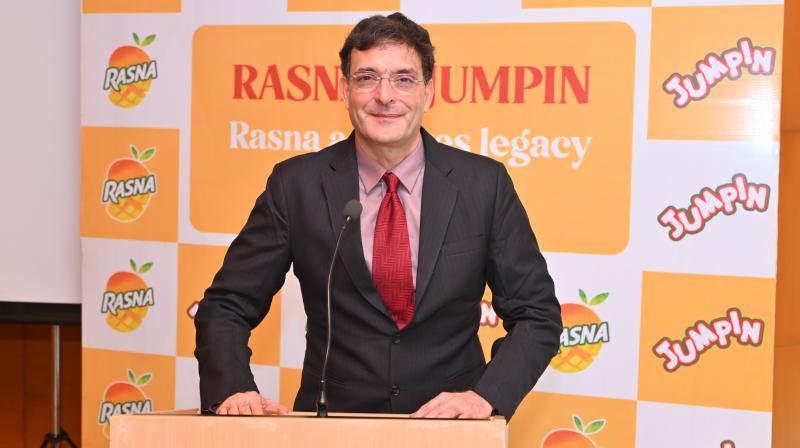
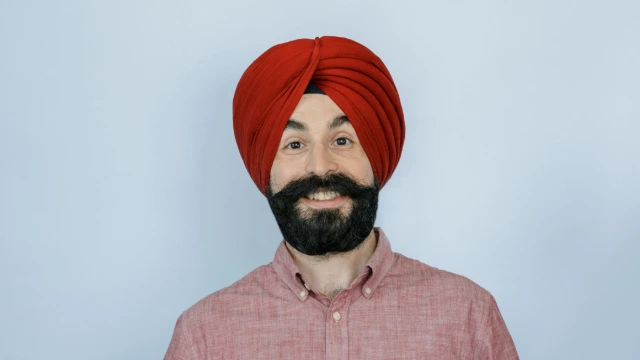
 Piruz Khambatta
As summer approaches and beverage brands ramp up their advertising, Rasna has rolled out a new campaign aimed at reconnecting with younger consumers while reinforcing its family-friendly positioning. The brand, which commands over 70% share of India’s concentrate market, is targeting 15–20% CAGR growth with the launch.
The campaign introduces Rasna Nutri+, a reformulated variant fortified with vitamins and zinc, and marks the brand’s latest celebrity association with actor Rakul Preet Singh.
The move comes as India’s health drinks market, valued at around USD 9 billion in 2024, continues to expand on the back of growing demand for functional beverages.
Conceptualised by its mainline agency RK Swamy, the campaign blends nostalgia with its iconic 'I love You Rasna' tagline (first seen in its popular ad film with Ankita Jhaveri) with a refreshed communication strategy.
The campaign consists of an ad film. It also revives Rasna’s kid-focused storytelling through the 'Rasna Boy', played by Areez Khambatta, the seven-year-old son of Piruz Khambatta, chairman, Rasna International, alongside collectable toys inside packs designed to engage children and families. The collectable of 'prankies' is also the brand's revival strategy.
The film captures a playful prank war between Singh and the two child actors, introducing the next generation of icons: the new Rasna Girl and Rasna Boy.
This time, the campaign introduces a digital prank challenge open to everyone, from students and parents to professional creators. To participate, users simply need to upload a video of themselves pranking friends or family on social media. Selected entries will win exclusive prizes and may also be featured on Rasna’s official platforms.
The move builds on Rasna’s long-standing strategy of pairing nostalgia with celebrity appeal. Over the years, the brand has partnered with cricketers Kapil Dev and Virender Sehwag, and actors including Hrithik Roshan, Karisma Kapoor, Genelia D'Souza, Anupam Kher, and Paresh Rawal.
Alongside the celebrity-led push, the brand is reshaping its media mix with a stronger emphasis on digital platforms, including YouTube and the digital properties of the Indian Premier League.
The campaign spans YouTube, Meta and programmatic platforms, supported by an influencer-led leg. At the same time, it maintains a strong presence on free-to-air television, children’s programming and traditional TV to deepen penetration in rural and semi-rural markets.
The strategy reflects the scale of Rasna’s operations, with a presence in 60 countries, 11 manufacturing plants in India, and a distribution network spanning packs priced from INR 1-2 to INR 200, catering to consumers across income segments.
To understand why the brand chose Singh to front the 2026 summer campaign and how Rasna plans to balance nostalgia, nutrition and new-age media in its next phase of growth, Manifest spoke with Piruz Khambatta, chairperson, Rasna International.
Edited excerpts:
Rasna has had memorable celebrity-led campaigns in the past. What made Singh the right face for the Summer 2026 campaign, and what does the association unlock for the brand that previous campaigns didn’t?
I was pleasantly surprised because Singh's agency told me she was very keen to do Rasna. I think part of that comes from the fact that when she was younger, she enjoyed drinking Rasna herself, so the association felt natural to her. When I explained that we were introducing Nutri+, she was equally enthusiastic because she is quite health-conscious and understands the importance of micronutrients. In the hinterland of India, there is a significant issue of micronutrient deficiency. When a consumer buys a two-rupee Rasna sachet, which we sell in billions, they are also getting three vitamins, including vitamin C for immunity. She appreciated that aspect of the product. Singh performed very well in the ads, and she also gelled very naturally with the kids in the film.
Many beverage brands rely heavily on celebrity visibility. For Rasna, is the celebrity meant to drive mass recall, reposition the brand for a younger audience, or signal a new phase for the brand? Do celebrities give the brand the reach it deserves in the current market?
We have made a lot of ads, and less than half of them feature celebrities. It is not necessary that every campaign must have a celebrity. Just taking a celebrity has no value unless that person communicates what the brand wants to say. In this case, for example, Singh is strongly communicating health while also interacting naturally with the kids in the ad film, and I believe that is important.
Credibility is equally important. I once saw a script where actor Amitabh Bachchan, at 60, was shown drinking Rasna and saying he drinks it regularly. We didn’t go ahead with that because it wouldn’t have been believable. Similarly, if Shah Rukh Khan is shown driving a very small car, people know it’s not real. Endorsements have to feel authentic.
So we are careful about how we use celebrities. Sometimes we cast them in roles that feel natural. For instance, actor Paresh Rawal had been a consumer of the brand, so we portrayed him as a retailer, which suited his personality. The idea is to keep the association believable.
Today, another advantage celebrities bring is their own social media reach. They have large followings on platforms like Instagram, and when they share the campaign there, it adds another layer of visibility and viewership for the brand.
What does the marketing mix look like for this campaign?
We will have a multi-channel approach. Ten years ago, our spending on digital was essentially zero. Today, however, nearly 60–70% of our marketing is moving towards digital platforms.
What impact are you looking for with this campaign?
Nutri+ is a new blend that we have added to the product, and we want to clearly communicate that. In today’s competitive market, one needs a strong USP. If one looks at our nearest competitors in the concentrate category, they offer no nutrition at all.
So when a consumer wants some level of nutrition along with the drink, Rasna naturally becomes a better option compared to the competition. It gives us what I call a tangible advantage. It is not just a marketing claim; there is an actual, visible benefit in the product.
Rasna acquired Jumpin and entered the RTD segment last year. How has that worked out for you?
Last year, even during the off-season, we launched the product and are continuing to roll it out. At the moment, we are not investing heavily in marketing for it because we are still learning the logistics of the business and setting up our franchise network. So this year, we have not done any television advertising and are focusing mostly on below-the-line activities.
That said, we believe Jumpin has strong potential. In the next two to three years, its turnover could become comparable to Rasna’s, and we expect a significant portion of our growth to come from that brand.
Unlike many other brands that focus on supermarkets and large modern retail outlets, we are prioritising smaller towns first. Historically, Jumpin has always had a strong appeal in smaller towns, especially in North India, so that remains our focus. In fact, in the coming days, we have a distributor meeting in Delhi, and many of the distributors attending are coming from smaller towns, which reflects the direction we are taking.
Every summer, the beverage category becomes intensely competitive with soft drinks, juices, and new health-focused drinks. Where does Rasna see its biggest opportunity in this crowded landscape?
The big advantage today is that in the digital space, a marketer is paying for views. Unlike television, where one does not really know who is watching. For example, if we advertise during a TV serial, our ad runs along with several other brands, but we don’t know who is actually seeing it or paying attention.
With digital, one knows that the person you are targeting will see the ad. Even if they do not engage deeply with it, the brand is still visible to them. So in that sense, it is far more focused and targeted.
That is why we believe the summer campaign will work. The content is also good. The creative has a nice narrative and a pleasant feel to it. It is not overdone or overloaded, but rather a soft, simple commercial. I expect people will enjoy watching it and see it more often.
With inflation affecting household budgets, Rasna has traditionally positioned itself as an affordable family drink. How important is value messaging in your strategy today?
Luckily, GST brought significant relief for both consumers and us, because earlier the taxes used to add up quite a lot. We have passed on that benefit to consumers. For many of our packs priced at INR 2 or INR 5, we have actually increased the grammage while keeping the price the same, and we are also offering added nutrition at that cost.
We have tried to be transparent in passing on the benefits and maintaining our price points. Unlike many other brands that focus on larger packs, we concentrate heavily on smaller packs. In those cases, we often absorb cost increases ourselves. For instance, even when input costs like plastic rise, we cannot increase the price because of the fixed coinage. So we ensure that the benefit still reaches the consumer while we manage the costs on our end.
Looking ahead, what is Rasna’s larger vision for the brand in India and globally over the next few years?
I think one should give us full marks for trying to do things that are not only about our own profitability but also about the larger industry and the country.
Let me give you a few examples. First, if we look at our competition, very few of them offer micronutrients in their products, but we do. Second, we use Indian fruits. We are completely swadeshi (of one's own country) in that sense and are not importing raw materials that would benefit foreign farmers. Even in many orange-based concentrates today, the ingredients are often imported, whereas we use Indian fruits and support local farmers.
Another example is packaging. About 10–15 years ago, a lot of plastic packaging was imported. We decided that everything should be made in India, and today all our jars and packaging are domestically produced. So we are consciously trying to work in ways that benefit the country.
Recently, I also tied up with the Confederation of All India Traders (CAIT). They have around 30,000 members, and we are creating a dedicated B2B app through which traders can directly buy Rasna products at better rates instead of going through multiple middlemen. The idea is simple: why should there be unnecessary intermediaries making money in between when we can connect directly with traders?
To be honest, my satisfaction does not come only from top-line or bottom-line numbers. It comes from doing things that are good for the broader ecosystem. I would be happier making reasonable profits while also supporting social causes and industry initiatives. That has always been my mindset. I have been involved with several industry associations, working on issues such as food laboratories and taxation, because I believe businesses and the government need to work together. When I approach the government on these matters, they know it is not just about seeking favours but about representing a wider industry interest. That, to me, is the bigger purpose of doing business.