
 Subscribe
 Shekhar Bhattacharjee
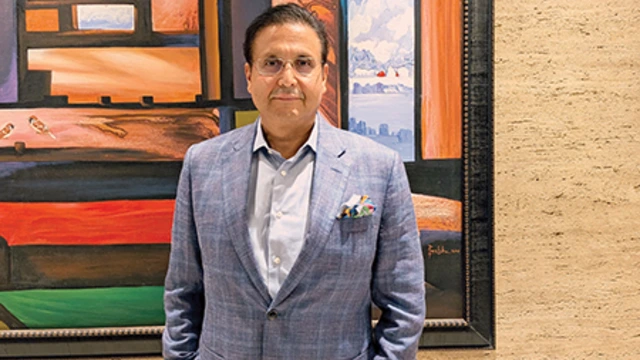
In the May 2026 issue, Manifest spoke with Shekhar Bhattacharjee, founder, Edstead, on the role of branded content today, the realities of building a full-stack studio, and where non-fiction storytelling is headed next.
Bhattacharjee, who launched Edstead in 2022, is an education and media entrepreneur with over two decades of experience building purpose-driven institutions and content platforms, including scaling Great Place to Study into a globally recognised authority before its acquisition in 2020.
Edstead’s decision to build a full-stack model, spanning ideation, production, brand onboarding, and amplification, was rooted in gaps Bhattacharjee observed in the media and entertainment ecosystem.
“What I noticed in the M&E ecosystem was that there were multiple missing links,” Bhattacharjee shared. In simpler terms, he pointed to an industry where creative, production, and distribution often operate in silos, leading to fragmented storytelling and inefficiencies.
“What we wanted to do was build a platform that brings everything together from ideation to selling, to onboarding brands, to producing content, and finally amplifying it,” he added.
His explanation highlighted a shift from fragmented execution to a more integrated model that allows better control over both storytelling and commercial outcomes.
He also emphasises Edstead’s platform-agnostic approach. Bhattacharjee stated, “Most networks sell what they already have. We focus on the idea first, then the brand ideology, and then identify the right platform.”
What he underscored here is a reversal of the traditional pipeline, prioritising story and brand alignment before distribution, rather than tailoring ideas to fit existing platforms.
Since launch, the company has produced 11 shows and worked with over 90 organisations, with several properties returning for multiple seasons. “Some of our shows are now in their third season, which shows brand acceptance and audience validation,” he shared, pointing to sustained engagement rather than one-off campaigns.
On the content front, Edstead is doubling down on non-fiction.
Bhattacharjee voiced, “We’re pushing to expand non-fiction storytelling. Stories that feel lighter, more meaningful, and rooted in real experiences.”
The broader point he made is that audiences are gravitating towards authenticity, especially in an overcrowded content landscape.
Maintaining editorial integrity while working with brands remains a key focus, according to Bhattacharjee. “We set clear expectations with brands: it’s less your story and more about what we are doing,” he added.
What this translates to is a storytelling approach driven by impact and context, rather than overt brand messaging.
He noted a clear evolution in brand integrations as well.
Bhattacharjee stated, “Now, integrations are more advocacy-led. Brands align with a larger ideology or culture rather than pushing direct messaging.”
The explanation here is that branded content is moving closer to cultural participation, where brands become part of a narrative rather than interrupt it.
On the business side, Bhattacharjee outlined a structured revenue model. “We follow two formats: cohort-based shows and long-form shows,” he explained. Essentially, this allows flexibility, either multiple brands sharing a narrative or deeper integration by one or two brands, depending on the storytelling format.
The larger industry shift is unmistakable. “It’s definitely a core strategy now, and part of daily marketing plans,” he said, referring to branded content’s evolution. He cited how dedicated branded content teams now exist across agencies and platforms, signalling their move from a peripheral activity to a central function.
Discussing the creator ecosystem, he observed growing maturity. “Micro creators can drive immediate action. Larger creators may not deliver instant ROI but build long-term trust and reach," Bhattacharjee explained.
His explanation reflected a more segmented ecosystem where brands choose creators based on specific outcomes rather than blanket visibility.
On storytelling formats, Bhattacharjee sees strong momentum for factual content. He added, “Factual storytelling is coming back strongly. The key is making it informative yet cinematic.”
What he highlighted is the blending of documentary-style depth with the production quality of mainstream entertainment.
He also touched on regional storytelling, noting a balance between local relevance and broader appeal. “There’s a larger cultural shift; people are reconnecting with their roots while consuming global content.”
His point here is that culturally rooted stories can travel further when anchored in universally relatable themes and personalities.
Finally, on AI, Bhattacharjee takes a measured view. “It can improve speed and efficiency, but it cannot replace human intelligence in the business of creativity," he summarised.
His broader argument is that while technology can optimise execution, the core of storytelling, ideas, emotion, and perspective, will remain inherently human.
Read the full interview in the May issue of Manifest, which can be purchased here.