

 Subscribe
 Apurva Sharma
JSW Group has announced its foray into the electric commercial vehicle market with the launch of Ampstar, the electric commercial mobility brand of JSW Greentech.
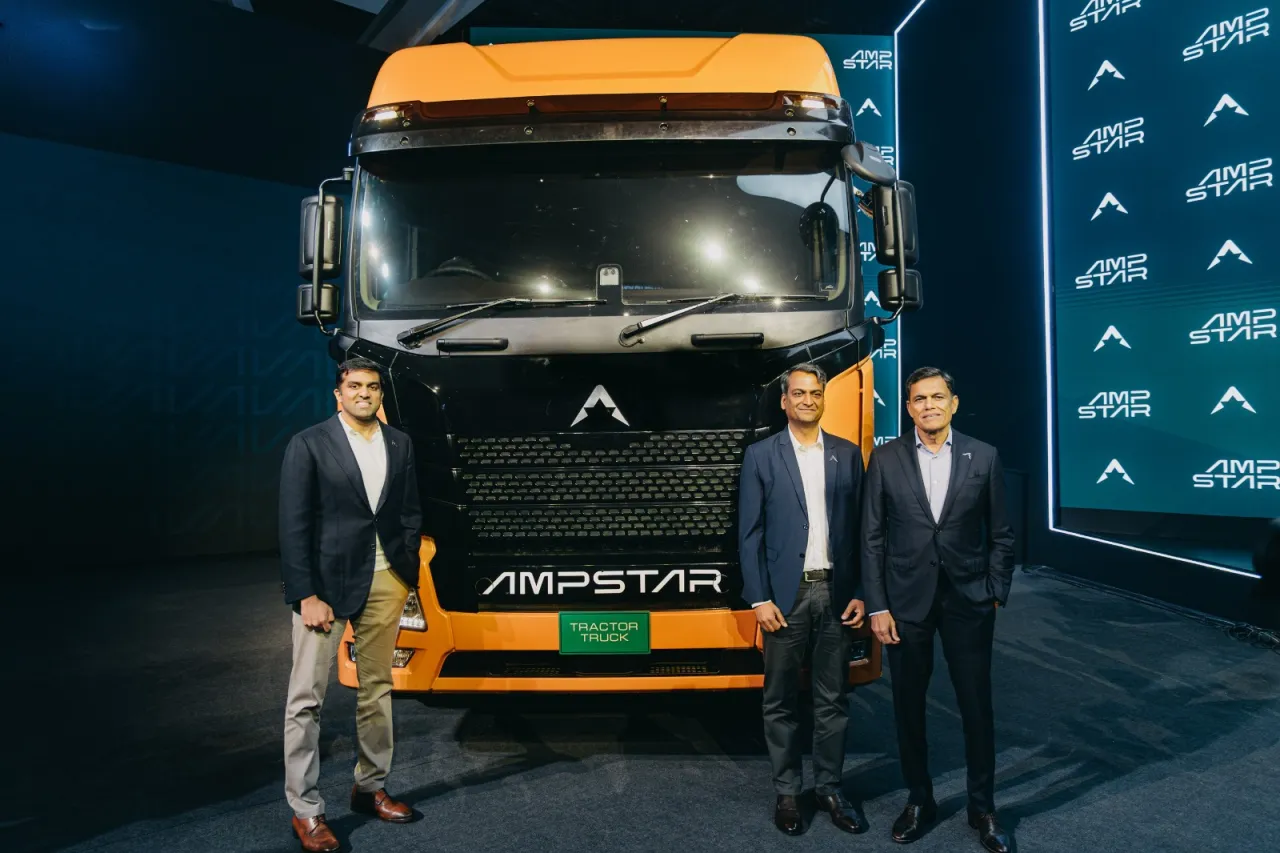
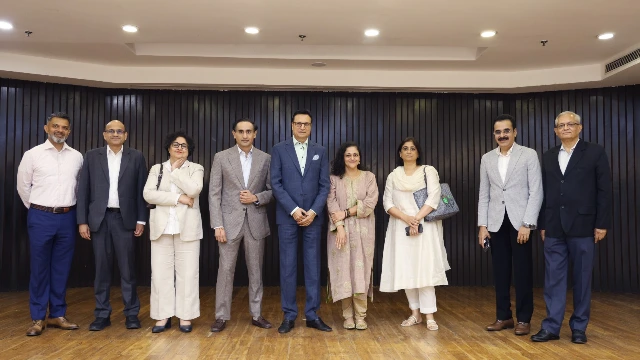
(From L-R): Parth Jindal, Sumit Mittal and Sajjan Jindal at the launch event of Ampstar in Mumbai
The company has committed INR 2,500 crore in the first phase and will manufacture electric buses and trucks at its greenfield facility in Chhatrapati Sambhajinagar, Maharashtra. The plant will have an annual capacity of 15,000 vehicles.
Apurva Sharma, head - marketing, JSW Greentech, emphasised that the entry into the space is more of a ‘national decision’ than a ‘commercial decision’. He said the move, backed by the JSW Group, is driven by four key priorities: energy security, lower logistics costs, building a stronger domestic automotive and technology ecosystem, and creating a cleaner, zero-emission future.
"India imports 88% of its crude oil requirement. The switch to electric can also reduce logistics costs over a period of time for the industry. It will help build a better future for the next generation in terms of zero emissions. We realised that not much has been done in the commercial mobility segment, and saw a lot of white space, so we felt it was the right time to enter this market. There's also a lot of backing from the government, and they are asking industries to focus on sustainable forms of mobility. JSW Group has always believed in that,” he said.
The brand has partnered with Interbrand to create its brand strategy, positioning and identity.
Sharma said the company worked with the agency to conduct primary and secondary research to understand the market, identify gaps and map customer pain points. “We understood what the segment needs and what the pain points are. Our focus is on building an entire electric mobility ecosystem around the customer. The customer value proposition has to be the complete mobility stack. It’s about charging and financing, operations and after-sales support. We wanted to create a brand that captures this entire customer value proposition, while also cueing the category and technology and being relevant for the end customer to understand and relate to,” he noted.
The company is initially focusing on heavy commercial vehicles, including buses and trucks, but plans to eventually expand into medium and light commercial vehicles.
According to Sharma, the company’s proposition goes beyond selling an electric vehicle, with a focus on giving commercial customers confidence through the transition to electric mobility. “We understand electric mobility and have built in-house capabilities around that. We need to help our customers through the entire customer journey (to build that confidence). It’s not only about the vehicle, but also the things around the vehicle after the purchase including after-sales service and support."
Ampstar will target both public- and private-sector customers. The company has already started bidding for tenders and plans to work with institutions, while also looking at the private sector as the electric commercial vehicle market develops. “We are currently bidding for tenders, and we'll be working with a lot of institutions. Things are just getting started. As and when we develop more of the product range, which you’ll see in the coming months, that will open a lot of opportunities for us,” Sharma shared.
On the go-to-market strategy, he said the company plans to take a customer-specific approach. “Go-to-market is very focused and customised to what the customer needs, and we will work for that. We are offering all kinds of options in terms of outright purchase or lease,” he stated.
For Sharma, one of Ampstar’s key differentiators is the scale and capabilities it can draw from the JSW Group. “The backing of the JSW Group is a key differentiator for us. We can leverage the group’s scale, progress and capabilities as we build this business. There are some unique aspects to our manufacturing plant, including the PTD process we are using for buses. These are things that, to my understanding, no other auto player in the market has done. You will see more of these capabilities coming through in the next couple of months,” he mentioned.
Digital will be a key part of Ampstar’s communication strategy, particularly given the digital engagement of its target customers. “Our customer segment is actually quite digitally savvy. You may think that a truck driver may not be very active digitally, but they are quite active across digital channels,” Sharma said.
At the same time, he noted that the company will need to look beyond digital platforms to reach customers across India, particularly in tier two and three cities. “A lot of our customer segment is not the typical metro audience, so we will have to take the message across the length and breadth of the country and reach into tier-2 and tier-3 cities. This is not a B2C segment where you can simply advertise and reach everyone. We will have to take a more customised approach and work closely with customers,” he said.
The company plans to complement its digital efforts with PR, events, customer roadshows and other targeted initiatives.