
 Subscribe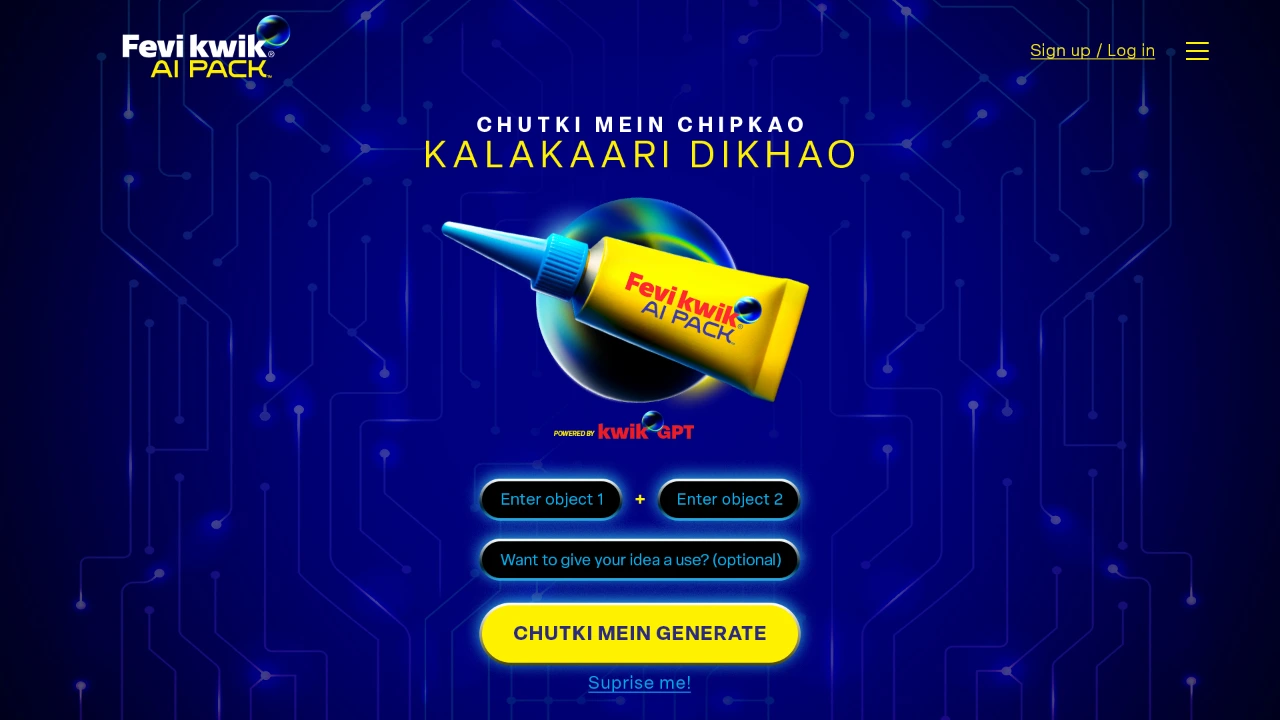
 Rather than positioning AI as a sophisticated piece of technology, the brand chose to treat it as a tool for playful creation.
Artificial intelligence was everywhere. It dominated headlines, flooded social feeds, and found its way into everyday conversations. Yet for many people, especially those outside technology circles, AI still felt intimidating. It was fascinating, but not always accessible. Most interactions with AI were framed around productivity, efficiency or complex applications, leaving little room for experimentation and fun.
At the same time, a different behavioural shift was taking place. Younger audiences were increasingly embracing DIY culture, creator platforms and hack culture. They were personalising, remixing and reimagining everything around them, turning participation into a form of self-expression rather than simply consuming content.
For Fevikwik, one of India’s most recognisable brands, these two trends presented an interesting opportunity. The brand had spent decades building associations with speed, ingenuity and instant fixes. The challenge was to find a way to participate in the AI conversation while remaining true to those core brand values.
From instant fixes to instant creativity
The campaign began with a simple question. What if Fevikwik’s role was not limited to bonding objects together? What if it could bring together ideas, imagination and creativity with the same ease and immediacy?
This thinking led to a subtle but significant evolution in the brand narrative. Moving beyond Chutki Mein Chipkaye, Fevikwik introduced Chutki Mein Kalakaari, expanding the meaning of instant bonding from functionality to creativity.
Rather than positioning AI as a sophisticated piece of technology, the brand chose to treat it as a tool for playful creation. The objective was not to explain AI. It was to make people want to engage with it.
The insight was straightforward: technology becomes far less intimidating when people can experiment with it in a way that feels intuitive, entertaining and rewarding.
Turning consumers into creators
At the heart of the campaign was the Fevikwik AI Pack, powered by KwikGPT. Users were invited to visit a microsite and enter any two everyday objects. Within moments, the platform generated a visual mashup along with a unique name for the creation.
A chopping board and a mirror became Cute Chops. A watch and a makeup kit transformed into Timeglam. Headphones combined with an umbrella turned into Headbrella. The possibilities were endless, often amusing, and occasionally entirely unexpected.
What made the experience compelling was its simplicity. There were no complicated instructions, no technical expertise required and no barriers to participation. Anyone with an idea could immediately become a creator.
This shift in ownership proved critical. Instead of showcasing what AI could do, Fevikwik handed the creative process to consumers themselves. Every generated creation became a piece of user-generated content, and every participant became part of the campaign narrative.
Designing the campaign around participation
The campaign was built to encourage discovery, experimentation and sharing. A leaderboard-driven structure rewarded creativity and gave participants an incentive to return, while the open-ended nature of the platform ensured that no two creations were exactly alike.
As more people engaged with the experience, participation began to fuel visibility. The campaign generated more than one million user-created entries, demonstrating both scale and sustained engagement. The volume of content also ensured that the campaign remained fresh, with new ideas continuously emerging from the community itself.
This was particularly important because the most effective ambassador for the platform was not the brand. It was the participant who proudly shared a creation with friends and followers, inviting others to join in.
Turning innovation into a PR story
With strategic amplification from Adfactors PR, the campaign was positioned as more than a marketing initiative. It became a story about how an established Indian brand was finding new ways to engage audiences through technology.
Media outreach focused on the campaign’s unique use of AI, the participatory nature of the platform and the cultural relevance of the idea. User-generated creations became proof points that demonstrated the campaign’s appeal, while influencer partnerships helped introduce the experience to wider audiences across regions and languages.
The initiative secured more than 26 media coverages and delivered an earned media value of INR 16.2 million. PR value crossed INR 4 crore, generating an ROI of 196x. Just as importantly, conversations around the campaign remained overwhelmingly positive, with 96 per cent positive tonality reflecting strong audience endorsement.
The bigger takeaway
Many brands have looked at AI as a technological opportunity. Fevikwik approached it as a cultural one.
By combining a familiar brand promise with a simple participatory experience, the campaign transformed a complex technology into something people could play with, share and enjoy. The result was not a demonstration of artificial intelligence in its most advanced form. It was a demonstration of what happens when technology is used to unlock human creativity.
In doing so, Fevikwik successfully expanded its own narrative, moving beyond instant fixes to instant ingenuity, while proving that the most effective innovations are often the ones that feel effortlessly simple.