

 Subscribe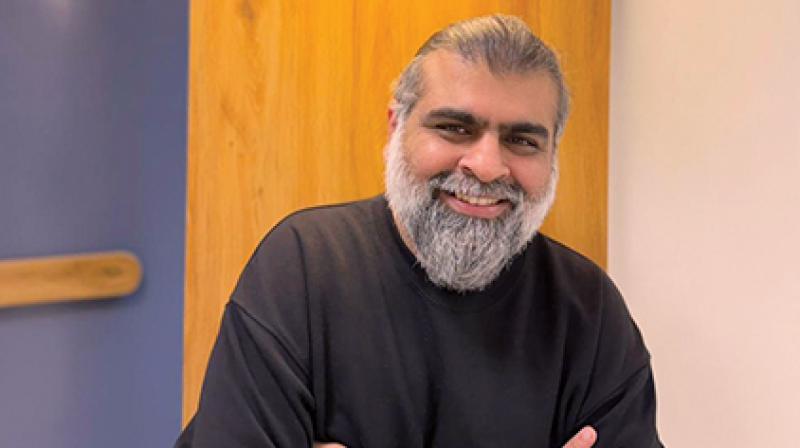
 Harshhik Suraiya
Most production houses launch with a polished showreel and a rehearsed pitch. Harshhik S Suraiya chose a different route. And that shows in his debut work under his new banner Studio Zuno: the brand film for Naturals Ice Cream.
Drink Water Design and Naturals approached him for the launch film, and instead of taking the usual route of a treatment deck, he cut a 1-minute-20-second scratch film.
So while the idea started from a script that Prasad Patil, founder and creative director, Drink Water Design Studio, the agency on board shared, Suraiya chose to respond with a film rather than a document.
Suraiya then started stitching together a rough edit built around design, people and the small rituals that make Naturals Ice Cream feel like home. Only after seeing the cut did the final story emerge. That’s how he works: build the emotion first, shape the structure later.
The film already has people talking. It’s nostalgic without leaning on clichés, rooted in India without feeling staged, and emotionally warm without being sentimental. It feels like a filmmaker telling a story he personally believes in. And that’s exactly the point when it comes to the stickiness of an ad film.
The Naturals Ice Cream film: design, joy and unmistakably Indian
For Naturals, Suraiya leaned into a very specific truth: India doesn’t eat ice cream as the world does. It isn’t plated. It isn’t staged. It’s scooped into steel bowls at 7 am when someone wakes up hungry. It’s shared during cricket matches, passed around a living room, or eaten quietly after dinner while standing near the fridge.
Naturals isn’t a dessert, it’s a feeling. And the film aims to mirror that.
The design language anchors the narrative, but the human moments give it life. People interacting with nature, glimpses of warmth, the simplicity of everyday routines. Nothing is over-styled, nothing tries too hard. That’s the emotional calibration Suraiya aims to excel at.
He also credits the client, director, Srinivas Kamath, Ourtimes Ice cream, who told him upfront that he didn’t need a heavy-handed brand presence. “People know the brand,” Kamath said boldly.
That kind of trust isn’t common, and Suraiya calls it one of the biggest reasons the film could breathe.
The timing of Studio Zuno’s arrival also fits into a broader shift in India’s advertising landscape. With brands seeking storytelling that feels lived rather than over-engineered, filmmakers who bring emotional clarity and instinctive craft are increasingly shaping the big conversations. Suraiya’s approach sits right in the middle of that moment, unpolished where it should be, precise where it needs to be.
A decade of craft, stripped of the noise
Suraiya’s path is familiar, but the way he speaks about it is not. He grew up creatively at mainline ad agencies such as Ogilvy and McCann. He’s worked on big, complicated, award-winning campaigns including Cadbury, Swiggy, Savlon, and Tata Power, among others, and has a shelf full of One Show, Cannes Lions, and D&AD metals.
But he doesn’t want to revisit the past too much.
What he carries forward are the learnings that matter: trust your instinct, keep the work honest, and protect the idea from unnecessary layers.
According to him, running a company and directing at the same time teaches you more about life than work. He said that it forces you to choose the briefs that matter, hold your line when the easy money is tempting, and surround yourself with people who share your rhythm. “If my heart doesn’t respond, I say no,” he remarked.
He’s left money on the table more than once, and that choice shaped him more than any award.
Suraiya also points Milin Shah, his producer, calling him a pillar for Studio Zuno since day zero, someone who has held the foundation steady while the vision took shape.
The rise of a new voice in the filmmaking ecosystem
Studio Zuno is young, born in August 2025. But through this conversation, one can already sense its direction. It’s not trying to be the biggest studio. It’s trying to be the one with a point of view. A place where the filmmaker leads with instinct, cuts a film before he writes a deck, and builds stories that feel lived rather than manufactured.
For an industry hungry for work that feels human again, Studio Zuno’s timing is spot-on.
Why Studio Zuno was born
The production company wasn’t born out of frustration with the industry, no grand manifesto, no ‘fixing advertising’. It came from something smaller but truer: a restless curiosity, an urge to tell stories in Suraiya’s own language, and a belief that great work stays simple.
He never wanted to be boxed into a genre. His portfolio jumps from humour to emotion to design-driven craft because he consciously avoids being typecast. “People remember stories, not categories,” he shared.
Studio Zuno is his chance to build a space where the story decides the treatment, not the reputation of the director.
Suraiya’s vision and the one he is building now is a creative house where the instinct of the filmmaker sits at the centre, not the format, not the trend, not the pitch deck.
Where Studio Zuno wants to go next
Suraiya’s clear on one thing: tech isn’t the enemy. “AI isn’t a threat to live action unless you try to use it as a substitute for emotion. People don’t connect with perfection; they connect with effort, intention, texture. They can feel when something is lived versus generated,” he said.
For him, AI is a tool, but live-action storytelling carries a truth you can’t fake. “If the Naturals film were made in AI, you wouldn’t feel anything,” he tells us. “People subconsciously know the work, the craft, the weather, the waiting, the decisions behind every frame.”
Studio Zuno’s ambition is simple yet demanding: create work that leaves a legacy. Build a company big enough to take on different kinds of stories, but keep the honesty of the craft intact. He doesn’t want to be the man who only does emotional work or only does design work. Suraiya wants to do the work that moves him and trusts that audiences will respond to that honesty.
What Suraiya is building with Studio Zuno is less a production setup and more a creative environment where decisions are made close to the idea, not far away from it.
The goal is to keep the storytelling intimate, even when the scale grows, which is much needed.
Harshhik S Suraiya’s showcase reel:
This special feature was first published in our December issue. Get your copy here!