
 Subscribe
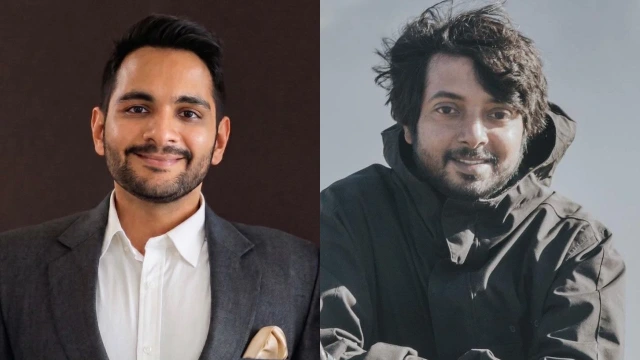
 Amith Prabhu (left) and Jaideep Shergill
IndiGo’s recent operational meltdown did more than inconvenience passengers - it exposed a glaring weakness in the airline’s crisis management playbook. The airline CEO’s woefully inadequate apology quickly became a case study in how even consumer-facing giants can misjudge tone, timing, and public sentiment. Driven by arrogant mismanagement and compounded by regulatory apathy, IndiGo’s crisis echoes a recent episode involving another beleaguered airline: after the tragic Boeing 787 crash in Ahmedabad, Air India CEO's allegedly plagiarised apology, worsening the airline's reputational damage.
After all the fake apologies from sundry brands that did the rounds on social media recently, we weigh in with Amit Prabhu, founder, The Promise Foundation, curator, Praxis, founding dean, SCoRe and Jaideep Shergill, founding partner, Pitchfork Partners, on why brands fall short when it comes to actual apologies.
Why do brands, despite sophisticated tools and technology, still fumble the fundamentals of crisis communication? Do large consumer brands underestimate how quickly gaps in empathy or accountability get amplified today?
Amith Prabhu (AP): This is specific to brands within India. Tools and technology can never communicate during a crisis. Only real people with courage can. Most brands that fumble do so because they do not have genuine people at the top to take ownership and shoulder the blame. There is an underlying belief among brands in India that customers are forgiving and easily forget and move on.
Jaideep Shergill (JS): Technology has given us the ‘what’ and the ‘where,’ but it hasn’t given us the ‘how.’ Brands fumble because they focus on managing the data rather than the crisis. The fundamental rule is simple: Come out quick and accept there is a problem. Large consumer brands often suffer from an ‘arrogance of scale’ and underestimate the velocity of public sentiment. When one is a market leader, there is a tendency to hide behind operational metrics while passengers are stranded in the real world. They waited for internal reports while the house was already burning down on social media. Today, a ‘gap in empathy’ is amplified in seconds. If you aren’t the first one to own the narrative, the narrative owns you.
What does a modern-day apology require in a hyper-connected world? And how can marketing leaders reclaim authenticity before reputational damage becomes irreversible?
AP: A modern-day apology requires the same thing an apology required back in the traditional days: Genuineness, Empathy and Magnanimity = GEM.
JS: They require three things: Ownership, immediacy, and corrective action. But above all, an apology today must be legit. It shouldn’t look like a formal, full-page newspaper ad because a newspaper ad isn’t an apology; it’s a transaction.
To reclaim authenticity, one must feel sorry. Authenticity isn’t a marketing buzzword; it’s a leadership trait. Marketing leaders need to stop hiding behind ‘statements’ and start showing ‘presence.’ The CEO shouldn’t be hiding in a boardroom; he should be on the terminal floor, visible and taking the heat.
One reclaims trust by over-compensating and over-correcting. Don’t just offer a measly discount voucher; provide a solution that feels like one and not just another marketing gimmick. In a world where every failure is recorded and shared, humanity is the best hedge against reputational damage. If you wait for the legal team to finish their fourth draft, the court of public opinion has already delivered its ‘guilty’ verdict.
Why do brands with robust marketing machinery still default to generic, legal-filtered statements during crises? Have brands become overly reliant on ‘PR-safe language’ that strips apologies of humanity?
AP: There is nothing called ‘PR safe’ language. There is language that is not thought out and lacks humanity. Brands resort to this because there is a feeling that customers will forgive and forget. This makes the brands not care beyond a point.
JS: It’s the ‘legal vs. legacy’ trap. Most brands are terrified of litigation or social media blowback, so they let lawyers write their apologies. The result is a sterile, robotic statement that reads like a terms-and-conditions update. What these brands don’t realise is that playing it safe is the riskiest thing you can do.
We’ve become overly reliant on ‘PR-safe’ language because it’s defensive. But in a crisis, defense is the fastest way to lose trust. Look at the recent Air India episode following the Boeing 787 crash in Ahmedabad. When you use what feels like a plagiarised or ‘PR-templated’ apology for something so grave, you aren’t being safe; you’re being heartless.
Which brand - global or Indian - in your view, has delivered a standout crisis response in recent times, and what can Indian marketers learn from it?
AP: The way Suresh Narayanan carried himself and the brands at Nestlé in the aftermath of the Maggi crisis until his retirement recently was exemplary. He personified humility and honesty.
JS: Globally, I still point to JetBlue’s Valentine’s Day meltdown as a gold standard, but more recently, look at how Airbnb handles community crises. They don’t just apologise; they change policy.
In India, we can learn from brands that lean into the chaos rather than away from it. The lesson for Indian marketers is simple: Stop managing the media and start managing the stakeholders. A standout response is one where the brand’s actions are louder than its press release. If Air India had spent more time on a transparent, human-led recovery than on a drafted (and allegedly plagiarised) apology, the narrative would be very different.
What are the non-negotiables of an effective brand apology in 2025 from a marketing/branding lens?
AP: The simple mantra of an apology is GEM = Genuine, Empathetic, and Magnanimous.
JS: By 2025, an apology is a dead letter unless it meets three non-negotiable criteria:
• Radical Sincerity (Don’t just sound sorry, mean it): No more ‘technical snags’ or ‘operational issues.’ Tell us the truth. Did you under-hire? Did you ignore the rules? If the apology is written by a bot or a legal team, the public will sniff out the lack of soul in seconds. It must come from a person, not a logo.
• The ‘Over-Correction’ Mandate: Don’t just fix the mistake; make the customer feel rewarded for their patience. In a hyper-connected world, ‘sorry’ without a refund or a verifiable ‘Bill of Rights’ is just noise. You must over-compensate to the point where the solution feels like a genuine effort to make things right, not a token gesture.
• Omni-channel Empathy: The apology must be felt by the customer through every single touchpoint. It is useless to have a CEO post a heartfelt video on LinkedIn if the customer service agent on the phone is still reading from a cold, scripted manual. The regret must be baked into the entire brand ecosystem, from the boardroom to the ground staff.
Does the rise of AI in marketing risk further dilute authenticity in crisis messaging? How can organisations course-correct before trust erodes beyond repair?
AP: Organisations need to do whatever it takes to build on five soft currencies – Goodwill, Respect, Engagement, Affinity, and Trust. All these are possible when the product or service is of robust quality, and the leadership is strong and grounded. Organisations need to invest in ensuring the highest quality standards and great leaders at the helm.
JS: AI is a brilliant tool for scaling information, but a terrible tool for scaling empathy. If a customer is grieving or stranded, and they get an AI chatbot (like 6Eskai) giving them a templated ‘Sorry for the delay,’ it’s a slap in the face.
The course correction is ‘Human-in-the-Loop’ communication. Use AI for the logistics - flight updates, rebooking - but keep the ‘apology’ human. Organisations need to define a ‘red-line’: any communication involving high-empathy scenarios must be human-led. Trust is a human emotion; you can’t automate the repair of a broken heart or a broken schedule.
This article first appeared in the January issue of Manifest. Get your copy here.