

 Subscribe
 Arnaud Debia
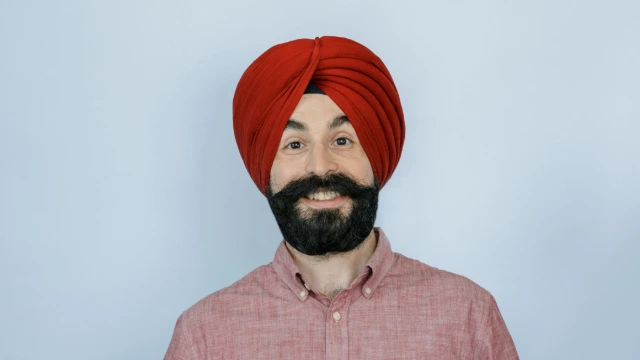
With AI evolving, Arnaud Debia, global creative excellence director, Ipsos, believes brands and agencies are asking the wrong question. The challenge is not whether humans or AI can produce more advertising, but whether the work is distinctive enough to be remembered. During his recent visit to Mumbai, he spoke with Manifest in our latest issue about what separates effective advertising from the noise, and how brands can use AI without allowing efficiency and scale to come at the expense of original thinking.
AI is reshaping advertising production, but Debia believes human creativity still holds an advantage when campaigns need to connect emotionally with consumers. An Ipsos study with Syracuse University tested 10 AI-generated ads against human-made versions, finding that human-created advertising performed better on average.
Giving us an example, he shared, “For product-led advertising, such as an Herbal Essences ad focused on ingredients and fragrance, AI performed very well. But humans had a huge advantage when the story was unexpected or disruptive, and when it relied on empathy."
An ad for Freshpet, which depicted a dog growing old with a family, demonstrated the difference. The AI version was significantly less effective, with the human-made ad recording a 57% advantage. Debia believes this distinction should guide how brands deploy AI, using it for simpler product assets while retaining human creativity for strategic, emotionally resonant campaigns.
Ideas matter more than production
With AI making execution faster, Debia argues that agencies should redirect greater investment towards developing ideas rather than simply producing more assets.
“Now that AI can expedite production and execution, one needs to invest more at the idea stage,” he added.
He points to empathy as a critical competitive advantage, explaining that brands must translate an understanding of people into credible action.
Gillette’s ‘The Best a Man Can Be’ campaign, for instance, offered a meaningful message for a traditionally male-focused brand. However, its subsequent sponsorship of a stadium whose football team owner had been convicted of sexual harassment created a disconnect between the brand’s messaging and its actions.
“Consumers notice when brands act on what they say and when they don’t,” Debia remarked.
Creativity must translate into effectiveness
Winning creative recognition does not automatically mean a campaign has achieved its business objectives. Debia notes that Cannes Lions juries reward creativity, whereas effectiveness ultimately depends on how consumers respond to the work.
Ipsos’ social intelligence company Synthesio examined the impact of Cannes winners across social media, search and AI-driven environments.
KitKat’s PR Grand Prix-winning campaign around a truck stolen in Italy generated more conversation than Columbia Sportswear’s ‘Expedition Impossible’, which won two Grand Prix awards at the 2026 Cannes Lions.
However, Debia cautions against interpreting conversation as the sole measure of effectiveness, as the campaigns addressed different audiences and objectives.
“One cannot create generic advertising and expect it to stand out. That applies whether the work is made by AI or humans. Generic doesn’t work,” he said.
His ‘Misfits’ study identifies creativity and empathy as the two components driving effectiveness. Breaking category conventions, he adds, makes advertising an average of 20% more effective than following established norms. However, differentiation must remain relevant to both the brand and its audience.
Quality over quantity
For Debia, cultural relevance begins with understanding consumers and identifying a connection the brand can credibly own. He cites Liquid Death, which built its identity around a provocative name, aluminium cans and humour rooted in social culture to encourage younger Americans to drink more water.
He also argues that brands can become sources of stability as consumers navigate an increasingly uncertain information environment.
“There is a rush to use AI to multiply assets and be everywhere. But another road is to think about quality and what will stand out among thousands of pieces of content,” he shared.
Agencies must embrace AI and technology, but Debia believes the process should begin with a strong idea and strategy before scaling execution across different touchpoints.
“It’s not about being everywhere. It’s about being in the right place. Quality is what will win in the market, with people and with clients.”
Lastly, reflecting on Indian advertising, Debia highlights Indian Railways’ ‘Lucky Yatra’ campaign for its ingenuity and problem-solving approach, describing it as an example of jugaad. He also points to Ariel’s #ShareTheLoad films as examples of how brands can create social impact while strengthening their own influence.
“There is a lot the world can learn from India,” he concluded.
This article appeared in the October issue of Manifest. To read the whole conversation, purchase the issue by clicking here.