

 Subscribe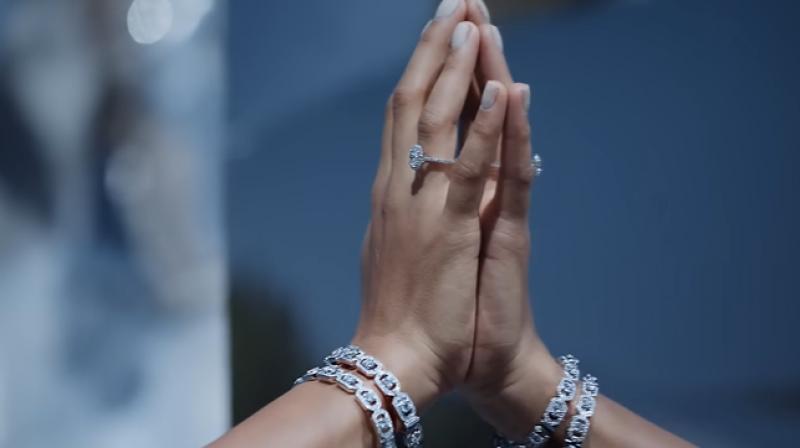
 Forevermark has rolled a series of campaign's titled 'This One's For Me', to highlight its Icon collection.
India’s luxury goods market is breaking new ground. Fueled by rising affluence, rapid urbanisation, and a growing base of globally minded consumers, the country’s luxury sector, according to India Brand Equity Foundation, is projected to have reached about USD 12.1 billion in sales in 2025, growing roughly 10% year-on-year, one of the fastest growth rates among emerging markets.
Jewellery and diamonds in particular are riding that momentum.
The Indian diamond jewellery market alone is valued in the tens of billions of dollars, cites MarkNtel Advisors' forecast for 2025-2030, with consistent demand driven by cultural occasions, weddings, and a shift toward premium branded purchases that reflect changing consumer attitudes toward luxury and self-expression.
Here’s the thing: luxury in India isn’t just about big-ticket transactions. It’s about experience, identity, and digital-meets-physical journeys.
Omnichannel strategies are table stakes, and younger buyers are increasingly comfortable buying high-end jewellery for themselves rather than only for traditional occasions.
Against this backdrop is the launch of Forevermark Diamond Jewellery’s boutique in Khar, Mumbai, on 7 January 2026.
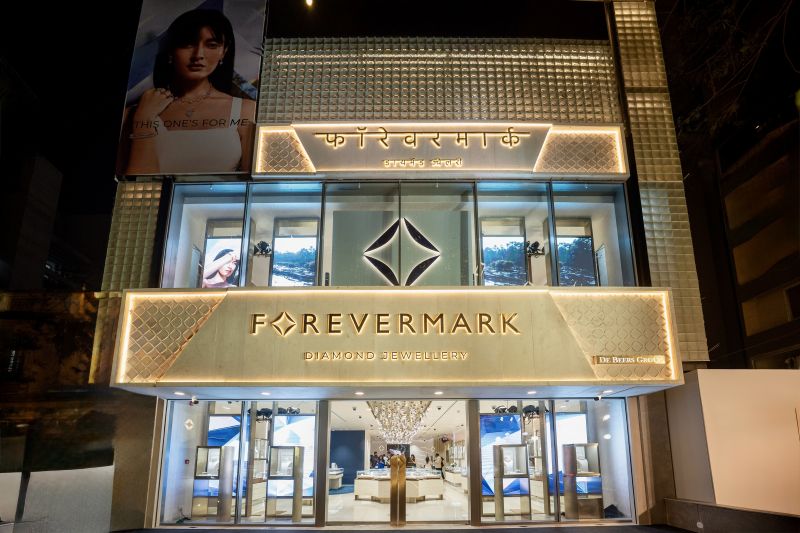
And the brand doesn’t want this to be ‘just another store’. It wants the store to be a statement about how premium, female-oriented luxury brands with global design sensibilities are building cultural relevance and retail scale in India.
The brand’s strategy, blending international design, tier-one and tier-two city growth, and an omnichannel retail approach, aims to speak directly to evolving luxury consumption patterns.
At the launch of the newly opened boutique, we spoke with Sandrine Conseiller, CEO, brands and diamond desirability, De Beers Group, and Shweta Harit, SVP, De Beers Group and CEO, Forevermark, to get the lay of the land on how the brand is re-engineering diamond desirability while building a premium, female-first luxury brand in India through retail, culture and changing consumer behaviour.
Sharing Forevermark’s positioning in India, Harit explained, “We are a premium brand, and our designs are international; that’s the positioning we have chosen. Our aim is to be known as a female-oriented brand.”
The brand’s latest campaign for its Icon collection reflects that thinking.
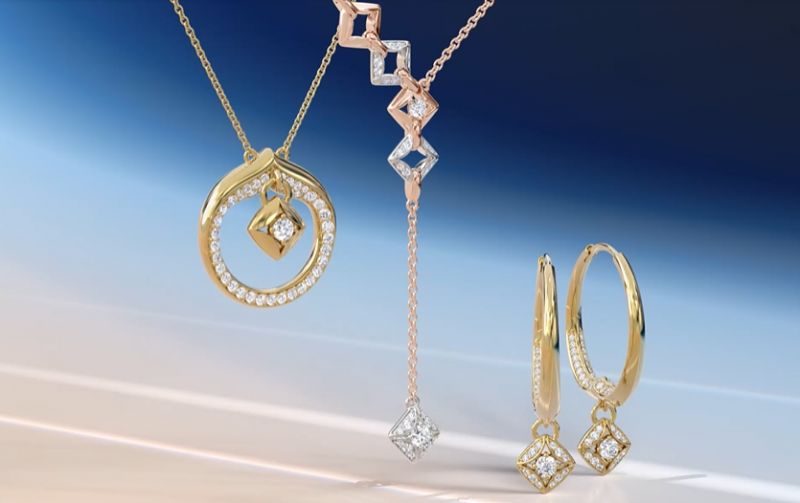
The Icon Collection
“The campaign we have launched is for our Icon collection, with a deeply rooted insight around the challenges one faces and how one looks within oneself for answers and guidance,” Harit said.
The brand has released a series of digital films featuring four 'icons': fashion designer and actor Masaba Gupta, Princess Gauravi Kumari of Jaipur, professional shooter Manu Bhaker, and actor Diana Penty.
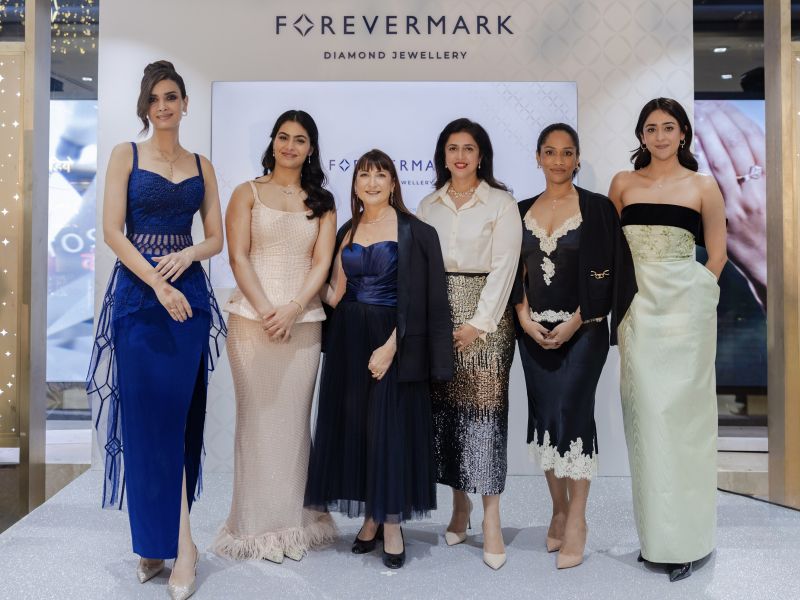
L-R: Diana Penty, Manu Bhaker, Sandrine Conseiller, Shweta Harit, Masaba Gupta,Princess Gauravi Kumari at the newly opened store in Khar Mumbai.
Retail, too, is being reframed as a cultural and emotional space rather than a purely transactional one.
“This new space in Mumbai is meant to bring together what I call a ‘champagne brunch’, a place to host more events, more female-oriented events, and build a calendar of experiences over the rest of the year,” Harit shared.
Geographically, growth is not only coming from the metros but beyond.
Harit voiced, “The growth is coming from tier one and two. We started with Delhi, now we are in Mumbai, with today’s store launch, and next we will expand to Chandigarh in February, that’s already in the works. And we’re continuously looking for stores elsewhere. Meanwhile, our e-commerce allows us to reach consumers very easily across locations.”
That physical expansion is supported by a deliberate omnichannel strategy.
“Everyone has an omnichannel approach, and for us it’s the same. Beyond a certain price point, it’s more assisted sales than pure e-commerce. Physical presence matters. You want to see a store. That combination is important,” Harit added.
Conseiller echoed this. She said, “They go together. People research online, about 90%, but still want to see the product physically. It’s an intimate business.”
Harit shared, “I hear other brands are at about 8–10% of revenue from e-commerce, we’ll probably get there too. We’ve only been around for three months, and only one store was open for most of that time. But early signs are good. We’re also on affiliate marketplaces like Tata Cliq.”
A major shift the brand is responding to is the rise of self-purchase.
“Self-purchase is a big and fast-growing part of this market. Our recent campaign is called ‘This One’s For Me’, meaning I’m buying this for myself, not to lock away and pull out once or twice a year. It’s a choice, a form of self-expression and individuality,” Harit remarked. “That’s why we want this space to feel personal, like a self-care ritual, not intimidating.”
While gold remains culturally central, diamonds are increasingly finding their own emotional and lifestyle relevance.
“Gold is deeply cultural and will always be there. But diamond penetration is growing; we have had four years of double-digit growth. People are buying more for themselves now, not just as an investment or legacy,” Harit shared.
Conseiller added, “Gold and diamonds aren’t replacing each other. What’s happening is that diamond pieces are becoming more elevated. Retailers make more margin on diamonds. Diamonds have always been culturally present here.”
Search behaviour reflects this shift too.
“One of the top Google searches is ‘How do I wear diamonds?’ for their GRWMs, when, with what colours, day or evening. That shows how the category is still expanding,” Harit noted.
The idea of luxury itself is also being redefined by the brand and made more accessible.
“Our average ticket price is about INR 1.5 lakh, so we’re premium but not ultra-luxury. We want the store to feel welcoming, playful, and not intimidating, especially for women. I want women to feel that sisterhood, warm and welcoming and playful and not intimidating,” Harit said.
Conseiller added, “India has a sweet spot, and Forevermark is in that zone between mass chains and ultra-luxury, more accessible, more welcoming, but still international and individualistic. India is an interesting market that can cover a variety of customers at various touch points, and all of them will have an element of luxury in the craft.”
In the near term, success for new physical stores like the newly opened one in Mumbai is defined less by scale and more by relationship-building.
Harit shared, “The newly launched store in Mumbai is our largest Forevermark store globally. For now, success means growing the funnel, growing the customer base. It’s very early days.”
From a global perspective, India stands out sharply.
“India is unique because diamonds have symbolic value, jewellery is culturally embedded, and the economy is growing. That makes it the fastest-growing market. We treat India very bespoke marketing here is done by Indians, for India,” Conseiller said.
Conseiller added that while the US remains the largest market, India is the most promising growth engine, with trust and transparency also playing a growing role.
“We’re the only company that goes from exploration to creation. We can tell you exactly where your diamond comes from. Where it is sourced and polished. That builds trust,” Conseiller concluded.