

 Subscribe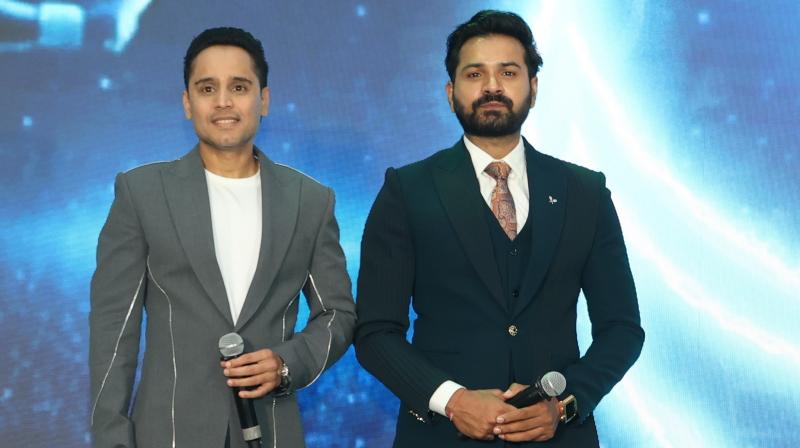
 TPL co-founders Kunal Thakkur and Mrunal Jain
In a country where cricket monopolises national attention, the Tennis Premier League (TPL) is steadily crafting a distinct space of its own.
What began in 2018 as an experiment by actor–entrepreneurs Kunal Thakkur and Mrunal Jain is today a fixture on India’s sporting and commercial calendar. Blending an innovative 25-point match format with Indian and international star power, the homegrown league has become a credible platform for athletes, a differentiated property for brands, and an entry point for young talent.
Now in its seventh season, scheduled from 9-14 December at the Gujarat University Tennis Stadium in Ahmedabad, with broadcast partners Sony Sports Network and JioHotstar, the league is going bigger, bolder, and more global.
In this freewheeling conversation, TPL co-founders Thakkur and Jain trace the league’s evolution from a challenger brand to a catalyst for tennis culture in India.
Laying the base
When the duo first envisioned TPL, the question wasn’t whether India enjoyed tennis, but whether fans would rally behind Indian players. “The IPL changed the way India looked at sports,” recalls Thakkur. “When the kabaddi and badminton leagues took off, we asked ourselves - why not tennis? But we realised tennis viewership in India was limited to international matches featuring star players like Federer or Nadal. If we wanted local players, we needed a different, more engaging format.”
That led to TPL’s defining innovation: short, fast, 25-point matches designed for broadcast-era attention spans.
“Our goal was twofold,” says Thakkur. “To make tennis more exciting to watch and to create a sustainable platform for Indian players.”
For the league’s early seasons, convincing brands wasn’t easy.
“In year one, brands weren’t sure how tennis could offer visibility compared to other leagues,” says Jain. “We knew we had to go beyond logo placements.”
Without a broadcaster initially, TPL leaned on digital storytelling, talent engagement and social amplification. The breakthrough came in Season 2 with a TV partner, unlocking integrations for brands like Croma, Kotak Mahindra Bank, Clear, Yonex, Jeep and Ola.
“Celebrity co-owners helped too,” Jain added. “They offered brands the added push of digital influence.”
By Season 6, TPL’s presence had expanded dramatically from 10 billboards in the first year to 75 hoardings across Mumbai, Delhi, Ahmedabad, Hyderabad, and Bengaluru; from deferred streaming to national broadcast and international telecast on platforms like Willow TV.
“It evolved into a 360-degree platform, blending sport, entertainment and year-round engagement,” shared Jain.
Targeting grassroots growth
At the heart of TPL’s strategy is a simple conviction: “We’ve understood one thing very clearly - for the league to grow, the sport must grow first,” says Thakkur. “It has to reach tier-two and tier-three cities. That’s why we’re hosting district-level tournaments, building a ranking system, and creating opportunities for young players.”
TPL’s new Race to Gold program spurred by India’s 2036 Olympic ambition, targets players aged 10–14 through scholarships, kits, mentoring sessions and coaching clinics.
“India hasn’t won an Olympic tennis medal since Leander Paes in 1996,” Thakkur points out. “Our goal is to change that.”
TPL is also scaling its academy network through the TPL Lab, which already has 190 affiliated academies and aims to reach 800.
“It’s about developing the sport, not just the league,” he emphasised.
Despite the league’s celebrity associations, TPL’s marketing has evolved to centre the athletes.
“We very well know that, at the end of the day, the sport has to work,” says Thakkur. “In year one, we needed Bollywood to get attention. So we are balancing both: Bollywood drives the entertainment conversation, while Leander (Paes), Mahesh (Bhupathi), and Sania (Mirza) drive the sporting narrative."
"But now our billboards and creatives are player-centric. Eventually, we want our marketing to shift completely towards the players, where it truly belongs,” he added.
That’s not to say that entertainment-driven activations have not retained their charm. Last year, Jeep gifted a car signed by all celebrity owners to the winning team ,“recreating a Ravi Shastri moment,” Jain shared, in a reference to the iconic moment when the cricketer won an Audi as ‘player of the series’ in the Benson & Hedges Cup back in 1985.
Digital remains a major growth lever: influencer collaborations, player cross-posts from international athletes, partnerships with platform such as Khel Now for coverage, and initiatives such as a limited-edition TPL–Clear bottle rolling out a month before the league.
“It's very difficult to beat cricket on viewership,” Jain stated. “So our focus is on differentiated brand experiences, not competing on numbers.”
Competition from emerging racket sports
As new-format racket sports gain traction, Thakkur isn’t too worried.
“I don’t see pickleball as competition - it’s more of a recreational sport. I don’t see it turning into a professional sport, at least in the next few years,” he says. “A league sustains only on broadcast numbers. Pickleball is fun to play, but I’m not sure people want to watch it. Tennis has a very big legacy through the grand slams and a deep global fan base.”
If anything, he believes it enhances tennis participation. “Many who start with pickleball often graduate to tennis when they want a sport that requires more skill. We see it as complementary, not competitive.”
TPL’s differentiation, Thakkur argues, lies in its competitive integrity. “TPL is an officially recognised league under the All India Tennis Association (AITA). It’s not an exhibition or fun event - every point matters.”
The league’s durability, entering its seventh season while many other leagues have fizzled, is a badge of resilience. “We’re here for the long run,” he underlined. “In the next five years, you’ll see TPL at a completely different level.”
The long game
TPL’s ambitions stretch beyond commercial metrics. “Ultimately, our goal is impact,” says Jain. “If the league can produce more Leander Paes, Sania Mirzas, or Mahesh Bhupathis - that’s when we’ll know we’ve succeeded.”
For the founders, the vision is expansive - more academies, more grassroots tournaments, better player pathways, and global broadcast rights. “Each season, the player quality improves,” Thakkur emphasised. “Our dream is to one day have a world number one or two competing in TPL.”
And at the core of this growth is a simple, unshakeable belief. “We’ve understood one thing very clearly: Every new player we bring into the system becomes an ambassador and a stakeholder in tennis. For the league to grow, the sport must grow first,” Thakkur underscored.
This conversation first appeared in our November issue. Click here to buy the copy and catch the whole conversation.