
 Subscribe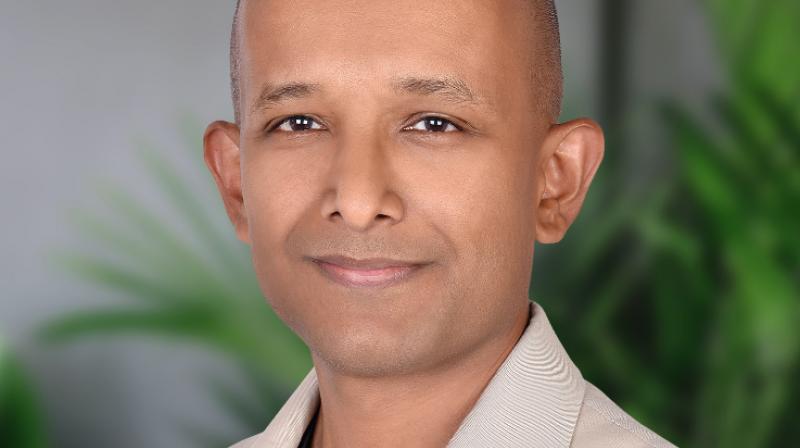
 Amrith Gopinath
India’s malls are no longer just places to shop; they have become destinations in their own right. They are becoming stages for culture, community, and brand storytelling, where retail, entertainment, and media increasingly blur into one experience.
At DLF’s flagship properties, this shift is visible the moment a visitor walks in: towering curved LED screens, immersive brand installations, influencer-led campaigns, and carefully curated events that turn a routine visit into a planned outing.
DLF Retail has moved decisively from a transactional, footfall-driven model to a year-round activation strategy anchored in data, design, and experience. From digitally enabled OOH formats and AI-powered footfall tracking to experiential campaigns that fuel social media growth, DLF aims to build malls as high-impact media environments as much as commercial spaces.
This evolution is also reflected in its approach to tenant mix and loyalty.
With a growing portfolio of global and premium brands, and the rapid adoption of its DLF Rewards programme, the company is focusing on deeper consumer relationships rather than one-time visits. Influencer collaborations, seasonal IPs, and community-driven wellness and cultural events further reinforce this shift from aggregation to curation.
In an increasingly competitive retail landscape, where e-commerce and quick commerce continue to reshape consumption patterns, DLF’s strategy rests on one central idea: giving people compelling reasons to show up, stay longer, and return often.
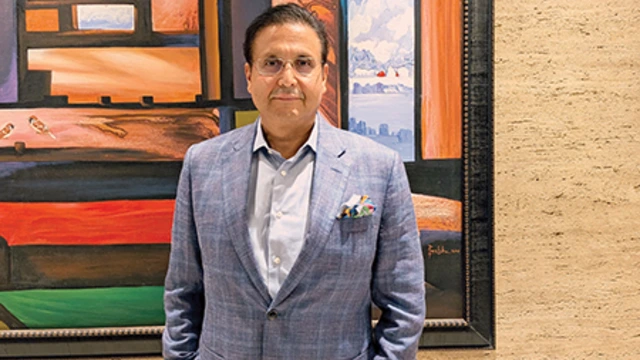
Amrith Gopinath, chief marketing officer, DLF Retail, spoke with us about building malls as ‘year-round theatres of dreams,’ the growing role of data and digital media, and how experiences are becoming the new currency of retail performance.
Edited excerpts:
DLF Malls have moved from being transactional spaces to immersive lifestyle destinations. What’s the strategic thinking behind your year-round activation model?
Over time, one starts seeing malls as a year-round theatre of dreams. Think of it like a stadium where brands get to showcase their best. It’s about looking at a mall as more than just a place to transact. Yes, transactions matter. They keep the engine running. But the bigger idea is building a year-round activation platform that stays alive beyond weekends and festival peaks.
One has to think long-term. This approach helps in three ways. First, it drives stronger, more consistent footfall. Second, it builds deeper brand engagement. And over time, it attracts better talent and stronger partners.
Brands want visibility, storytelling, and relevance. The mall becomes the platform that enables that. Yes, they have stores here. But as DLF, we also give them spaces and opportunities to bring their stories to life through activations. That’s how it becomes an ecosystem, not just a landlord-tenant relationship.
Malls are now high-impact media environments. How do you leverage OOH and ambient advertising?
It starts with design. Over the last two years, we’ve updated our design frameworks while preparing new properties. Right from the blueprint stage, we ask: if this is a theatre of dreams, how do we showcase the best brands from day one?
So we design spaces and surfaces that support visibility and storytelling. Over time, we’ve shifted from static formats to digital media, which allows richer narratives. We’ve also experimented with curved LED screens and immersive formats that enhance the visual experience when people enter.
Once the mall is ready, we’re able to fully leverage these assets and turn them into powerful storytelling tools.
How do you measure impact and engagement? What has surprised you most?
Footfall is monitored electronically across all entry and exit points. We also track vehicle movement using AI and ANPR systems to understand where visitors are coming from, whether it’s Delhi, Haryana, or outstation traffic.
This helps us analyse movement patterns and dwell time. Detailed dwell-time tracking isn’t fully implemented yet, but we’re exploring technologies that combine AI and facial recognition to better understand repeat visits and engagement.Footfall remains a core metric. For experience-led campaigns, registrations and sign-ups are strong indicators.
What’s surprised me is how intentional visits become during strong campaigns. People plan their trips. They come with a purpose. Otherwise, visits can be spontaneous. These experiences change behaviour.
Another key insight is the link between on-ground experiences and digital growth. When people have a great time, they follow and engage. We see Instagram followers grow much faster after strong campaigns. There’s a clear connection between physical experiences and digital community building.
DLF has become a launchpad for global and premium brands. How has that shaped your tenant mix?
DLF has built strong equity in retail. Today, we’re often the first port of call for brands entering India or opening flagship stores.
Over the last decade, we’ve moved from being aggregators to being curators. Both marketing and leasing teams now think in terms of experience, not just occupancy.
Global brands bring high standards of design, service, and storytelling. That elevates the entire ecosystem. The Apple flagship at Mall of India is a good example.
Our tenant mix is now very deliberate. We think carefully about adjacencies, brand narratives, and how global and Indian brands coexist. We see our malls as launchpads where brands can truly showcase themselves.
How does the festive calendar influence your planning?
We rely heavily on historical data. We map the year month-wise and align campaigns with major moments.
We’ve built strong IPs around festivals. The DLF Shopping Festival during Diwali and Dussehra. Wedding Tales during the shaadi season. Unwrapped December for Christmas.
These moments resonate because people actively look for ways to celebrate.
Décor plays a major role. Just like people decorate their homes, we want the mall to reflect that mood. It creates warmth and excitement.
But it doesn’t stop at festivals. In May and June, we focus on kids and holidays. In February, Valentine’s season. The goal is to stay relevant all year, not just during peak periods.
Many malls have also started focusing on wellness. Is that part of DLF’s vision?
Wellness is going to be one of the biggest growth areas going forward. And coming from an adidas background, it’s something I feel strongly about. I truly believe that sport can change lives, and people will make the effort for it.
So we’ve approached this in a slightly different way. As a marketer, I brought that sports and wellness quotient into DLF through a series called Active. We run formats like Active Noida, Active Delhi, and Active Gurugram.
Instead of creating permanent sports infrastructure inside malls, we focus more on activations. For example, we organise 5K and 10K runs to celebrate mall anniversaries.
Rather than saying, “Let’s celebrate with food,” we say, “Come run with us.” We also do large-scale International Yoga Day events and other curated fitness moments within mall spaces.
Sometimes we literally clear out the mall atrium, lay down yoga mats, and turn it into a community wellness space for the day.
As a mall developer and operator, my role is more about creating engaging experiences. So we partner with brands like Nike and adidas, or bring in celebrity trainers for Pilates or Zumba sessions, and use the mall as a platform for that.
Some of this is also personal, because I’m very sport-inclined. So we naturally lean into these ideas.
We also do match screenings. Cricket, of course, works really well. I’m still trying to convince my management about football. But we definitely use major sporting moments to bring people together.
How are you staying future-ready as expectations evolve?
We’re continuing on the path we’re on. First, brand partnerships are central. We leverage our tenants’ marketing strength to create high-quality experiences.
Second, we focus on distinctive events. We’ve done immersive 360-degree installations, hosted concerts like Passenger at CyberHub, and events like India Cocktail Week. These culturally relevant moments help us stand out.
Today, commuting itself is a challenge. When people come to a mall, they plan to spend three to four hours. Shopping is one part. Experiences matter equally. If you combine both well, people return.
Third, we’re using data more intelligently. A mall is a microcosm of society. There’s huge potential there.
That’s why we launched our loyalty programme.
Tell us more about DLF’s loyalty programme and rewards?
Loyalty works naturally for brands, but not always for malls. People usually come to specific stores. So we asked: how do we build loyalty to the mall itself?
We created a simple system. Shoppers click pictures of bills and upload them to our WhatsApp channel. In return, they get free parking, vouchers, and benefits. No cards. No forms.
We launched the programme in July, and honestly, the first two to three months were slow. It was invite-only at first because we weren’t sure how comfortable people would be sharing their data.
But post October, momentum really picked up. We crossed 50,000 members just last week. That’s when we knew this was working.
It’s been a game-changer. It allows us to build a direct dialogue with consumers, not just act as a platform for brands.
We want people to love DLF malls for what we stand for, not just for the stores inside them.
How important is social media in driving offline engagement?
Social media is absolutely vital. One simply cannot have a presence today, especially if one looks at the consumer and digital landscape in India.
Adults are on Facebook, and younger audiences are on Instagram. That’s where they are, so that’s where we need to be as a mall if we want to talk to them.
The challenge for us, though, is that a mall can easily be seen as a boring channel. So the question becomes: how do we make ourselves interesting? How do we create content that makes people actually want to look at our feed?
That’s where influencers become very important. As a brand entity, there’s a limit to how engaging you can be on your own. But when a person you relate to is talking about you, you listen more. That’s been our experience.
We work with a mix of influencers, from large names like Kusha Kapila at CyberHub to micro-influencers who specialise in beauty, fashion, and lifestyle. We collaborate with them either through quid pro quo arrangements or commercial partnerships. They experience things at our malls, create content, and post about it. We then link our Instagram with theirs through collaborations.
What surprised me was the number of intentional visits we started seeing.
People were coming specifically because they had seen something on social media. That’s when we really saw how digital engagement was translating into footfall.