

 Subscribe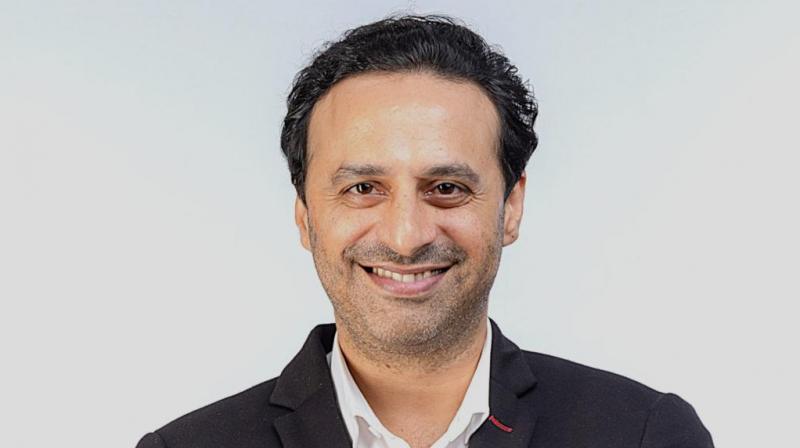
 Varun Koorichh
Diageo India’s Black Dog has entered a new chapter, one defined by quiet confidence, contemporary relevance, and renewed purpose.
With the unveiling of its redesigned whisky bottle on 6 February in Mumbai, Black Dog aims to evolve its visual identity while staying rooted in its legacy of craft and character, marking a strategic shift in how the brand shows up in an increasingly cluttered premium spirits market.
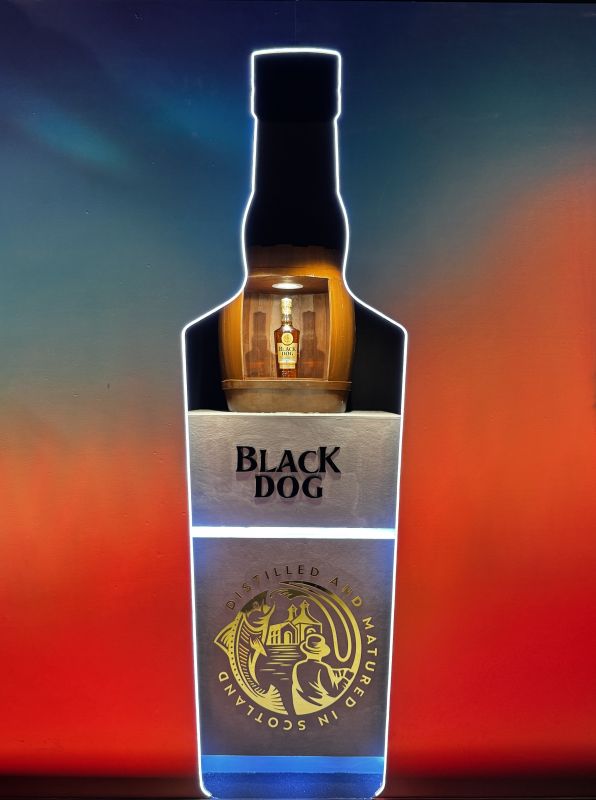
Black Dog's new bottle unveil
This philosophy came alive during the Kala Ghoda Arts Festival, where its collaboration with artist Arzan Khambatta took shape as an installation on the lawns of the Chhatrapati Shivaji Maharaj Vastu Sangrahalaya, a gleaming black cube whose mirror-like surface and immersive interiors transformed brand communication into a sensory experience, inviting audiences to pause, reflect, and engage meaningfully.
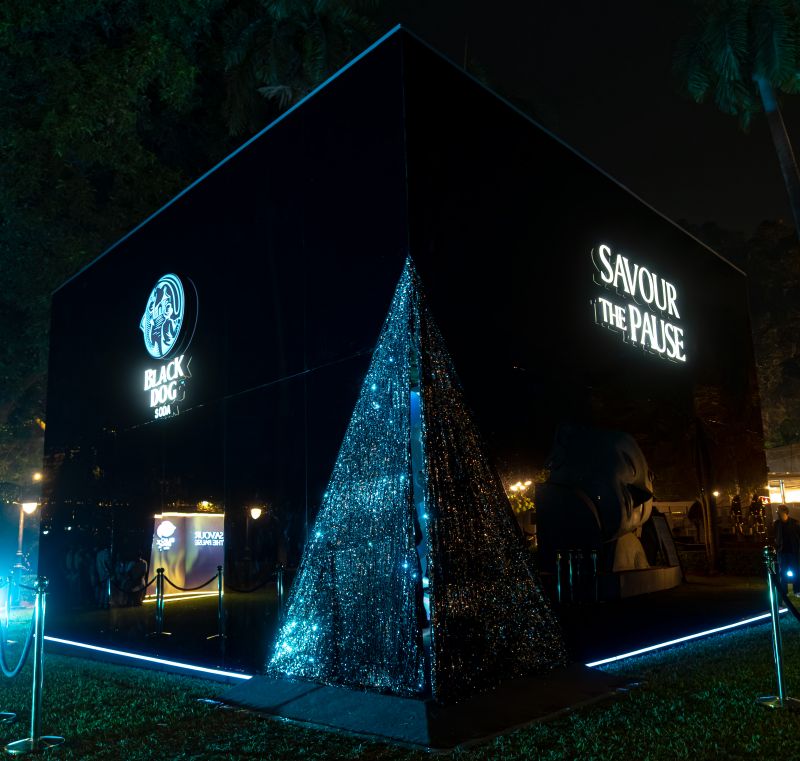
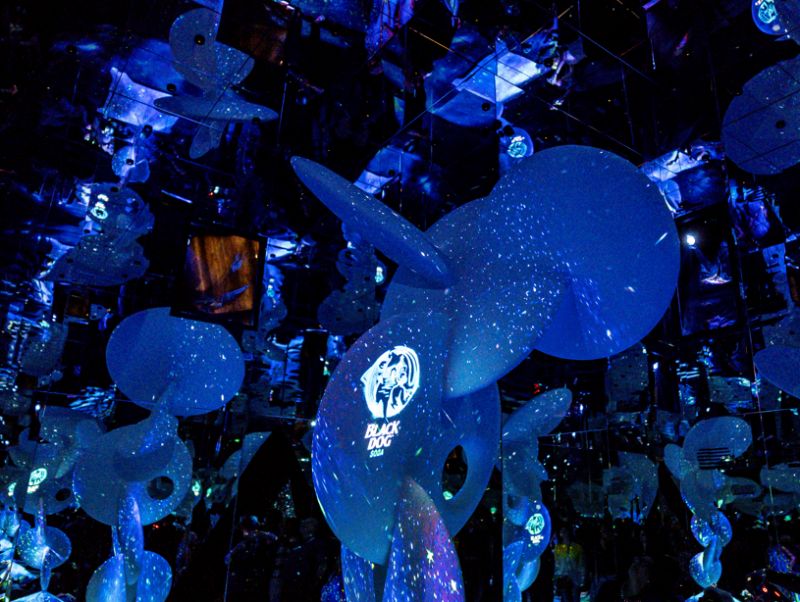
Black Dog's art installations at Kala Ghoda, Mumbai
This renewed philosophy is reflected across the brand’s recent initiatives. From its global campaign featuring actor Emilia Clarke to immersive, experience-led storytelling on Indian ground, Black Dog Soda is reinforcing its core message: ‘Savour The Pause’.
Conceptualised by Virtue Asia, the campaign’s ad film and its wider rollout underline the idea of slowing down, being present, and choosing depth over distraction in an always-on world.
Together, these efforts point to a brand that is not chasing fleeting attention but building long-term resonance. By blending global storytelling, thoughtful design, and locally rooted experiences, Black Dog is redefining what premium means for today’s aspirational Indian consumer, one that values authenticity, craft, and emotional connection as much as visibility and scale.
It is within this evolving context of refinement, accessibility, and purpose that the brand’s next phase is taking shape.
Manifest had a free-flowing chat with Varun Koorichh, vice president – marketing, portfolio head, premium and luxury, Diageo India, to understand how Black Dog is balancing legacy with modernity, building relevance among young aspirants, and translating ‘Savour The Pause’ from a brand philosophy into tangible experiences across packaging, communication, and culture.
Edited excerpts:
In earlier conversations, you’ve spoken about disrupting categories through design and accessibility. With Black Dog, the focus now appears to be more on refinement and pause. How do you decide when a brand needs bold disruption, and when it calls for quieter elevation?
It comes down to marketing fundamentals. Year on year, one has to track where the consumer is, what they’re doing, who they’re engaging with, and how their passion points are evolving. All of this comes from listening.
We see this reflected in our brand KPIs and equity reports, which give us a detailed view of these shifts. Post-pandemic, especially with with the acceleration of the digital world, people have been under a lot of stress. Conversations around mental health and well-being have become much more prominent.
With Black Dog Soda, this insight connects directly to our philosophy of 'Savour the Pause'. While it may not be new, it’s deeply rooted in the brand’s DNA.
It comes from the manufacturing process itself. Black Dog dates back to 1883, and its creator, Walter Millard, believed whisky-making was about patience, balance, and perseverance. That’s where this philosophy began.
Over time, it became about more than just the product. It’s about experiencing the moment, not just the whisky. That flows into our brand purpose as well, encouraging people to be fully present and find meaning even in simple moments.
This idea of disconnecting to reconnect has become especially relevant for Gen Z, who’ve grown up in a fast, digital-first, often chaotic environment. Because of that, this philosophy feels more important today than ever. It reflects where people are emotionally and culturally, and that’s what guides whether a brand needs disruption or a quieter evolution.
Moving to packaging, which is increasingly shaping how consumers perceive premium brands, what were the non-negotiables in this redesign, and where did you take creative risks?
It always comes back to the consumer. Black Dog speaks primarily to young aspirants who are ambitious, driven, and still on their journey to making it big.
While the core audience sits between LDA and 29, it extends into the 35 to 40 bracket as well. It’s not limited to metros either. It includes boom towns and SEC A and B markets. So you’re really talking about the young, aspirational Indian consumer.
Over the past six to eight years, this generation has become deeply connected to the global world through smartphones, the internet, and platforms like Instagram and Snapchat. They know what’s happening internationally and want to associate with brands that feel global, modern, and relevant.
When one is talking about scotch, it has to be elevated by default. Consumers want something that feels differentiated, looks great, carries strong Scotch codes, and speaks a global design language.
So we put all of this into the mix and asked: how do we make Black Dog feel modern and luxurious, while staying rooted in craft, which is at the heart of scotch?
When working with a legacy brand like Black Dog, how do you decide what to preserve and what to evolve?
First and foremost, it’s the taste. You don’t compromise on that. Taste is deeply rooted in craft, and with Black Dog, there’s a strong legacy linked to the liquid and the distilleries behind it. That heritage matters, both for quality and storytelling.
Where one evolves is in the look and feel, especially how the brand shows up on the shelf. That has to move with the times. One needs to constantly evaluate what’s happening in the category.
For example, highlighting the liquid’s origin, like Linkwood, strengthens credibility. At the same time, broader trends such as white, retro, and simplicity are returning as responses to clutter. When everything is loud, simplicity stands out.
The goal is to look simple yet credible, modern yet rooted. You need to be topical and relevant. Across the category, bottled-in-India brands are beginning to present themselves like global Scotch players. Going forward, competition will increasingly be with international brands, so everyone is raising their game.
Premium products also need to feel accessible. How do you balance aspiration with approachability?
Pricing is largely out of our hands. What we can control is how we show up on the shelf. Are we standing out? Because once one breaks clutter, one automatically become more accessible.
Accessibility is also mental. One needs to exist in the consumer’s mind space. That comes back to whether you’re doing justice to the philosophy of encouraging people to be fully present.
That’s where immersive experiences matter. It's about making the brand people can talk about and relate to, even before purchase?
So one starts with the fundamentals. One needs to identify their star content, the piece that communicates 'Savour The Pause' in a modern, beautiful, and memorable way.
That’s when we launched the campaign with actor Emilia Clarke. The film shows her and her friends in Scotland watching the Northern Lights. Everyone immediately pulls out their phones. She does too, but then she pauses and decides to experience the moment.
Clarke immerses herself in it, understands her emotions, and later translates it into art. It becomes her way of disconnecting to reconnect.
Making a film is easy. Putting it on TV and digital is manageable. What matters is bringing it to life on the ground. That’s when consumers start believing in the brand.
When Nike says 'Just Do It,' it shows up everywhere. That philosophy lives across touchpoints. For brand managers, building a lifestyle brand is crucial. You need adjacencies that reflect your core values.
For us, that came alive at the Kala Ghoda Arts Festival, where we created an immersive, Northern Lights-inspired environment. It allowed people to forget everything else and just be present.
When all these elements come together over time, the ecosystem starts to resonate. Hopefully, it leaves people with a simple reminder: life is moving too fast, disconnect to reconnect and savour the pause.
How are you translating this philosophy into tangible touchpoints, from packaging to retail and experiences?
When it comes to retail, it’s about mental and physical availability.
Mental availability is what people remember. What they see in campaigns and experiences should immediately come to mind in-store. Our innovation showcases, where consumers taste different liquids, reflect exactly what’s available on the shelf.
Whether it’s a shelf bay or a floor unit, everything follows the same visual identity. If Clarke appears in communication, she appears in retail. If we reference the Northern Lights, that imagery shows up on the shelf.
This uniformity makes recognition easy. We sometimes overcomplicate what is actually simple.
We’re also just getting started with immersive experiences. Kala Ghoda was the beginning. There’s more coming, and we’ll keep working with partners who can help bring Savour The Pause to life in meaningful ways. That’s what consumers want today.
In an increasingly crowded premium whisky market, what is Black Dog’s sharpest point of differentiation?
Taste comes first. If the taste is right, people will return, even if branding isn’t perfect. But in a competitive market, especially among young aspirants, design matters. People want to associate with something that looks good and feels global.
Taste might make one like the product. One might drink it alone. But will one open it when friends come over? That only happens if the bottle makes one look informed, current, and confident in their choices. It should signal that the drinker understands Scotch.
So first comes taste. Then comes the visual identity: the label, wordmark, and bottle design. Together, they shape perception.
Are you seeing a shift from influencer-led marketing to experience-led storytelling?
Influencer marketing is still very much part of new-age marketing. It’s relevant and here to stay. But we’re selective. We don’t want the same influencer working across competing brands. That wouldn’t be authentic. It’s a challenge, because one often sees the same faces everywhere. That’s why influencers need a strong point of view. Otherwise, they won’t sustain themselves. We’ll continue using influencers, mainly for reach. But when we find someone who fits the brand authentically, it becomes more meaningful. That’s where the difference between an influencer and a brand ambassador lies. An ambassador carries the brand philosophy. An influencer delivers reach. Both are important, but they serve different purposes.