
 Subscribe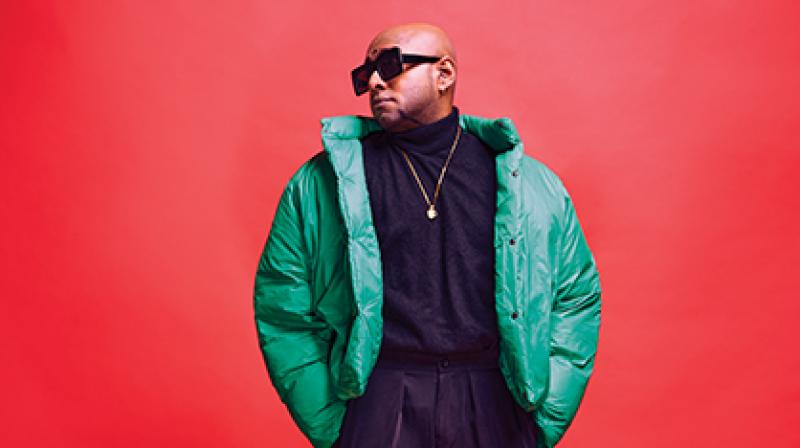
 Benny Dayal
While many of his peers have struggled with the algorithm-driven demands of today’s music economy, Benny Dayal has taken a more grounded route, staying aware, experimenting selectively, and only moving when it feels honest.
In conversation with us for our January issue, he reflected on instinct and building music that lasts, not by chasing relevance, but by defining it on his own terms.
Benny, you’ve stayed relevant for a long time. A lot of us have literally grown up with your music from hits like Badtameez Dil to Pappu Can’t Dance. What’s shifted in the way you think about your audience today compared to when you first started? And how do you protect that core ‘Benny Dayal’ style and identity?
For me, the only way to stay relevant is to be honest with myself. Not trying too hard, not forcing anything. Of course, one stays aware of what’s happening right now, but one still has to stay true to oneself. If one is sharp enough, one can catch the essence of the present and bridge it with what one has always done, and then carry it forward. The one thing I avoid is pushing too hard, because that comes off as cringe. And people today have the freedom to call it out instantly in the comments nowadays. So, staying real has been my rule.
Now, when it comes to dropping a new track, what dictates the release? Is it streaming-first thinking, or is it content-first, or social-first? What do you actually think about during the creative process?
Honestly, I used to think like that until 2023. I got swept up in the whole social media cycle: reels, short formats, all of that. It’s cool, it’s what the world is right now, but I don’t see longevity there. It works for some, but it doesn’t work for me anymore. If a song is meant to be short, then fine. But if one is chopping up a full idea into tiny pieces just to fit a trend, what’s the point? It’s like cutting a cake into so many slices that nobody actually gets a real piece. I listen to what’s happening, but I try to make something that isn’t already out there. For me, novelty matters. If I’m listening to a playlist of 100 songs, my track should stand out immediately. That’s the only thing I focus on. Social media trends? Streaming? If the song is good, it will work everywhere, short formats, streams, whatever. The priority is the music itself, and it should stand out.
When you’re rolling out a new song, what does the behind-the-scenes (BTS) process actually look like? And do you consciously think about shooting content around it?
We keep it genuine. We shoot whatever’s happening naturally and try to capture real moments. We usually start with a rough idea, get everyone in the room, and then just let things unfold. The vibe is always comedic. Honestly, there’s more laughter and enjoyment in the ‘music process’. The actual music part is quick because we all know when something is going to work. Everyone’s already aligned in the direction.
When it comes to promoting your albums or singles, do you work with a team or an agency?
It used to be just us. But going forward, we’re working with a team.
And if there’s one thing you had to unlearn this year about marketing your music, something that just didn’t work, what would that be?
Unlearning has been the best part. The thing that didn’t work was not having a team. I was doing everything myself. Now we have people ideating, waiting on mixes and masters, and figuring out how to roll things out, whether we grab the audience upfront or tease our way to the final content.
And as you mentioned, your BTS content is always playful. We see that on your Instagram, too. Is that intentional?
Not really. That’s just who we are. We’re not trying too hard. We just keep it real. If it fits, great. Most of it is instinct, not overthinking.
Let’s talk about collaborations. You find a lot of music through collabs these days. What makes you say yes? What’s the deal-breaker?
Music itself is a collaboration. If one person does everything, it gets boring. The greatest artists work with the best producers and writers. When the right minds and energies come together, whatever resonates, resonates.
Have you done any brand partnerships? If yes, how do you choose which ones to take on?
We haven’t done any yet. And honestly, I wouldn’t know where to start. That’s something the team would guide me on going forward.
From where you stand, what do music artists get wrong when marketing themselves on social media?
I’m sure I’ve gotten plenty wrong. And that’s fine. If you try too hard to get everything right, something’s already off. One has to make mistakes, learn from them, and move on.
Looking at next year, what’s the plan in terms of new releases and the sonic direction you’re aiming for?
2026 is going to be a year of releases. I’ve been working quietly for two and a half years. I prefer finishing the music and letting it speak for itself. People online say albums don’t work the old way anymore, but honestly, that’s still the most organic way to make music. The marketing will support it, but the music should market itself if it’s good. And yes, we’ll have a team guiding us because it’s a competitive space. The aim is to reach an audience that genuinely connects with this sound.
Lastly, when it comes to on-ground events in India, what do you think needs to change? And what’s working?
Programming and infrastructure are the big ones. Sometimes at festivals, the lineup doesn’t feel right. Teams who organise these events need to understand that when someone steps on a massive stage, they should be able to smash it live, not just have popular streamed songs. Infrastructure can definitely improve, though things are getting better. There’s great local employment and learning for young people behind the scenes. But artists also need to feel good about being part of an event. The right programming and the right lineup can create far more impact.
This conversation first appeared in the January issue of Manifest. Click here to buy a copy.