
 Subscribe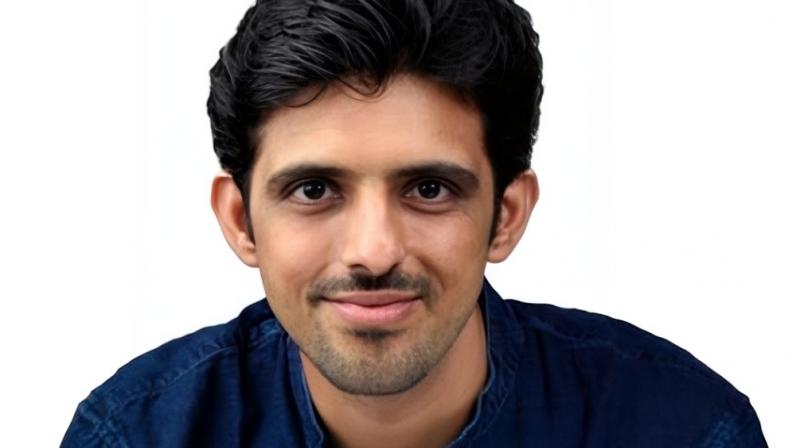
 Vishaal Shah
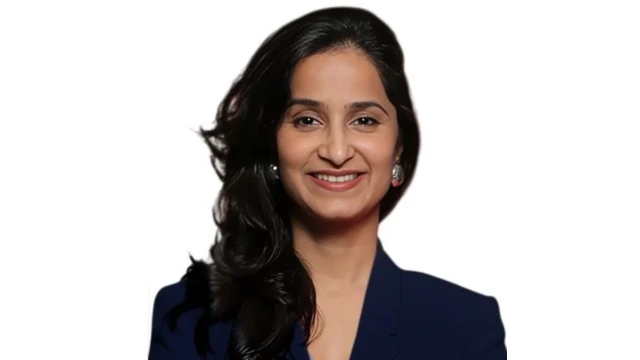
Vishaal Shah, co-founder, Moe’s Art, has nearly two decades of experience in media and marketing.
For Shah, storytelling isn’t confined to a single function: it flows through PR, digital, content, and design. In an era of shrinking attention and rising clutter, that integrated approach is what gives brands their edge, according to him.
He believes the future of brand building depends on breaking silos. The strongest ideas, he says, don’t come from isolated teams but from a shared creative consciousness where every piece of communication speaks the same language.
That belief inspired The Anti-Agency Show, a Moe’s Art original that flips the traditional agency-client model. The series puts creators directly in conversation with brand founders, cutting out the layers of account management that often dilute or delay ideas. The result: a raw, unfiltered exchange between creativity and business insight.
Launched on LinkedIn first and then YouTube, The Anti-Agency Show was designed for professionals at the crossroads of marketing, entrepreneurship, and creativity, people shaping the next wave of brand storytelling. “We could’ve gone the YouTube route for the launch,” Shah told us, “but we built it with a LinkedIn-first mindset. That’s where our audience lives, they’re not just watching communication, they’re shaping it.”
In conversation with Manifest, Shah breaks down how the meaning of PR has evolved, why balance beats virality, and how brands can rediscover the power of patient storytelling. He also explains the thinking behind The Anti-Agency Show and what it signals about the future of creative work.
Edited excerpts:
How has the definition of PR changed for you in the past few years, from press releases and coverage to full-fledged brand storytelling?
I can speak about this with some perspective, having been part of this industry for nearly a decade and a half. Ever since we started Moe’s Art, brand storytelling has always existed; it’s not something that was invented in the late 2000s or early 2010s. If one looks at a company like Apple, its campaigns from the 1970s already positioned the brand as one that could create magic when placed in the hands of creators.
What’s changed over the last decade or even in just the past five years is how many more brands and founders have realised the importance of weaving a story into their communication. Earlier, only a few clients were tuned into articulating a larger purpose. Today, with greater exposure, competition, and clutter, storytelling has become the most effective way to differentiate.
From a PR perspective, it remains one of the best media to convey who one stands for. Unlike other channels, PR comes with built-in credibility because when your story goes through the media, it carries journalistic validation. That’s what helps build lasting trust.
In an age of content overload, what truly moves the needle for a brand’s visibility, virality, or credibility?
It would be unfair to say that virality or visibility alone drives a brand’s narrative. A piece of content might go viral because it resonates with consumers, but if it doesn’t align with the brand’s identity, it can backfire. On the other hand, something deeply authentic might not be engaging enough.
It’s all about balance. Credibility, engagement, and reach need to work together. Brands can’t rely on just one. If I had to pick, I’d still say credibility edges out the other two just slightly, but enough to make a lasting difference.
Brands today chase trends instead of building a long-term narrative. How do you steer clients towards strategy over moment marketing?
We manage digital mandates for brands across B2B and B2C platforms, LinkedIn, Instagram, YouTube, and more, and honestly, it all depends on the brand’s DNA. If it’s a consumer-facing brand that thrives on pop culture, jumping on trends can work beautifully. But if you’re a pharma brand that’s always been conservative, doing something like the 'apology trend' can feel unnatural.
When Škoda jumped onto the apology trend, it was surprising but effective; they had time to plan it and align it with their tone. But when everyone else rushed to copy it, most of it fell flat. It’s not about being the first or fastest; one can join a trend later and still make an impact if it feels authentic.
Moment marketing works only when it fits the brand’s DNA. Otherwise, it’s just noise.
What’s the biggest misconception brands still have about PR agencies?
The biggest one is this idea that PR works like an on-off switch. We’ve had clients expecting visible results in 20 or 30 days, but it doesn’t function like that. Among all forms of marketing, it’s probably the slowest in showing impact. But that’s also its strength.
PR builds slowly, but it builds deeply. I remember a client in financial services who understood this perfectly. For six months, there were no big results, but once things clicked, the visibility and goodwill were incredible. That’s the compounding nature of PR.
Consistency is the other thing brands underestimate. One can’t do PR for a year, pause for two, and expect people to be remembered. It’s a continuous process. And finally, collaboration matters. Agencies aren’t vendors; they’re brand custodians. The best outcomes happen when brands treat them that way when there’s open dialogue and co-creation.
As social media collapses the gap between celebrity, influencer, and everyday user, how is that changing outreach?
PR agencies are actually among the best equipped to handle influencer engagement, whether it’s with a celebrity or a micro-influencer. We know how to craft stories that connect both the influencer and the brand in a credible way.
The old perception that influencer marketing needs to be outsourced elsewhere doesn’t hold anymore. Most PR agencies today have strong analytics teams that can measure impact and engagement.
That said, influencer selection is key. Big names help with mass visibility, but authenticity drives real engagement. Heard the SuperYou founder (Nikunj Biyani) mentioning he partnered with Ranveer Singh to position the brand as ‘mass premium.’ It worked because Singh gave him that scale. Without him, we might not even be talking about the brand, as now the brand has become synonymous with the actor.
But not every campaign needs a celebrity. If one wants awareness, go big. If one wants conversions or depth, go smaller and more niche. The conversion ratios from micro-influencers are often higher because the trust is stronger.
Ultimately, it’s like the old media mix: TV for scale, print for credibility, digital for agility. The media have changed, but the logic remains.
The Anti-Agency Show feels like a statement. What inspired it, and what gap were you hoping to fill?
It comes from a belief we’ve always held that Moe’s Art isn’t just a PR agency. Over time, we’ve evolved into a full-fledged creative communications company.
We’d observed that creativity often gets diluted in the traditional process. Too many layers between the person with the idea and the person making the decision. Even within brands, creative discussions often stop short of reaching the real decision-makers.
The Anti-Agency Show was born from that frustration and curiosity: what happens if one removes the middle layer entirely? What if you put creative minds, directors, writers, and filmmakers directly in front of brand founders and let them co-create?
The experiment paid off. Many founders came back saying, “These guys get what I’m trying to do.” Not every idea was perfect, but the collaboration was real. That’s what we wanted to challenge the traditional agency-brand model and show what’s possible when you make space for open, direct creative exchange.
Were there any key learnings from the show that you’ve started applying with your clients?
Two things stood out. First, the depth of understanding. As creative professionals, we often rush into ideas without truly immersing ourselves in the brand. The participants on the show took the opposite approach; they spent time understanding the brand before ideating. That’s something we’re consciously bringing back into our process.
The second was about agility and culture. When you remove unnecessary hierarchy and over-analysis, the work moves faster and feels more authentic. In one episode, only one brand wasn’t happy with the final concept, but that feedback came immediately. There was no wasted effort, no endless loops. It wasn’t about always getting a ‘yes,’ but about getting clarity quickly and moving forward.
With the rise of creative collectives and independent creators, do you see the future leaning toward anti-agency models?
Yes, and we’re already seeing it. But it’s not about replacing PR agencies, it’s about redefining them. We have never thought of ourselves as a pure-play PR agency anyway.
For big legacy brands with established systems, the traditional model still makes sense. But for challenger brands and new-age Indian companies in categories like fashion, FMCG, or lifestyle, the flexible, integrated model is far more effective.
Our teams are built that way, and we can move across PR, digital, and content seamlessly. If a client needs a quick LinkedIn strategy or video concept, the right people can jump in immediately. It’s collaborative, not compartmentalised.
And that’s what today’s landscape demands. Attention spans are short. Brands can’t wait two years to make an impact; they want visibility now. Media and platforms have democratised the process, so agility is the new advantage.
That’s the direction we want to keep exploring, creating immersive, physical experiences in a post-digital-fatigue world. There’s a clear demand for that kind of engagement.
Across other verticals, PR, digital, and video, we’ve got some exciting campaigns coming up, too. What’s kept us relevant all these years is our willingness to evolve and rethink how brands speak to consumers.
For me, content isn’t defined by format. Whether it’s a video, article, or campaign, content is just storytelling. The audience doesn’t think, “Am I reading or watching?” They just connect. As long as we create stories that engage, the platforms will follow. That’s the principle that drives everything we do and everything we’re building next.
Finally, what’s next for Moe’s Art?
We’re building a few experiential IPs right now. We tested two recently in Mumbai and Pune, for one, the Anti-Agency Show, which we have spoken about, and another format we are working on where the audience became part of the performance instead of just watching a speaker on stage. It turned into a shared, interactive experience, and that’s the space we want to keep pushing into, especially as people look for something beyond digital fatigue.
On the PR, digital, and video front, we have strong campaigns lined up. What’s kept us relevant is our habit of evolving and rethinking how brands speak to people.
For me, content isn’t about format. Whether it’s video, print, or a full campaign, it’s all storytelling. Audiences don’t care how they receive it; they just connect. As long as we stay focused on creating stories that engage, the platforms and formats will take care of themselves.