

 Subscribe
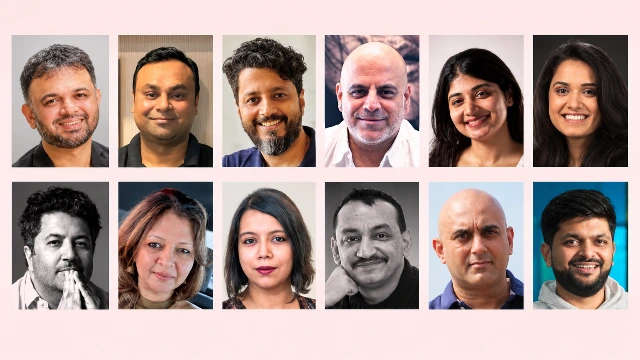
 Jyoti Bansal (left) and Rohit Potphode
The government’s clampdown on real-money gaming (RMG) earlier this year - a sector that had rapidly grown into a multi-billion-dollar digital entertainment powerhouse - didn’t just freeze an industry; it sent shockwaves across sports sponsorships, advertising, and marketing ecosystems that were heavily fuelled by RMG spends. For an industry that had become a major driver of digital ad revenues, the question now is whether this is a temporary reset or a long-term realignment of how India regulates high-risk digital categories. With the RMG ban wiping out one of digital advertising’s fastest-growing revenue streams, how will this reshape media spends, influencer monetisation, and platform dependency? Do you expect this pushback to encourage brands to adopt more responsible, category-agnostic growth strategies?
Rohit Potphode, managing partner - Sports, Gaming, eSports and live experiences, dentsu India
For years, real-money gaming acted as an accelerant, a category that spent fast, scaled faster, and lifted the entire advertising ecosystem. When that momentum disappeared almost instantly, it forced all of us i.e. brands, creators, platforms, agencies, and even regulators to confront an uncomfortable truth that we had become heavily dependent on a single engine of growth.
Without RMG’s relentless spending cycles, media inflation is easing, bidding wars are calming, and platforms are beginning to see what a more organic demand curve looks like. Influencers, who were earlier swept up in a constant churn of performance-heavy deals, are rediscovering the value of community-led content and brand relationships that are built over time and not just transactions.
For brands and agencies, the learning is even sharper. We are being reminded that sustainable growth cannot be outsourced to one high-velocity category. The real work, the strategic work lies in building diversified communication architectures, strengthening first-party data, nurturing long-term brand equity, and creating value that isn’t dependent on the fortunes of a single sector.
Platforms, too, have an opportunity here. A recalibrated advertiser mix may feel like a slowdown today, but it reduces systemic risk. A healthier ecosystem is one where no single category holds disproportionate power, not because it spends the most, but because the market is balanced, resilient, and future ready.
And yes, this pushback will inevitably encourage more responsible, category-agnostic strategies. Not out of caution alone, but out of realisation that true growth is about building an ecosystem that endures shocks, adapts to regulation, and evolves with consumer trust at its core.
Jyoti Bansal, chief - brand and communications, Tata Power
Reset/realignment/reincarnation? The recent clampdown on real-money gaming by the government has painfully revealed how the high-risk, high-burn sectors actually are just that – they are risky and they burn. Monthly transaction volume drops of INR 30,000 crores per month for payment gateways, INR 17,000 crores of annual digital ad spend wiped out, INR 10,000 crore plus of tax loss on government revenue, 1.5 million jobs impacted and more than USD 2.5 billion in venture capital in recent years reported as impaired! The numbers are staggering and so will be the impact.
While multiple legal petitions are challenging the ban’s constitutionality, this will force a long-term pivot for brands and media. The signal is clear – responsible scale, not just rapid scale. And that a digital economy built on fragile foundations, where platform ad pricing, sports sponsorships, creator content monetisation and performance ad rates were on steroids, is not necessarily the right and sustainable growth path.
Other ad sectors are stepping in, with more realistic pricing. You might see some new entrants into the IPL advertiser list next year! Creators will have no option but to build their credentials on deeper trust and compliance. Media brands will go back to the basics of lesser category concentration (till the next rapid wave hits them!).
Overall, it is a structural recalibration, which will hopefully teach us to balance and discern short-term accelerants with long-term resilience and depth.
This was part of the December issue of Manifest, in which we look back at some of the defining shifts and developments that didn’t just shape the news cycle but that are likely to leave a lasting impact on the advertising, marketing, and media landscape.
Get your copy here!
Also read:
'The move towards harder ROI metrics is something that clients have been looking for in any case'
'Ultimately, awards will evolve to reward not just creativity, but integrity'
The French are prospering, while others are consolidating'
'The share of endorsements going to women athletes is still small, but the trajectory is upward'
'The strongest business results in the history of advertising have come from unforgettable ideas'