

 Subscribe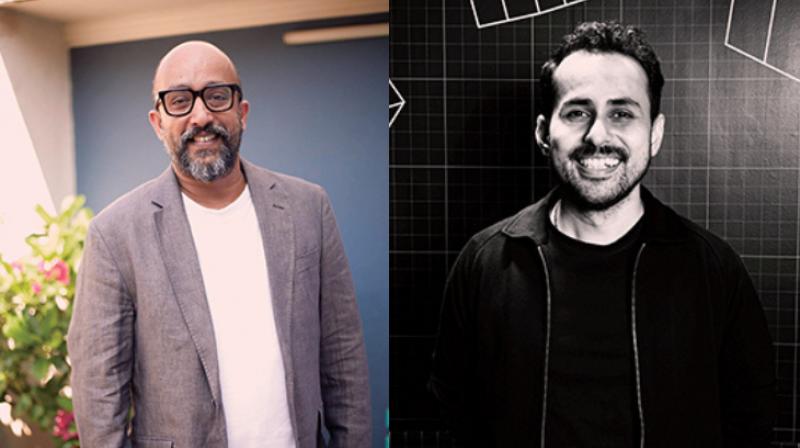
 Shriram Iyer (left) and Sahil Shah.
In our December issue, we set out to discover whether long-copy storytelling can hold attention in a scroll-heavy world, how design choices shape engagement, which formats convert best across demographics, and the recent campaigns that have truly stood out. We spoke with Sahil Shah, president, Dentsu Creative Isobar and Shriram Iyer, co-founder, ZeroFifty Mediaworks, to share their views on the same.
Can long-form content still engage readers in an age of fleeting attention, particularly for e-commerce or deal-driven campaigns?
Sahil Shah (SS): One can argue that print is inherently a long-form medium; readers engage with it more immersively and with intent. So, long-form advertising can feel like a natural fit. However, that logic doesn’t always hold. YouTube, for example, is also a long-form platform in terms of average content length, but the ads on it are short, sharp, and to the point. The bottom line is that marketers need to stop obsessing over the medium and start focusing on the message, what it’s saying, why it matters, and how it’s being delivered to create impact. Attention spans may be short, but people still spend hours on long-form podcasts, OTT shows, or deep-dive YouTube videos. So, it’s not really about short attention spans; it’s about the intent behind the content and the value it delivers.
Shriram Iyer (SI): Yes, long-format content can engage readers. Yes, short attention spans will be a reality and more of an acute challenge, but here’s the thing. Content primarily has the responsibility of being clear, clever and engaging. And when that is achieved, there will always be an audience. Long-form, per se, is not an issue. Boring long form is.
How important are visuals, headlines, and layout in keeping readers engaged and driving action?
SS: Every ad needs a sense of structure because the human brain is wired to process information in certain ways. We look for visual hierarchy, contrast, and cues that guide our attention. Strong visuals and headlines are often what pull readers in, but it’s the interplay between all three, the copy, visuals, and layout, that keeps them there. That said, there’s always value in breaking the template. Sometimes, a bold creative leap is what makes a brand stand out in a cluttered space. As long as it serves the message and doesn’t compromise clarity, experimentation should always be encouraged; that’s how new norms are created.
SI: Visuals, headlines and layouts are the very soul of any static idea. If one can be cognisant that the brand has a story to tell, it can be done at a very high level of craft. There are enough great examples. Nothing works better than being direct, simple and honest.
Does narrative-led copy build loyalty and recall, or does direct product focus drive better conversions?
SS: Even if one is ultimately trying to sell something, leading with a narrative almost always works better. A narrative creates emotion, and emotion creates memory. Offers and product facts alone rarely build recall or brand affinity, especially in a hyper-competitive environment where most products and deals have near-identical alternatives. Narrative-led copy, when done well, doesn’t just sell a product; it sells a perspective, a feeling, or a reason to believe. That’s what builds long-term loyalty.
SI: People are interested in narratives, in characters that move the story along, but people don’t have the patience to consume narratives that meander and are not to the point. Depending on the nature of the product or service, one must make a decision about the nature of advertising that’s right for the said audience. Consumers call out bullshit. Authenticity is rewarded.
Do different formats work better for certain demographics, such as luxury shoppers, older audiences, or digital-first younger consumers?
SS: Absolutely. We’ve seen that even subtle creative tweaks can shift how an ad resonates with different audiences. Luxury audiences, for instance, often respond better to storytelling, restraint, and craftsmanship in design, while younger, digital-first consumers might engage more with bold visuals, conversational language that’s super authentic, and a sense of immediacy. The key is to clearly define your core target group and build for them; the rest of the audience will only notice if they’re meant to.
SI: Yes, it’s different formats for different sets of audiences based on the category of product and brand, definitely makes sense. Luxury shoppers perhaps have the luxury of time, too. That is an opportunity for print to appeal to their discernment, aesthetic and stature. Well-researched product stories, coupled with a well-crafted world of luxury, can usher such shoppers into the brand’s unique offering.
From the recent print campaigns, do any stand out for you?
SS: None stand out. There is some effort with Samsung’s AR ads using tech interestingly, or Swiggy Instamart’s mango season ads leveraging print as a medium fully or even stuff done by De beers on “love, from dad” collection that’s classic but impressive storytelling was nice. But nothing so far stands out for me.
SI: The Dunkin’ At Home and BBH USA prove why simple campaign design still wins. Secondly, British Airways. A consciously selected tone, well-crafted for a discerning flyer.
This article first appeared in the December issue of Manifest. Get your copy here.