

 Subscribe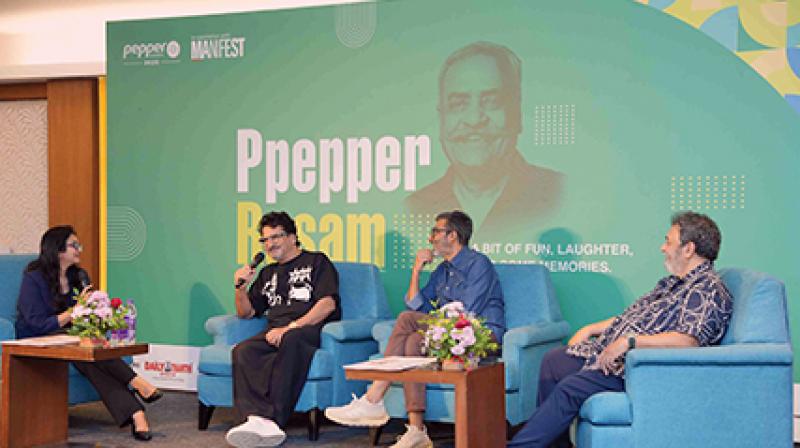
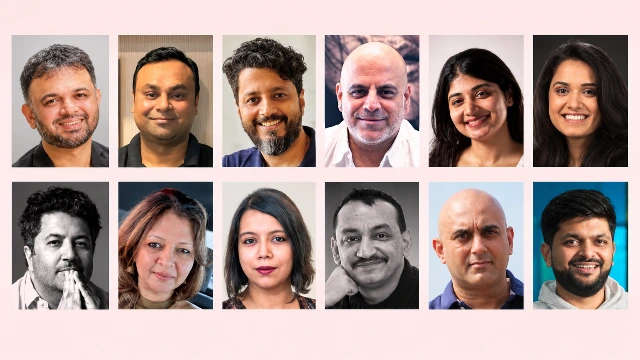
 From left: Sonal Dabral, Rajiv Rao and Prathap Suthan
The 19th edition of the Pepper Awards, held in Kochi, paused to remember Piyush Pandey and celebrate the person behind the titles, accolades and legend through a special session titled ‘Ppepper Rasam'. As Pandey is honoured with Padma Bhushan posthumously, we look back at the session which unfolded as a deeply personal tribute that celebrated his genius for storytelling and his rare ability to capture the quintessential Indian soul with humaneness and wit.
Comprising Sonal Dabral, founder, Tribha; Rajiv Rao, director, Nirvana Films; Prathap Suthan, co-founder, Bang In The Middle; and moderated by Anupama Sajeet, features editor, Manifest, the panel became a collective walk down memory lane as they reflected on Pandey’s larger-than-life persona through personal anecdotes and backstories drawn from some of Indian advertising’s most iconic campaigns.
As the contemporaries, collaborators, and industry peers traded anecdotes, the conversation became less about campaigns and more about camaraderie and the genius of the man who redefined Indian advertising and taught India to tell its own stories.
Remembering the man before the myth
Setting the tone for the conversation, the panel began with their ‘earliest memory of Piyush’ that had stayed with the panellists through the years.
Dabral recalled a time when, as a young art director at Lintas Delhi, he headed to Mumbai for his first big shoot. Expecting to stay at a five-star hotel, he instead found himself crashing at Piyush Pandey’s home, along with the latter’s brother, Prasoon Pandey.
The next morning, he woke up to find Piyush shouting at them to get up, while holding two mugs of tea he had made himself. It was a small moment, but one that defined Pandey’s leadership style for Dabral forever.
“He had woken up earlier than us and made tea for us, making sure we reached our first big shoot on time. Over the years that I worked with him, I kept seeing that quality of his - a leader who loved and cared and yet taught you at the same time.”
For Rao, Pandey first appeared not as a colleague, but as a phenomenon who ‘collected all the big awards during award shows.’
“I was in another agency at the time, and we used to go for the Abbys and other awards,” Rao recalled. “There was this one man with a big moustache who kept walking up to the stage and picking up all the awards. And I used to wonder who this man was.”
When Rao finally joined Ogilvy and met Pandey in person, it felt like meeting a celebrity. “That was like a big fanboy moment for me,” he remembered fondly.
But what stayed with him was not the stature, but the energy of the adman. “He taught us without teaching,” Rao said. “Just by example.”
Being a relative outsider who has not worked with Pandey at Ogilvy, Suthan’s earliest memory of the adman involved a night at the Abbys at Mumbai’s Mahalaxmi Racecourse. Ogilvy was winning everything, as expected. But, unexpectedly, Suthan’s agency, Grey, was the runner-up.
“And then all of a sudden,” Suthan narrated, “I see Piyush Pandey walking towards us. And then he’s just standing there and applauding.”
He didn’t know them, and yet the ‘night’s biggest winner’ stood applauding his competitors until Suthan walked down to thank him.
“He hugged me and said, ‘Well done.’ To me, that was a sign of true leadership. And that’s my first memory of him - What a man,” Suthan remembered.
Pandey’s inherent warmth, his complete lack of insecurity, and his belief that great work deserved celebration - no matter who made it - echoed throughout the discussion.
The OG Ogilvy leader
The conversation highlighted Pandey’s leadership, his spontaneous, sometimes childlike approach to creativity, balancing ideas that seemed simple on the face of it with daring yet effective brand strategies. A consistent portrait emerged.
“He was a playing captain,” Dabral said, “who wanted his team to be fit and committed. So even if you are laughing and drinking till 2 am, you show up when you have to show up.”
“He was probably one of the youngest minds in the agency, and also the most daring. And, he balanced that brilliantly,” said Rao. “Under Piyush, there was this confidence in everybody, which was amazing. And it just rubbed off on every single person. It was all about ‘creative first’ and doing brilliant work - that was his motto.”
That often manifested in early-morning calls, ideas shared at dawn, and an atmosphere where work felt more like play. “You never felt like you were in an office,” Dabral added. “And that’s why the best work happened.”
When it came to creative reviews, Pandey was very upfront and famously direct. Even when dismissing an idea, he managed to disarm rather than discourage. “He’d say ‘achha bakwaas hai,’” Rao laughed. “Which basically meant: go, do better.”
Most importantly, Pandey trusted his instincts. “The first reaction matters,” Dabral explained. “Advertising has to hit you immediately.”
And when the ad guru liked something, his support was absolute. “He always had his team’s back,” Rao said.
Pandey’s conviction, the panel agreed, was legendary. Once he believed in an idea, he stood by it fiercely - whether the resistance came from within the agency or from the client side.
“At the same time,” Rao remarked, “he valued spontaneity deeply, which I think is very essential in advertising.”
What shone through in the conversation was how Pandey treated clients as collaborators, not adversaries. He believed genuine interest in the client’s business mattered more than pitch theatrics, never letting ego derail the work.
Storytelling that changed Indian advertising
The conversation shifted to the work and behind-the-scenes stories of how great ideas were born. One such notable campaign included Cadbury’s ‘girl on the cricket field,’ which expanded the market by appealing to adults, with its ‘Real Taste of Life’ campaign, based on the insight that everyone, regardless of age, has a childlike spirit.
Dabral narrated the now-celebrated ad’s origin.
While on a family holiday in the US, Pandey noticed an elderly couple playing with toys in a shop. “That’s when it struck him,” Dabral said, “there is a child in all of us.” That insight shifted Cadbury Dairy Milk from a children’s product to an emotion shared by adults, and gave the country one of its most iconic advertising moments: a girl dancing on a cricket field, uninhibited and joyful.
“Although it looked simple, it came from razor-sharp observation,” Dabral stated.
Another story showcased Pandey’s efficacy and leadership instinct.
On the eve of the 1996 World Cup semi-final, Dabral described how he noticed both India and Sri Lanka wore blue jerseys and coined the ‘Hamara Wala Blue’ tagline for Asian Paints, basically wishing ‘Best of luck’ to the Indian team for the semifinals.
“Piyush loved it and within half an hour, we presented the idea to the client. Piyush then mobilised everybody from cricket administrators to photographers, and newspapers to create the Hamara Wala Blue ad – the Indian jersey was arranged in a hotel room, one photographer was sent to shoot, the pictures were sent, and overnight, we worked on the artwork. The next morning, the ad was in the publications.”
And then India lost the match. So the duo came up with the idea for the sequel, putting up Sri Lanka’s jersey, replacing ‘Hamara’ with ‘Tumhara wala blue’, adding a line saying, ‘Sri Lanka, congratulations, you were a shade better.’ No long meetings - just instinct, trust, and execution, recounted Dabral.
Infusing desi tadka into ads
The conversation also highlighted the shift in Indian advertising from westernised formats to relatable, local stories, a change widely credited to Pandey.
Suthan offered a broader industry perspective, crediting Pandey with dismantling westernised advertising templates. “Before Piyush, if you look at the advertising that used to happen earlier, it belonged to the Alyque Padamsee era of Indian advertising, which had a more westernised approach,” he said.
“But Piyush came in and started doing these little Indian stories, which we never saw as advertising. The moment that happened, it all felt very fresh. Every story that came out of Ogilvy at that time was something we never expected. It was formidable advertising for other agencies. We would ask ourselves, ‘How do you beat this?’ The only answer was to play the same game. He showed us that the stories were right outside our windows.”
Where earlier advertising borrowed international formats and aesthetics, Pandey rooted storytelling in everyday Indian life - from buses and trains to streets and interactions. “These were stories we had seen,” Suthan noted, “but nobody had framed them that way.”
That authenticity helped Pandey’s work resonate on global stages, including Cannes, while remaining deeply local. “He made Indian advertising cool,” Suthan emphasised.
‘The national creative director of India’
As the session drew to a close, the conversation bridged a glorious past with an uncertain future, touching upon the role of artificial intelligence in creativity. It was a subject Pandey himself viewed with scepticism, having famously dismissed the replacement of ideas with AI as “artificial bewakoofi”. As the panel underlined, while AI may serve as a tool, the human-centric creativity Pandey championed will always remain the soul of the industry.
Suthan summed it up best when he said, “Piyush wasn’t just Ogilvy’s creative director. He was India’s national creative director,” a sentiment that resonated deeply across the room and cemented Pandey’s status as a national treasure whose legacy will continue to influence and inspire generations of advertisers to come.
If there’s one thing the session reinforced, it’s that Piyush Pandey’s legacy isn’t preserved in awards or reels - it lives in people, conversations, and the courage to tell Indian stories with honesty.
This story first appeared in the January edition of Manifest. Get your copy here!