
 Subscribe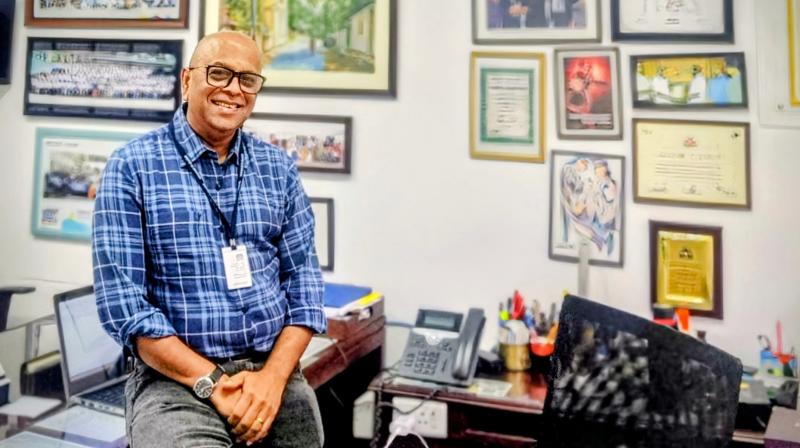
 Varghese Chandy
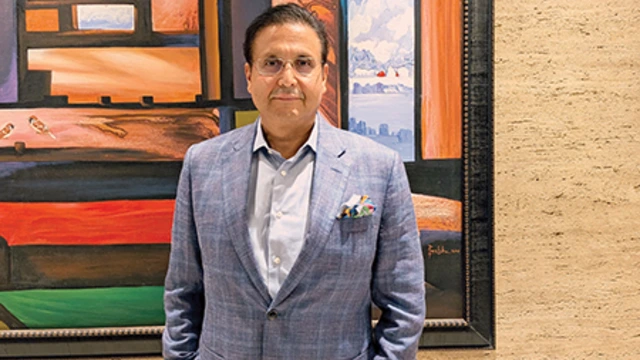
At a time when the narrative of print’s decline dominates industry discourse, Malayala Manorama continues to chart a markedly different course. With strong circulation, rising cover prices, and sustained advertiser confidence, the 138-year-old publication is challenging assumptions about media consumption and trust.
In a candid conversation, Varghese Chandy, VP – marketing and advertising sales, discusses how credibility, cultural connection, and reader-first practices, and not just nostalgia, are sustaining print’s relevance, while revealing why Kerala continues to defy the national narrative when it comes to the medium. He also reflects on advertiser behaviour, media credibility, and why he believes media buying today lacks merit-based evaluation.
Print’s enduring power
For Chandy, speculation about print’s decline is hardly unprecedented. “We have been hearing this for the last 100 years, if not more. Whenever any new medium emerges, it always challenges existing media. However, print has survived all of that.”
He attributes the newspaper’s resilience to a dual focus on legacy and adaptation. While holding on to its founding values and editorial ethics, the publication continually refreshes its design, format, and storytelling styles to remain accessible to younger readers. A recent redesign by an international designer aimed to deliver a more contemporary, reader-friendly experience, part of ongoing efforts to increase engagement and time spent reading.
At the same time, Malayala Manorama has diversified its offerings across digital platforms, television, and events, guided by what Chandy describes as a “consumer-first” philosophy rather than a platform-first approach.
Why Kerala defies the national print narrative
Kerala’s media landscape presents a sharp contrast to national trends. According to Chandy, newspapers remain the dominant medium in the state due to high literacy rates and entrenched reading habits.
“It’s true that newspapers are still on top when it comes to reach among individual media vehicles. Print media is ideal for advertising high-end products, especially when they are not impulse buys that people purchase on a whim,” he emphasises.
Research conducted by the organisation, he adds, shows that people rely on newspapers for decisions ranging from purchases to education and employment.
While digital may offer broader overall reach, Chandy argues that fragmentation limits its effectiveness. “Even if digital has a higher overall reach, with the fragmentation of the medium, it is very difficult to get sufficient reach through selected vehicles.”
Also, the credibility and believability of social media platforms are very low, which further drives audiences toward print for reliable information, he adds.
Language also plays a decisive role. Citing 2025 Target Group Index data from Kantar, he points out that readership for Malayala Manorama in Kerala stands at 26.6%, compared with 0.28% for The Times of India in the state, challenging the assumption that premium audiences must be reached through English-language media.
Despite younger consumers gravitating toward digital platforms for entertainment and other content, Chandy says print remains their preferred source for news.
Cultural connect
The publication currently sees little need for a dedicated English daily. As Chandy puts it, “When a Malayalam newspaper like Manorama connects so deeply with Malayali readers—speaking their language, reflecting their culture, and earning their trust—why English dailies?”
He emphasises the emotional and cultural pull of regional languages, noting that audiences consistently prefer consuming content in their mother tongue, another factor supporting regional print growth.
English content, however, continues to play a role in niche categories through the group’s magazines targeting lifestyle and luxury audiences.
While concerns persist about declining reading habits among younger generations, Chandy believes print retains a unique role in focused, immersive consumption. “Even amid digital distractions, print remains the most effective medium for deep, focused reading—the kind where you set aside time to truly immerse yourself.”
Governments and educational institutions in several states, including Kerala, are promoting newspaper reading among students to strengthen knowledge and worldview, he notes.
Post-pandemic print resurgence
The pandemic initially triggered a shift of ad spending toward digital and television due to distribution challenges. Kerala, however, proved an exception, with newspaper circulation remaining stable as authorities supported distribution even in containment zones.
This actually changed the mindset of advertisers, not only in Kerala but of the entire country, Chandy says, as readers relied on newspapers for accurate local information, reinforcing trust in print. He believes advertiser sentiment subsequently shifted nationwide, with brands returning to print as time spent on digital and television eventually declined.
“Newspapers continue to be the most universal medium compared to any other. There is no better medium to achieve the reach and impact objectives.”
Data, metrics and revenue
As marketing becomes increasingly data-driven, Chandy raises concerns about the transparency of digital measurement systems.
“Unfortunately, in the case of digital, who controls the data? We are forced to believe the data given to us by the Metas and Googles of the world based on the algorithms set by them. There is no independent data available, as is the case with other media.” This leaves advertisers dependent on data controlled by the large tech companies, he rues.
Chandy believes that a newspaper business should maintain a balanced revenue mix, ideally around 65% advertising and 35% circulation income. “A healthy ad revenue percentage should lead to a healthy profit, and therefore, a higher circulation revenue than the current national average is advisable.”
Kerala stands out in this regard, with both strong circulation and relatively high cover prices. Malayala Manorama, he notes, has raised its cover price twice since the pandemic without affecting demand.
Political advertising forms only a small portion of revenue due to the state’s polarised political environment, he states, though election years typically bring modest increases.
The commoditisation of media buying
One of Chandy’s sharpest critiques concerns media planning practices. “Media buying has become heavily commoditised, and there is hardly any media selection based on merit.”
He states that agencies increasingly rely on negotiated deals and pressure-driven purchases rather than audience value, using outdated readership data primarily as a bargaining tool. The decline in print’s national share has also reduced urgency for credible measurement systems, though he welcomes plans to revive the Indian Readership Survey.
“At the national level, the print media share has drastically dropped, and hence nobody feels the need for authentic readership data. This affects states like Kerala, which are still very strong in print.”
News media's credibility crisis
Chandy attributes the broader erosion of media trust to the shift toward speed-driven “breaking news” and the proliferation of unverified content online. “Anyone with a smartphone can now create and share content without following the basic rules of journalism—like verifying facts, being fair, and staying ethical.”
Yet he believes legacy media, particularly print, continues to command high credibility. “Credibility attached to print is very high, and people still consider it as the final word.”
More so, with AI taking over most of the content on social media, digital is becoming the least trusted medium, he states, with audiences increasingly turning to established media brands for verification and reliability.
Read the entire conversation in the February issue of Manifest. Get your copy here.