
 Subscribe
 Harpz Kaur
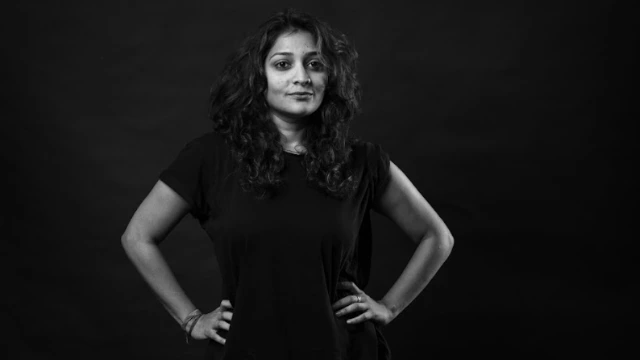
In the January issue of Manifest (which can be bought here), Harpz Kaur, a British Asian radio presenter, discussed how she landed her dream job as a RJ while DJing back in 2010.
"There was no TikTok or Instagram. I created a YouTube channel and posted my radio interviews and DJ mixes on it, hoping that people would see me and recognise what I would do. One day, one of my favourite presenters on radio, Nihal (Arthanayake), who worked for the BBC for many years, messaged me on Twitter (X) and asked me to do the ‘mix’ for a show on Radio One. I couldn’t believe it because it was going to get played on the BBC," she said.
A year later she applied for the Asian Media Awards after someone advised her to do so. While she didn't win, she was shortlisted, but that night became a career accelerator.
"That’s where my life changed. Nihal met me at the awards night and introduced me to someone whom I had no idea about. The person was the head of BBC Asian Network and told me he’d be in touch with me because Nihal spoke very highly of me. It was all unbelievable. I waited around seven months before I heard from him. In those seven months, every day I kept thinking he’d be in touch via email. I hit depression and was worried, because I had no paying job. I was at a low point in my life. During this time, I was on a family vacation when I got a call from the head of BBC Asian Network, and he told me to meet him at the studio. We met, he loved everything I did and wanted me to do a pilot for the radio channel. I was ill on the day I recorded it and was upset that I had missed the bus. They called me back and told me that they were giving me a second chance, and a couple of months later I got a call to host the Sunday morning breakfast show on BBC Asian Network. My body went numb because it took me six to seven years after graduating to get that big break and job I was working for."
Influencer
Kaur believes staying rooted to her culture has helped her immensely become 'the voice for South Asian culture in the UK'.
But is she an influencer for this community in the country?
"I don’t like to call myself an influencer because it’s used so widely. I have really worked so hard to study what I do and have two degrees in what I do. I have the skills and talent, and I own that. I’m proud of saying that because I have worked hard to understand the media world. People could look at me for influence, and that’s fine because I hope it’s taken as inspiration and not influence. I want to be more inspirational than influential," she said.
She added, "Now, influencers are taking over the world, and I don’t know how I feel about it. I understand why they do it, and we are in a world where if one is huge on social media and has a good following, one gets work and jobs based on it. But I see that sometimes in a negative way. Because those should have been jobs that I should have been called for, but they went to an influencer. Now, if one is an influencer and big on social media, the person is apparently good for every job. I don’t think that is necessarily true. But I understand I have to adapt to a different world."
Future of radio
Kaur left the BBC Asian Network three years ago and has seen the medium change drastically.
"The medium is different – the presenting skill, music, and what one wants out of it are different. Radio is not doing what it used to. It’s not filled with quality talent. They are filling the seats with influencers, people from reality shows, people on TikTok and TV shows. I find it quite sad that there’s a lack of talent in the space. One cannot have an Asian station being presented by RJs who cannot read the language or pronounce certain names. It’s a national platform, and there has to be a level of respect, knowledge, skills and passion. Some of them don’t have the drive or passion for their culture. But now, it’s about being famous, and I find it really sad."