
 Subscribe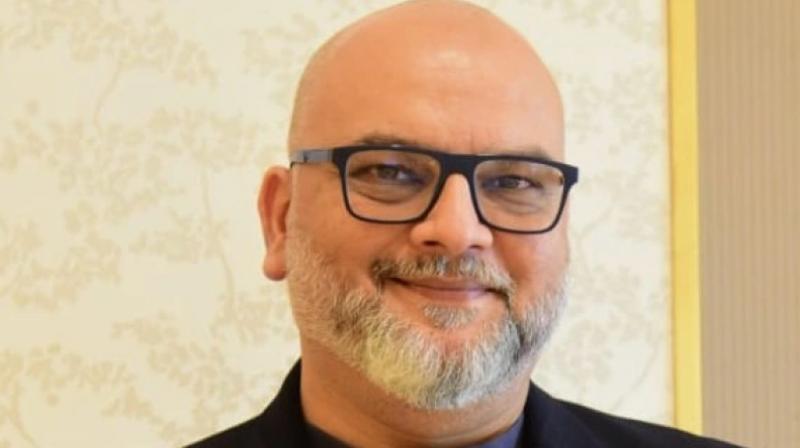
 Himanshu Saxena
As he takes on an expanded mandate overseeing Saatchi & Saatchi India and Propagate India in North and East India, alongside his role as managing director, BBH India, Himanshu Saxena is betting on a unified leadership model built around market needs rather than agency silos. The broader objective is to deliver comprehensive marketing solutions, powered by data, technology, and creativity, while enhancing market presence and client impact.
In this conversation, he discusses integrating the distinct creative cultures, unlocking the potential of North and East markets, evolving client expectations in the AI era, and why agencies must move beyond traditional creative outputs to deliver measurable business outcomes.
Edited excerpts:
Your mandate now spans Saatchi & Saatchi India and Propagate India for North and East, apart from BBH India. What was the business rationale behind consolidating leadership across these agencies, and how do you intend to balance the distinct agency cultures?
To be honest, our initial reaction also included some concern. However, once we returned to the fundamentals of why we were making this decision, things started falling into place.
Historically, agency systems have operated at individual brand or agency levels. Let me first address the easiest concern: ‘conflict mandates’. From experience across mid-to-large agencies, the proportion of potential conflict mandates that require insulation is typically no more than five to 10%. The good news is that, as it stands right now, across these three agencies, we don't have a conflict in my area of mandate, which is BBH nationally and Saatchi and Propagate in the North and East regions. That gives us a clean starting point.
Does that mean that we will not have an infrastructure or thinking on insulated mandates, which may be in conflict tomorrow? Of course, we can provide for that, as all good agencies do. Ultimately, if we violate client trust, we are the bigger losers.
The more important question is culture, the ways of working, and creative philosophy. Our starting point was simple: what does the market want? Through extensive engagement with senior leadership teams, we realised agencies worry about this more than the clients do. Clients simply want an accountable, highly effective, creative solutions provider who delivers results, provided, of course, business ethics and confidentiality are maintained.
Coming to your question of orchestrating three different brands, right now, it will operate at two levels. Operationally, the three brands will retain their individual identities and strengths. Each has a distinct legacy. Propagate, relative to the other two, has a younger legacy, because it's a kid of modern times. It is easily one of the fastest-growing digital and social agencies in the country right now, with diversified offerings in data, influencer marketing, and integrated content ecosystems, a massive footprint in the Mumbai market, and a reasonably good, solid start in the North already.
The other two brands have a much longer legacy, and they both come with very formidable creative reputations, creative cultures, and a certain aura. There is a natural constituency of clients that these two brands have attracted and will continue to attract. BBH, on one side, comes with a global narrative of being a supremely powerful creative powerhouse with fantastic credentials. It has lots to do with some of the most iconic pieces of work of the last 30 years in the advertising business. It does a very path-breaking, culture-building kind of work in the way it approaches creativity. And it has now developed a significant muscle, even in India. BBH has only eight offices in the world, of which, two of them exist in India. The US is the only other market where there are two offices.
Saatchi, on the other hand, was designed to be a global multi-market agency with strong scale and large multinational clients. In India, it is a significant business built on effectiveness, reliability, and deep partnerships with major brands. Saatchi's inception and strength came from elsewhere, and therefore, in terms of its creative legacy, they have built even in India very formatively.
It is a big agency built on scale, large clients, through-the-funnel effectiveness, and is a solid, reliable partner to major brands.
Now, is there a space for both kinds of clients? 100%. Ultimately, this is not about internal efficiency but about responding to market demand. Clients increasingly want partners with full-funnel capabilities rather than isolated services.
Does this signal tighter integration within Publicis Groupe’s creative ecosystem in India?
There is no consolidation or collapsing, if that’s what you are suggesting. The entities remain; they have their own unique strengths and genetic codes to play with, and there is a market for each of them. But yes, 'Power of One,' which is a consistent approach that we live every day, will be one of the biggest beneficiaries in accelerating this. The market needs it, and clients are seeking it. Now, with this unified structure, I expect - and we are already seeing early signs - stronger adoption of this approach, which is a unique and powerful strength of Publicis Groupe.
What opportunities do you see in North and East markets, and how do growth priorities differ across the agencies?
North and East India, as a market for the Groupe per se, has become a very strong market over the years in terms of our presence and scale on the Publicis Media front. Zenith, Starcom, Spark Foundry – these three brands are dominant with a reasonably large share in that market. But from the perspective of creative and other non-media businesses, our presence, we felt, has not tapped the potential of that market.
Historically, these regions have been centres of major industrial entrepreneurship. Many large business houses originated there. These markets are not ‘sleepy’; they have deep economic and entrepreneurial roots. The most promising thing about these regions, besides the legacy of the entrepreneurial spirit, is that when you compare the market structure of North and East with the West or South, the diversity and spectrum of industries in these markets is significantly larger.
Also, combined, these two regions easily cater to over 50% of the country’s population. Even if one looks at it at a localised level, though brands do not operate that way these days, regional brands which are very strong are actually talking to half of this country. In terms of population coverage too, they cater to very densely populated states.
So, as a combination of these two factors, there is massive potential. Therefore, the worry is not about what the growth story will be. There is enough opportunity for different kinds of creative thinking and marketing approaches. The modern marketing playbook requires integrated capabilities, creative, digital, data, and commerce, delivered through one partner. Clients are no longer satisfied with siloed offerings. Traditional advertising remains important, but it is not sufficient.
Mature categories in these markets, including long-standing homegrown brands such as the Relaxo Group, are demanding deeper engagement. Their expectations extend far beyond a TVC with a celebrity. They want solutions that drive retail performance, improve e-commerce uptake, influence repeat purchases, and build communities through influencer ecosystems. The key difference is not regional but category maturity. Because of the longstanding existence of these categories, brands, and industries in these markets, it has dawned on even the most ingenious and so-called traditional marketers that advertising alone is essential, but not sufficient.
In India, how has the decision to integrate Publicis into BBH changed how clients engage with the agency?
I don't want to speak over my global chief on this, but fundamentally, the starting point always was that this whole integration process - worldwide, or in India - should be built on what the market needs. So while there was a larger dispensation towards integration with Leo as a brand, which has happened in most markets, in India, a very important dimension of it was the growing strength of BBH as a brand in this market in the last three to four years, particularly. Clients were consulted beforehand, and the transition has been seamless.
For example, Škoda Auto, historically a Publicis client, has produced some of its most notable recent work with BBH following the integration. Similarly, work across multiple clients has benefited from a stronger talent pool and deeper strategic capabilities. So honestly, we never felt the pinch of it. We only enjoyed the benefits of a larger talent pool and a giant portfolio.
With regard to the group, Leo is perceived as the one who's winning all the accolades (at the awards) and creating cooler work. How do you think can the rest of the agencies within the Groupe match that creative reputation?
There is no rocket science or complex answer to that. The answer is simple: do outstanding work.
Full kudos to Leo, especially over the past seven to eight years; the creative strength, recognition, and reputation Leo has built are absolutely admirable. There's no question about it. I mean, we can only feel jealous about it, with a lot of admiration, of course. The kind of leadership it has - Rajdeepak Das, who is also the CCO of Publicis Groupe, has driven that brand personally for many years and provided a goal.
So how can others do it? I think it’s a very small step forward yet, but at BBH India - where I have spent more of my time in the Publicis Groupe so far - we are seeing the rise. It won its first Cannes Lion ever last year, and picked its biggest haul at the Effies, both last year and this year (BBH picked up two gold for Garnier and CaratLane and was ranked seventh). The agency also won some of the most significant businesses in the last three years. Of course, we have a big gap right now in terms of recognition outside, but in terms of client confidence, BBH India is getting noticed. That’s the same way any agency will have to do it. In our business, it finally boils down to outstanding work; the method can be whatever. We need to do a lot more of it, which is to bring in the modern marketing playbook, and a lot more modern creative thinking, which is built on data, technology, experiences, and so on.
So that is the direction. We are on the same path. And of course, we will do different things with our brands in them. But hopefully, we'll catch up with them soon!
You’ve said that exposure to diverse geographies and disciplines has been your 'biggest source of life success.' How does that global perspective shape your leadership approach in the N&E market today?
My career path may have seemed meandering at one point, but it is paying dividends now. Today, senior clients expect partners who understand the broader business ecosystem, not just communications.
If a CEO tells me their dealer net promoter score is low, that is not a traditional advertising problem, but it is a business challenge that affects brand performance. Agencies must understand such issues and contribute solutions.
My diverse exposure across different aspects of marketing helps me empathise with these challenges. It also shapes how we build talent, encouraging broader skill sets beyond traditional advertising roles.
On a lighter note, you would agree that there are a lot of people, and I felt sometimes jealous and insecure about the fact that a lot of my own colleagues, who stayed in the straight line, started in advertising, and have remained in advertising. But in the last four or five years, I've seen them struggle. Marketing has come full circle back to where it ought to be, about solving business problems, not just producing communications. And I've seen this diverse exposure very valuable and handy. Clients are willing to pay for it. I don't believe that clients don’t have money to spend. When we have the right solution, they will definitely pay.
How do you see client demand evolving in today’s AI era?
Clients are under immense pressure. Consumer behaviour, economic structures, and technological change are all evolving rapidly. Before you can master one trend, it's already obsolete. Competition is intense, margins are under strain, and boardrooms demand measurable results. Outputs don't matter. Only outcomes matter.
And the same theory has been demanded of us. As a result, marketing accountability has shifted from outputs to outcomes. Clients no longer want to pay only for deliverables, such as campaigns or content, but for business results. They expect agencies to commit to performance metrics, from downloads to revenue impact.
This explains why traditional creative businesses have seen stagnant economic growth globally for the last 15 years. If agencies remain limited to content production, they are on a path of slow death and risk long-term decline.
The modern marketing model requires full-funnel thinking and execution. Clients need partners who understand their challenges and deliver integrated solutions across multiple touchpoints.
How are you preparing your agencies for this shift?
Start getting out of narrow, rigid agency labels, stop defining ourselves as ‘I am this agency’ or ‘that agency.’
At BBH India, in the last three years, we have killed the notion in our heads that we are hiring purely for specific outputs, such as writing TVC scripts or producing digital content. Instead, we seek people who understand broader business and marketing challenges.
Our approach to hiring is different. We invest a lot of effort and time, which is where our HR teams have a big task to possibly upskill, and they do a great job on that. And infuse a lot of technology and so on. That is how one has to look at it. That is the only way agencies can remain relevant in today’s environment.