

 Subscribe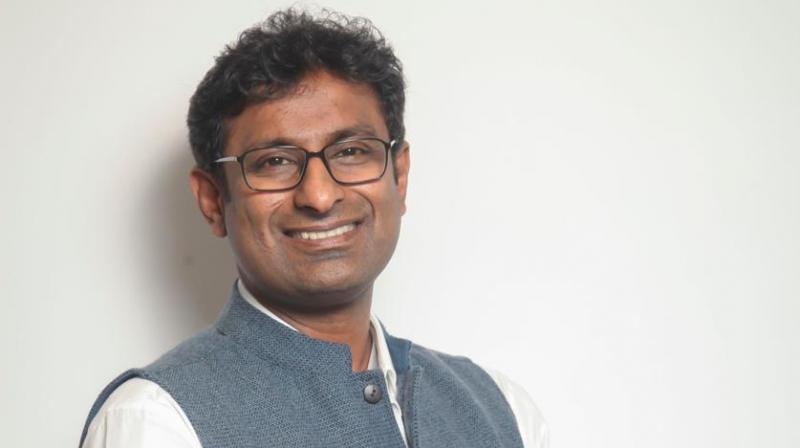
 Ashwin Padmanabhan
As India’s advertising market races toward INR 2,01,891 crore and digital tightens its grip on media investments, the industry’s long-standing binaries are beginning to collapse. (add link here instead of later)
The divide between traditional and digital media, once the central organising principle of media planning, is rapidly losing relevance as content flows seamlessly across broadcast, streaming, mobile and commerce platforms.
At the same time, the rise of connected TV, retail media, AI-driven planning tools and transaction-led advertising is forcing agencies to rethink how audiences are reached, measured and monetised.
WPP Media’s This Year Next Year (TYNY) forecast for 2026 projects India to remain one of the world’s fastest-growing advertising markets, with growth increasingly driven by commerce environments, intelligence platforms such as search and AI, and digitally enabled extensions of legacy media. The report also signals a deeper structural shift: advertising is moving closer to moments of decision, where consumers search, shop, and transact, rather than simply consuming content.
On the sidelines of the TYNY report launch, we spoke with Ashwin Padmanabhan, COO South Asia, WPP Media, as he addressed the growing complexity of balancing mass reach with precision targeting in a market where attention is splintering across screens, platforms and formats.
Edited excerpts:
This year's TYNY report merges print and other traditional media with its ‘digital extensions’. What was the rationale behind presenting them together?
The lines between traditional and digital are increasingly blurring. Take television as an example: It began as terrestrial over the air, then moved to cable, and later to DTH. For years, TV distribution was defined by these three modes. The first became irrelevant long ago, leaving cable and satellite. However, in recent years, TV has also begun to be distributed over the internet. Does that mean we stop calling it TV? That’s the question we’ve been grappling with for some time.
Globally, we have believed that the internet is simply a mode of distributing content, while the content itself remains broadcast. Whether it’s watched on a large television screen or on a mobile device, it is still broadcast content delivered via an OTT platform. It’s the same content, regardless of whether it reaches you through the internet, cable, or satellite. That’s the core of the debate we’ve been having.
In reality, we’ve now brought these perspectives together. If we take OOH, for instance, screens are becoming digital because they’re connected to the internet, which allows ads to be changed more easily. Earlier, ads had to be physically replaced; now that flexibility comes through connectivity. But does that automatically make it digital media? Out-of-home and ambient media are still fundamentally the same. What has changed is the method and the role of technology in how they operate, and that’s what we’ve reflected in the way we’ve reported the numbers.
We need to recognise that digital by itself is too vast. Digital, in that sense, is not really a medium. We don’t view it as one. Social can be a medium, commerce can be a medium, and video or content-driven video can be a medium. But digital is essentially the infrastructure, the wires that bring content together or enable people to do certain things. That’s all it really means. Which is why we’ve had to start classifying digital more specifically over time. Eventually, we may not even report digital as a standalone medium. Right now, we refer to it as 'other digital,' but even that will likely disappear, because everything is becoming digitised.
If we look at newspapers and print, the primary content is news. There’s lifestyle news, sports, political, city, and, but at the core, it’s still news as a genre that drives leadership and readership. As a journalist, the focus is on journalism. The journalist can publish that content in a newspaper, a magazine, online as a blog, or as the digital edition of a publication, but fundamentally, it remains news and content created by a journalist. That’s the perspective we’ve brought here.
As our lives become more digitally connected, these media and the businesses behind them will continue to evolve as well. Which is why, honestly, calling digital a medium in itself is increasingly irrelevant.
Is traditional media, especially print, still a growth driver or primarily a reach vehicle? While in India, there is a modest growth, print is declining globally. Why?
Print is clearly supported by rising literacy levels. What we’re also seeing is that language print, rather than English, is performing particularly well. Regional publications, non-English, across sectors are growing because brands are seeing tangible results, and print still carries strong credibility across regions, both among consumers and within government institutions.
There is also significant institutional support. After many years, the Directorate of Advertising and Visual Publicity (DAVP) has increased government print advertising rates, which will further boost the medium. In fact, the revision of these rates is one of the factors contributing to the growth we are projecting for print publications.
Print continues to work for brands today. Many dealers still swear by it and find comfort in its effectiveness. India is a vast country with a massive and diverse population, which means almost every medium can find a sizable audience. While we often highlight that India has one of the world’s largest youth populations, we also have a very large middle-aged and older demographic. That diversity ensures there is an audience for every medium, including print.
With regards to TV and CTV, is the line now blurring? Are marketers looking at this separately?
CTV, in the initial phase until about last year, around 2024, struggled a bit because it was still new. We didn’t have enough clarity on who was watching or what the outcomes looked like, and penetration was relatively low. Today, we estimate there are about 55-60 million CTV households, which is a significant base. Of these, nearly 20 million are cord cutters or cord nevers, meaning they either stopped using cable or never had a cable or a DTH connection at all. So we have a large audience consuming high-quality broadcast content outside of traditional linear TV.
This shift has been recognised by almost every brand. If we look at broadcasters, their growth on CTV and even on mobile has been extremely steep because brands now see a vast audience in these environments that they hadn’t fully tapped earlier. They also recognise that this is still television in many ways. From our perspective, this allows us to help brands plan across both linear TV and digital extensions of TV. We analyse reach curves across television, CTV, and mobile, and then determine the optimal investment split needed to reach the desired audience. As data evolves and we gain more signals from connected televisions, planning will become even more insight-driven.
In sports, especially cricket, digital extensions of TV are estimated to be around INR 8,000 crore by 2026 across sports and sports entertainment.
Piggybacking on sports, especially cricket, is increasingly split between broadcast and streaming platforms. How should brands optimise investments to capture both scale and measurable outcomes?
This year’s World Cup is a strong example of how well linear TV continues to perform for brands. One key reason is predictability. In live sports, everyone watching a channel sees the ad at the same time, which brands value highly. Digital operates differently. Ads are bought on impressions, so the same ad spot doesn’t guarantee the same ad exposure for everyone.
As a result, brands are figuring out how each platform fits into the mix. There’s a renewed respect for linear TV in sports because of its scale and certainty. Digital, on the other hand, becomes important for targeting specific audiences, smaller geographies, or deeper penetration into tier two and tier three markets, where mobile viewing is often stronger, and TV penetration may be lower. CTV helps reach households that linear TV may miss while still delivering a television-like experience.
From a planning standpoint, we estimate audiences across each of these distribution modes and then build an optimal mix based on the brand’s objectives. No two brand plans look the same, because each depends on what can be achieved through these different ways of delivering the same content.
Lastly, India is being pegged as the fastest-growing ad market on a global scale. What structural changes must agencies make now to stay relevant to Indian brands over the next decade, not just multinational clients?
We spoke about audience fragmentation and attention fragmentation, which essentially means planning is becoming more complex. To plan meaningfully for clients and reach audiences in a unified way, we have to invest in technology. Specifically, technology that allows us to integrate multiple data sources, homogenise them, and see a single, coherent picture. At WPP, this is being driven through our platform, WPP Open.
We also can’t ignore AI. We’re approaching it in multiple ways. One is through our partnership with Google, particularly Gemini, which is enabling different parts of the media workflow. From ideation and creative development to campaign activation and optimisation, AI is now embedded across the workflow.
The second shift is that we’re increasingly thinking like a technology company. Globally, WPP has gone through significant restructuring over the past year, including within the media business, driven by the recognition that we need to operate with a tech mindset. Media itself is becoming technology-led, and the lines between content consumption and commerce are blurring. Today, where we consume content, we can also buy, and where we buy media, we can also consume content. Those boundaries are fading.
So technology is becoming critical to how we operate. The reinvention underway is about imagining ourselves as a technology company first, with deep domain expertise in media. That’s the shift more agencies are beginning to make as well.