

 Subscribe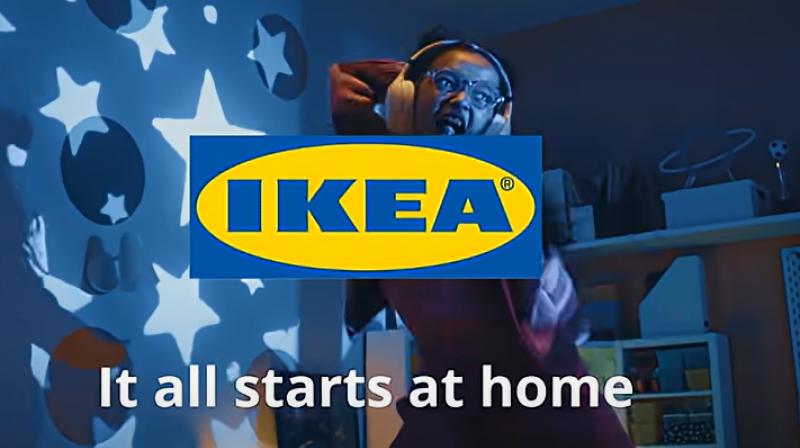
 Ikea's refreshed brand positioning: It all starts at home
Ikea has announced its new brand position, ‘It All Starts at Home’.
The brand positioning marks a strategic shift in how the Swedish retailer will connect with Indian consumers as it looks toward long-term growth in the country.
As a part of the rebrand, Ikea has rolled out a new campaign conceptualised by Leo. The campaign comprises a series of three films.
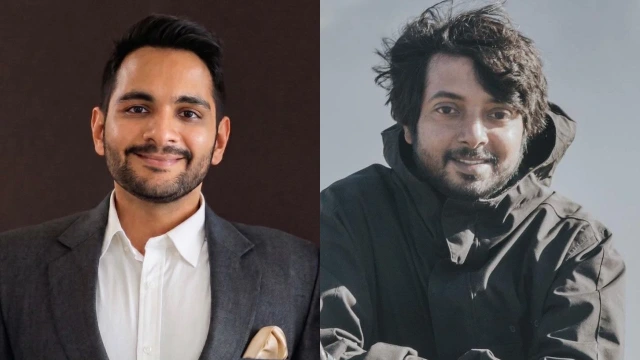
Following the refreshed positioning, we spoke with Adosh Sharma, country commercial manager, Ikea India, and Nivedeeta Moirangthem, country communication manager, Ikea India, at the reveal event.
Edited excerpts:
Ikea’s earlier ‘Ghar Aa Jao’ positioning celebrated togetherness and nostalgia. What shifts in Indian society and consumer behaviour prompted the brand to evolve this narrative now?
Adosh Sharma (AS): We've always been closely monitoring, watching, learning and adapting to how people live - not just one cross-section of people, but across segments since we launched in 2018. Back in 2022, through ‘Ghar Aa Jao’, we were saying that ‘Ghar’ is Ikea - and we are an extension of people’s homes. But we realised over the years that home has become the epicentre. Home is where everything is happening; it is where dreams are evolving, they are taking shape and coming true. Be it an MSME, a creator, or even a person doing a regular job, a lot of people are working from home today. So, home has taken a very different meaning; rather than just being four walls where people come and sleep. It is also where one is starting up on different things, hustling, and working every day. That's when we realised that we actually are all under one group. We connect with every part of the home and every living situation that one deals with. Hence, we understood that it was important for us to now connect with people and say that, whatever part of the journey you are in, whatever dream that you have, we want to be part of it and be a catalyst in fulfilling those dreams.
From a business and market perspective, what does this new positioning allow Ikea to do differently in India?
AS: There is an evolution that's happening in the country. So far, we have been lucky to welcome more than 100 million people to the brand. We want to extend that base further and be part of every journey that people live - right from providing solutions, to the ones that help you evolve, to the ones that help you think differently in terms of how the same space can be used differently.
Could you tell us about Ikea India’s geographical expansion plans?
AS: We have always said India is many countries in one, and the beauty about our country is that one can go any way. We want to go in a concentrated, accelerated way, where we are looking at six cities - Delhi, Mumbai, Hyderabad, Bengaluru, Chennai and Pune. We will go in and around these cities to look at a very true omnichannel expansion, which would be a mix of offline and online and built through that.
How do you ensure a refreshed positioning remains authentic to IKEA’s global DNA while feeling deeply Indian in its expression?
AS: Every year, we do a ‘Life at Home’ report. In that, we go to different homes, interact with a lot of people, and understand how they live, and more importantly, we see how life is evolving. What are their pain points? What is it that they really like about what's going on? What is it that they find is not usually useful anymore? We try to build all that in. We then try to see how our solution matrix fits into these issues. It is then that we try to create an offer which is most relevant to people everywhere.
As Indian homes increasingly become workplaces, classrooms, studios, and wellness spaces, how is Ikea rethinking categories beyond traditional furniture?
AS: We have more than 6,900 products in our range, which are pure products and not SKUs. We continue to evolve on a yearly basis. We have already been in that evolution where, for instance, if someone is hustling, we've got the lights now that you can use with your camera. I feel our products are quite versatile, while at the same time we continue on a yearly basis to bring new products. Every year, four times a year, we bring news into our markets. That is brought not just for function, but also for different use cases that we try to bring in.
Indian homes today look very different from even a decade ago — in structure, people, and purpose. How did these realities influence the tone and language of the refreshed positioning?
Nivedeeta Moirangthem (NM): Studying homes and learning from homes is a part of how we do business. It's nothing different for India. We've been listening and learning to the societal shifts and changes as well in the country. We listen to the needs and aspirations of many, and we realised the fact that India is also changing - from being a large joint family to nuclear families and moving for work to different cities. Being able to live in different life situations, our needs also changed. One doesn’t look for a traditional setup anymore. They look for more convenience and accessibility, which can make their life a little bit more comfortable and nice. We grow with society. Maybe the products will remain the same, but how people are using them, how we should present the range in a way that is relatable to people - that is changing. In our stores, we present different life situations with our ‘room sets’. There are all kinds of different life situations, and that comes only from our insight into how people are living in that particular state. In India, we call it a state because all states are different. Other countries are a little bit more homogeneous. But for us, Bombay is different from Delhi, which is also different from Bangalore, or Hyderabad. That's how we adapt, and we want to be locally relevant as much as possible. With this new positioning, we are in a phase where we should engage with each other a little more. We understand what people need, they understand what we have to offer, and we have a sweet spot. This will build our relationship even more strongly and meaningfully. That's the underlying theme around the platform of dreams and how Ikea can really enable one’s dreams.
Ikea’s communication has often been warm, humorous, and human. Does this new phase demand a different emotional palette?
NM: We call it having a twinkle in the eye. The three films are different life situations, and life journeys with different age groups, circumstances, and references. We try to integrate ourselves into what society is telling us. We will make sure that it is giving you goosebumps and tells you a story that one can imagine and relate to, and also makes sense. It's going to be a good mix of logic as well as creativity, with a twinkle in the eye.
Can you talk about how insights from Life at Home studies translate into creative decisions - from campaigns to in-store storytelling?
NM: We listen to the ‘Life at Home’ report very seriously. There can be different themes every year, but we listen to it and make sure that we are integrating what it is telling in our communication. This communication is not only advertising. It could be in the way we show our products in the store or in the way we are designing our in-store communication. In one of the reports, post- Covid, it was mentioned that Indians are now looking for some me-time. That is something that we really listened to and said what can we offer in that sense. Through our communication, we gave the woman or the man of the house the option of outdoor furniture, which can be kept in the balcony, and they can have their own time. So, we listened to that insight from the report and tried to integrate it not only in advertising and marketing, but also in the way we express ourselves in the store and even to our co-workers.
For this refreshed positioning, are you relying heavily on digital?
NM: It's a mix of traditional and digital. We are doing a lot of PR as well, and we are going to continue talking to the media. For the launch period, our focus is going to be a lot on mass media, for which we will be using connected TV and outdoor. Going forward, based on how we roll out different campaigns across the year, we will decide the media mix based on the creative vision as well.
With content and culture moving so fast, how does Ikea ensure its brand voice stays relevant without chasing trends?
NM: We have our own personality and tone of voice. We always have that as a guideline when we are talking to ourselves or even creating communication. We need to remain curious, optimistic, positive, and humble, all at the same time, with a twinkle in the eye. It should not be just boring communication, but how do we express ourselves in a creative way, so that people have a smile, or just maybe have a goosebump moment. It's not about taking ourselves seriously but about making sure that we are talking in a way that makes sense with our own tone and personality. That will always be our guiding framework. We come from a southern village in Sweden, which is known for hard work, stubbornness, and making things happen, so that will always be reflected in our communication all the time.