

 Subscribe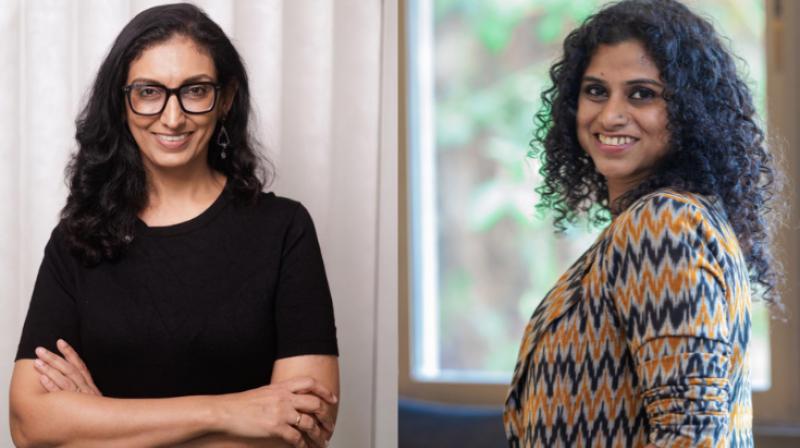
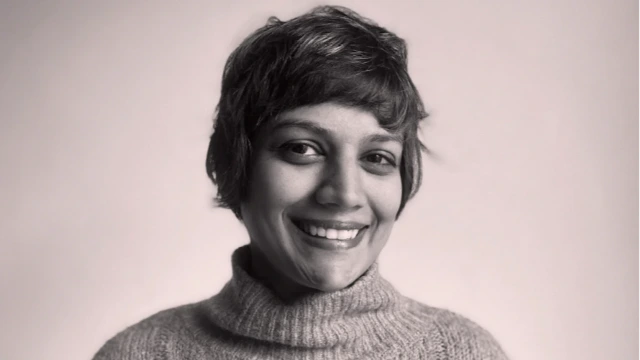
 Shveta Mehra (left) and Neha Kandalgaonka
As Mumbai readies itself for the Tata Mumbai Marathon (TMM) on 18 January, the annual gathering is less an event and more a cultural marker.
What began in 2004 as a single race has since evolved into one of India’s most influential platforms for sport, health, philanthropy and brand engagement, and at the heart of that transformation sits Procam International.
Founded in 1988 by brothers Anil and Vivek Singh, Procam has played a role in building India’s modern sports ecosystem. From live event management and broadcast production to long-term sports consultancy, the company has conceptualised and delivered over 100 international sporting properties across disciplines as varied as distance running, cricket, football, tennis, powerboat racing and squash.
But it is in participative sport, particularly distance running, that Procam’s most visible impact has been felt.
Through its ‘Big four’ races: the TMM, Vedanta Delhi Half Marathon, TCS World 10K and Tata Steel World 25K Kolkata, Procam helped create a culture of large-scale running in the country.
Today, the TMM functions as a year-round ecosystem rather than a one-day spectacle. It anchors employee engagement programmes, CSR and fundraising initiatives, sustainability projects such as the Green Bib agroforestry programme, and a growing calendar of brand, community and content touchpoints.
In the process, it has raised over INR 500 crore for social causes, enabled thousands of NGOs, and built one of the most loyal, influential consumer communities in the country.
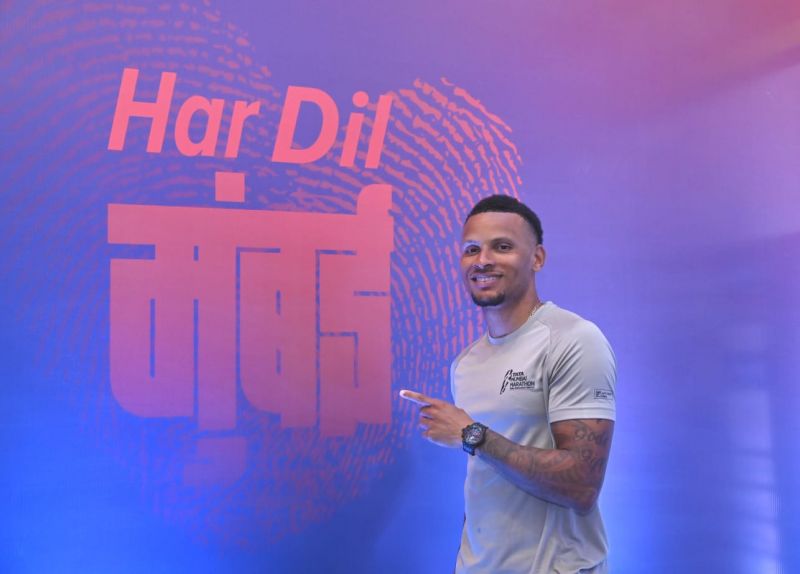
Sprinter and seven-time Olympic medallist, Andre De Grasse
Procam International expects a record participation of over 69,000 runners celebrating fitness, philanthropy and Mumbai spirit under the theme #HarDilMumbai.
Ahead of this year’s edition, we spoke with Shveta Mehra, vice president – business development and revenue management, and Neha Kandalgaonkar, vice president and head – corporate communications and PR, Procam International, to understand how the marathon has grown into a business platform, a social movement and a lens into how India now engages with sport, wellness and impact.
For Mehra, the scale of participation is not just numeric; it reflects a cultural reset.
She said, "The marathon is really where the change began in the country. Right before 2004, our country was not known for embracing the sport of long-distance running, and the entire movement started with the TMM."
That shift is now visible in both behaviour and economics. In 2025, the marathon generated a health-economic impact of INR 476.97 crore, nearly tripling from INR 156 crore in 2020. Participants spent INR 151.86 crore on meals, INR 130.65 crore on supplements, INR 107.07 crore on gear and footwear, and INR 78 crore on travel and accommodation, making running not just a lifestyle shift but a measurable driver of India’s sports economy.
"The canvas of sports is divided into two," Mehra explained. "One is spectatorial, the other participative. Long-distance running is participative, and that is why it is growing so fast."
This year alone, over 65,000 participants will take part, the highest in the marathon’s history, with female participation having grown 150% since 2016.
Finish times in the Half Marathon and 10K categories have steadily improved, reflecting how running has shifted from novelty to discipline for a growing base of Indians.
Mehra also pointed out that the movement now extends far beyond race day. She shared, “Over a thousand people lace up and run every single day in this country now. Running is no longer an event, it’s a habit, and that’s when culture really shifts.”
That participation has created what Mehra describes as a uniquely influential community.
"If you are a runner, you are a micro-influencer. People observe how you live, how you train, what you use. Loyalty builds very strongly here," Mehra added.
That loyalty is reflected in long-term brand relationships. Sponsors such as TCS, Airtel, Standard Chartered Bank, Bisleri, Volini and Fast&Up have remained associated for nearly a decade, with some relationships extending beyond a decade.
This year also sees a widening of categories engaging with the platform.
Amaron has come on board as the powered-by partner, Snickers as the hunger partner, Sir H N Reliance Foundation Hospital as the medical partner, Nayara Energy continues as the fuelled-by partner, and Red Bull has joined as a partner, signalling how the marathon now attracts brands across energy, healthcare, mobility, nutrition and lifestyle.
"This is not a one-day platform," Mehra expressed. "It is an ecosystem. The race day is just the culmination. The real marathon is the six to nine months of training, discipline, time, emotion and commitment that come before it. That’s what creates such a deep bond between the runner and the platform.”
The philanthropic impact mirrors that consistency. In 2025 alone, INR 53.62 crore was raised for NGOs, with 13,000 runners supporting 275 organisations.
Education emerged as the leading cause, raising INR 27.66 crore, while cumulatively the marathon has raised over INR 483 crore for philanthropy across 20 editions.
For Kandalgaonkar, this shift represents a bigger behavioural change.
Kandalgaonkar also pointed to how the marathon has become a rare social leveller. “On the road, there is no hierarchy,” she said. “A CEO runs next to a cab driver. A bureaucrat runs next to a college student. The road doesn’t differentiate, and that’s incredibly powerful in a society like ours.”
The mental and physical benefits now show up in data. Post-registration, 50% participants train over 150 minutes per week. 74% adopt strength and cross-training for injury prevention, while 45% use psychological techniques such as mindfulness and visualisation.
Kandalgaonkar remarked, "India was a spectator nation. Running made people participants in their own health."
Kandalgaonkar noted that one of the most meaningful shifts has been in women’s participation. “Women never really ran in our cities earlier,” she said. “But running created a safe space, especially in the early morning, where women found time for themselves, found community, and began to claim that space. That’s a social change, not just a fitness trend.”
From a brand and business perspective, the runner base itself has also evolved into a premium, discerning cohort, with 30% earning over INR 20 lakh annually, making it a highly attractive audience for categories spanning financial services, mobility, health, nutrition, apparel and technology.
Mehra pointed to Fast&Up as an example of how consistent engagement compounds. “Ask any runner today which electrolyte brand they trust, and most will say Fast&Up. That didn’t happen overnight. It happened because the brand stayed with the community, listened to it, and grew with it," she stated.
The marathon has also become a sustainability benchmark. Over two years, it has saved 242 cubic metres of landfill volume, processed 13 tonnes of waste, and achieved a 75% runner commitment to zero-waste initiatives.
World Athletics has recognised the event for best practices in waste management and food redistribution.
But sustainability at TMM goes beyond waste.
Two years ago, Procam launched the TMM Agroforest Initiative with United Way Mumbai. Since then, INR 74 lakh has been raised, 11,663 trees planted, 30 acres revived, and 29 farmers supported through the Agri+Horti model in Solapur district.
"This is not just about planting trees," Kandalgaonkar said. "It’s about sustaining them, and sustaining livelihoods."
Farmers have transitioned from subsistence or unstable livelihoods into structured, diversified farming. Fruit-bearing has begun across farms, mini-crops generate supplementary income, and biodiversity is visibly returning.
Kandalgaonkar added that this initiative is intended to have an impact.
Marketing, Kandalgaonkar and Mehra agree, follows the same philosophy.
"We still use digital, outdoor and print," Kandalgaonkar noted, "but emotional connection matters more than exposure now."
And that emotional connection, built through participation, trust and consistency, is what has turned the TMM into something far more enduring than an annual race.
Mehra concluded with a simple message for brands still watching from the sidelines. “Come and talk to us. Make time to understand this space. This platform doesn’t give you instant spikes; it gives you compounded growth. And today, that kind of trust is rare.”